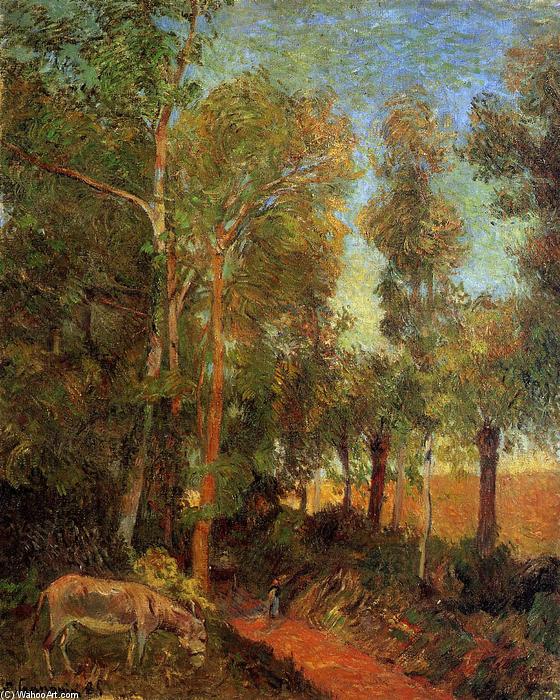
A Tranquil Encounter with Nature’s Essence: Exploring Gauguin's “Donkey by the Lane”
Paul Gauguin, a titan of Post-Impressionism, possessed an unwavering conviction that art should transcend mere representation and delve into the depths of human emotion. His masterpiece, “Donkey by the Lane,” painted in 1885, embodies this philosophy perfectly—a deceptively simple landscape brimming with profound symbolism and executed with masterful technique.
- Subject Matter: The painting captures a quintessential rural scene: a verdant forest path traversed by a man accompanied by his horse. Scattered horses add to the tableau, creating an atmosphere of pastoral serenity.
- Style & Technique: Gauguin’s distinctive Post-Impressionist style prioritizes expressive brushstrokes and bold color palettes over meticulous realism. Thick impasto—the application of paint in textured layers—dominates the canvas, conveying a palpable sense of physicality and immediacy.
The Kröller-Müller Museum in Otterlo houses this remarkable artwork, testament to Helene Kröller-Müller’s visionary patronage of Van Gogh and other groundbreaking artists. Founded on the belief that art should inspire contemplation and connection with the natural world, the museum serves as a beacon for preserving and disseminating artistic heritage.
Symbolism Within Simplicity
Beyond its visual beauty, “Donkey by Lane” resonates with deeper symbolic meanings. The donkey itself—a humble animal often associated with patience and perseverance—represents resilience and steadfastness amidst the challenges of life. Its presence alongside the horse symbolizes companionship and harmony within the natural order.
Furthermore, Gauguin’s deliberate use of color—primarily greens and browns—evokes feelings of tranquility, grounding, and connection to the earth. These hues mirror the artist's fascination with Polynesian landscapes and his desire to depict scenes untouched by Western civilization’s influence.
Historical Context & Artistic Legacy
Painted during Gauguin’s formative years in Brittany, “Donkey by Lane” reflects a pivotal moment in artistic history—the rejection of Impressionism's fleeting effects in favor of subjective expression. Gauguin’s approach paved the way for movements like Symbolism and Fauvism, influencing generations of artists to come.
Like many other works by Gauguin and Van Gogh, “Donkey by Lane” continues to captivate audiences today, prompting reflection on themes of spirituality, solitude, and the transformative power of nature. Its enduring appeal lies in its ability to communicate profound emotions without resorting to elaborate narratives—a testament to Gauguin’s genius as a painter and his unwavering commitment to artistic authenticity.
Where To Find This Artwork
Experience the beauty of “Donkey by Lane” firsthand at The Kröller-Müller Museum in Otterlo, Netherlands. Explore high-quality reproductions on ArtsDot and discover the inspiration behind this iconic landscape.