A Portrait of Quiet Sorrow: Exploring Gauguin’s ‘Faaturuma’
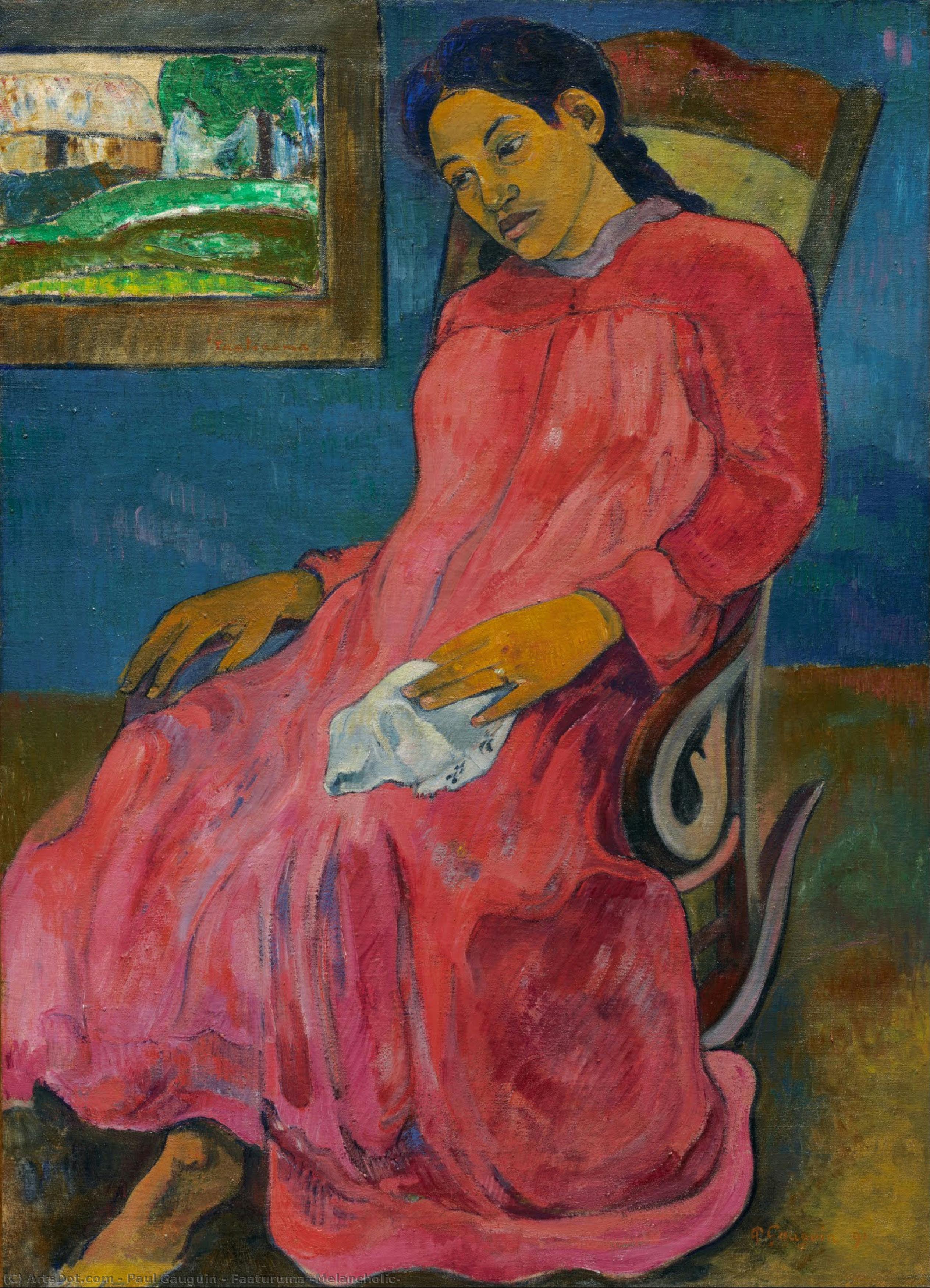
Paul Gauguin's “Faaturuma,” or “Melancholy,” is more than just a depiction of a Tahitian woman; it’s an embodiment of the artist’s profound engagement with emotion and his groundbreaking departure from Impressionistic conventions. Painted in 1891 during his prolific period in Tahiti, this artwork exemplifies Gauguin's signature style—bold color palettes juxtaposed against simplified forms—a deliberate rejection of the fleeting effects of light favored by Monet and Renoir. The canvas pulsates with hues of ochre, crimson, and turquoise, colors chosen not merely for their visual beauty but also to convey a palpable sense of sadness and introspection.
- Subject Matter: The central figure is seated in a chair, her gaze averted downwards as if lost in contemplation. Her hand rests gently on her face—a gesture universally recognized as indicative of sorrow and vulnerability.
- Composition & Setting: Gauguin skillfully utilizes natural light filtering through a window to illuminate the woman’s visage, creating a warm, inviting atmosphere that contrasts sharply with the underlying melancholy. The inclusion of two additional figures – one standing at the left and another positioned in the upper right corner – adds depth to the scene and subtly suggests an unspoken narrative.
- Technique: Gauguin employed a technique characterized by thick impasto—heavy application of paint—creating textured surfaces that capture the physicality of the brushstroke itself. This method wasn’t simply about visual impact; it was intended to imbue the painting with emotional resonance, mirroring the turbulent inner state of the subject.
The historical context surrounding “Faaturuma” is crucial to understanding its significance. Gauguin arrived in Tahiti in 1891 as part of a broader movement toward primitivism—a fascination with cultures perceived as untouched by Western civilization. He sought inspiration from Polynesian spirituality and mythology, attempting to distill the essence of human experience into simplified visual representations. The woman depicted isn’t merely sad; she embodies a yearning for connection and understanding – themes prevalent in Gauguin's oeuvre and reflecting his own personal struggles with identity and disillusionment.
Symbolism: Beyond its immediate depiction, “Faaturuma” speaks to larger ideas about human emotion and the complexities of inner life. The woman’s posture conveys a quiet dignity despite her sorrowful expression, suggesting resilience in the face of adversity. The handbag resting on the floor serves as a grounding element, anchoring the figure within her environment while simultaneously hinting at a hidden world of possessions and memories. Gauguin's deliberate use of color—particularly crimson—further amplifies the painting’s emotional intensity, symbolizing passion and perhaps even regret.
Emotional Impact: “Faaturuma” continues to captivate viewers today precisely because it transcends mere representation. It invites contemplation on themes of solitude, melancholy, and the human condition. The artist's masterful manipulation of color and texture compels us to confront uncomfortable truths about ourselves—the beauty found within sadness, the importance of introspection, and the enduring power of art to communicate profound emotional experiences. This artwork stands as a testament to Gauguin’s unwavering commitment to capturing the essence of feeling, cementing his legacy as one of the most influential artists of the late nineteenth century.