Gauguin at His Easel: A Window into the Soul of an Artist
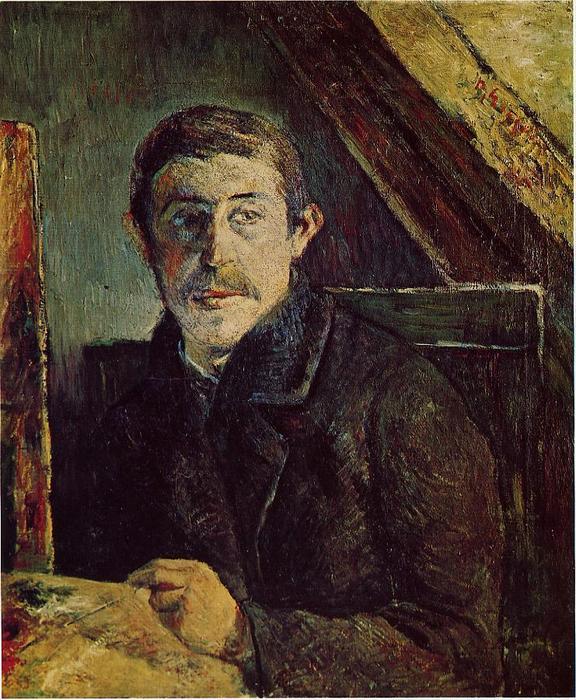
Paul Gauguin’s “Gauguin at His Easel,” painted in 1885, is more than just a portrait; it's a profound meditation on artistic creation and the artist’s inner landscape. Executed during a pivotal moment in his career – shortly before his move to Tahiti – the painting captures Gauguin in a strikingly intimate pose, seated before his canvas with a brush poised in his hand. The scene unfolds with a quiet intensity, inviting us into the very heart of his creative process. The muted palette, dominated by earthy browns and greens, reflects the somber mood of the time, hinting at the anxieties and uncertainties that fueled Gauguin’s relentless pursuit of authentic expression.
A Study in Self-Reflection and Post-Impressionist Technique
The painting's composition is deceptively simple. The artist’s direct gaze engages the viewer immediately, creating a sense of shared experience – as if he were inviting us to witness his struggle and triumph. Notice the meticulous detail with which Gauguin renders his own features: the furrowed brow, the thoughtful expression, the subtle lines etched by years of observation and reflection. This is not merely a likeness; it’s an exploration of identity, a self-portrait rendered through the act of painting itself. Gauguin's technique, characteristic of his early post-impressionist style, utilizes thick impasto – layers of paint applied with vigorous brushstrokes – to build texture and imbue the canvas with a palpable sense of energy. The use of color is equally deliberate, employing complementary hues to heighten visual impact and convey emotional depth.
Symbolism and the Quest for Authenticity
The background details—the two chairs, the partially finished painting on the wall – are laden with symbolic significance. They represent the artist’s ongoing engagement with art history and his desire to forge a new path, one rooted in personal experience rather than academic convention. Gauguin's fascination with non-Western cultures, particularly Polynesian motifs that would later dominate his Tahitian works, is subtly hinted at here. The painting can be interpreted as a visual representation of this quest for authenticity – a yearning to strip away the superficial and reveal the raw essence of human existence. The posture itself, working intently at his easel, speaks volumes about Gauguin's dedication to his craft and his unwavering belief in its transformative power.
Historical Context and Lasting Legacy
"Gauguin at His Easel" stands as a crucial document in the evolution of modern art. Created during a period of immense artistic ferment, it embodies the rejection of traditional academic styles and the embrace of subjective expression that characterized the Post-Impressionist movement. Gauguin’s influence extended far beyond his own time, inspiring generations of artists – including Henri Matisse and Pablo Picasso – to challenge established norms and explore new modes of representation. Today, this painting continues to resonate with viewers, offering a poignant glimpse into the mind of one of art's most visionary figures. Its enduring appeal lies in its honest portrayal of an artist grappling with fundamental questions about creativity, identity, and the human condition.