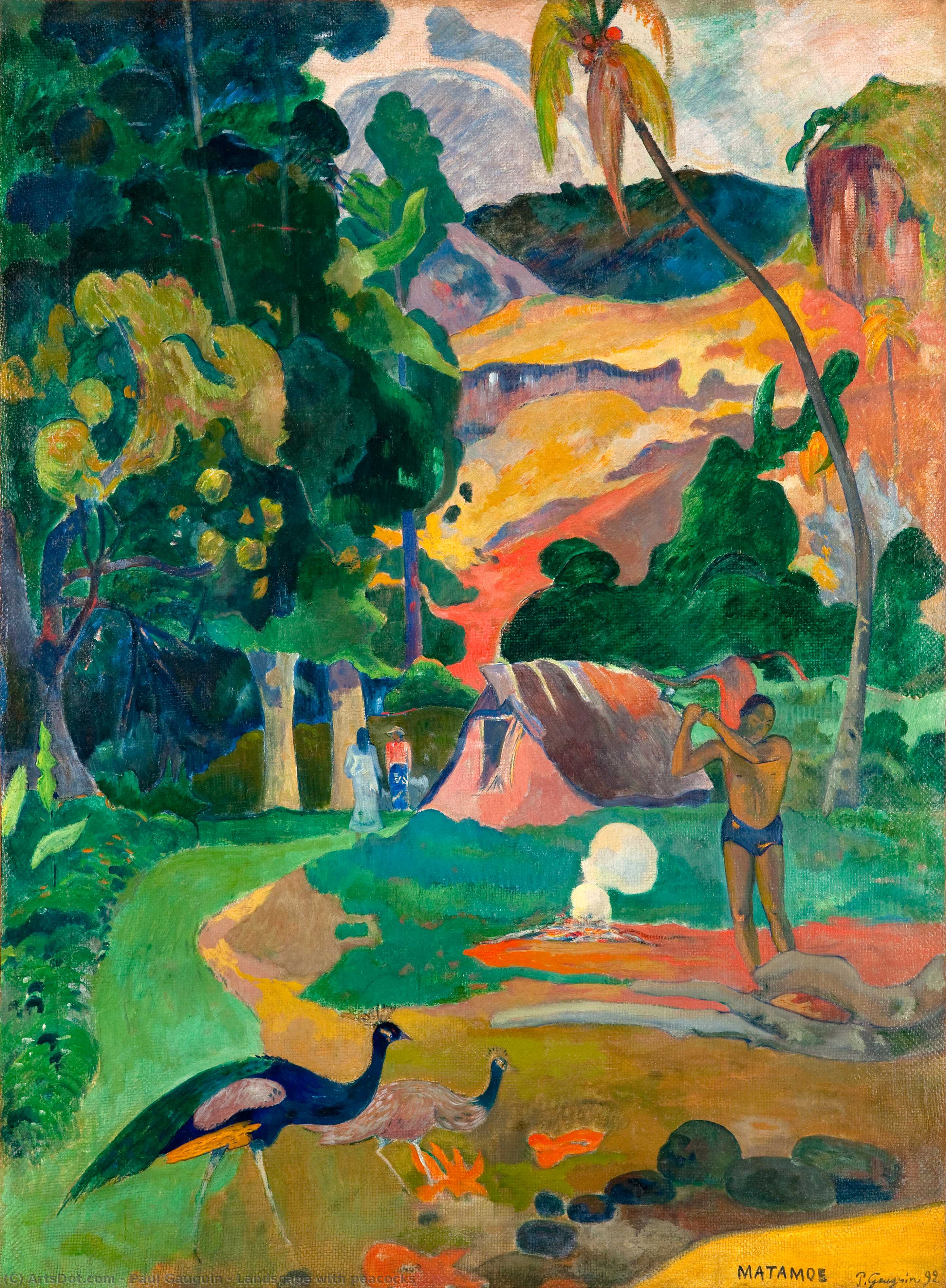
Experience Gauguin's bold post-impressionist vision in Landscape With Peacocks! This mesmerizing Tahiti scene captures exotic beauty through vibrant colors and expressive brushstrokes—a timeless masterpiece by Paul Gauguin, perfect for enriching your art collection.
Paul Gauguin: A revolutionary Post-Impressionist painter known for bold colors, exotic subjects & Symbolist themes. Explore his journey from finance to artistic legend.
Landscape with Peacocks – A Symphony of Color and Symbolism
Paul Gauguin’s Landscape with Peacocks is more than just a depiction of a tropical vista; it's an embodiment of the artist’s revolutionary approach to painting and his profound engagement with Polynesian culture. Created in 1892 during his idyllic sojourn in Tahiti, this oil on canvas transcends mere representation, venturing into realms of emotion and spiritual contemplation—a hallmark of the burgeoning Post-Impressionist movement.
The Artistic Vision: Embracing Primitive Beauty
Gauguin’s artistic journey began with a rejection of Impressionism's fleeting effects of light and color. Instead, he sought inspiration in primitive art forms, particularly those found in Oceania, believing they possessed an unfiltered honesty that Western European painting had lost. Tahiti captivated him; its lush vegetation, vibrant hues, and untamed spirit mirrored his yearning for escape from the constraints of Parisian bourgeois society. Landscape with Peacocks reflects this obsession—a deliberate departure from academic conventions toward a visceral expression of sensory experience. He wasn’t striving to capture an objective reality but rather conveying the feeling of being immersed in this exotic environment.
Composition and Technique: Bold Strokes, Harmonious Balance
The painting's composition is strikingly simple yet powerfully effective. Gauguin employs loose brushstrokes—a technique characteristic of Post-Impressionism—to build up layers of color and texture. The dominant greens of the foliage contrast dramatically with the fiery orange and crimson sky, creating a visual tension that underscores the painting’s emotional intensity. Two peacocks strut confidently along a winding path, drawing the viewer's gaze deeper into the landscape. Behind them, figures engage in everyday activities—a man tending to his garden—representing humanity’s harmonious coexistence with nature. Gauguin meticulously renders these elements using encaustic wax alongside oil paint, layering textures and hues to achieve remarkable luminosity and depth. This method allowed him to capture not just what he saw but also how it *felt*.
Symbolism: Peacocks as emblems of Pride and Transformation
The peacocks themselves hold significant symbolic weight. Traditionally associated with royalty and beauty, they represent aspiration and transformation—themes central to Gauguin’s artistic philosophy. Their iridescent plumage symbolizes spiritual enlightenment and the pursuit of perfection. The winding path leading into the landscape can be interpreted as a journey toward self-discovery, mirroring Gauguin's own personal quest for authenticity. Furthermore, the inclusion of human figures emphasizes the importance of integrating spirituality into daily life—a core belief within Polynesian culture that profoundly influenced Gauguin’s artistic vision.
Legacy and Emotional Resonance: An Inspiration for Modern Art
Landscape with Peacocks stands as a cornerstone of Post-Impressionism, paving the way for movements like Expressionism and Cubism. Its influence extends far beyond its immediate stylistic context. Artists continue to draw inspiration from Gauguin’s bold use of color, his rejection of photographic realism, and his exploration of primal emotions. Viewing Landscape with Peacocks today evokes a sense of tranquility mingled with wonder—a reminder that art can transcend time and culture to communicate universal truths about beauty, spirituality, and the human condition. It remains a testament to Gauguin’s unwavering commitment to artistic innovation and his enduring fascination with the transformative power of nature.