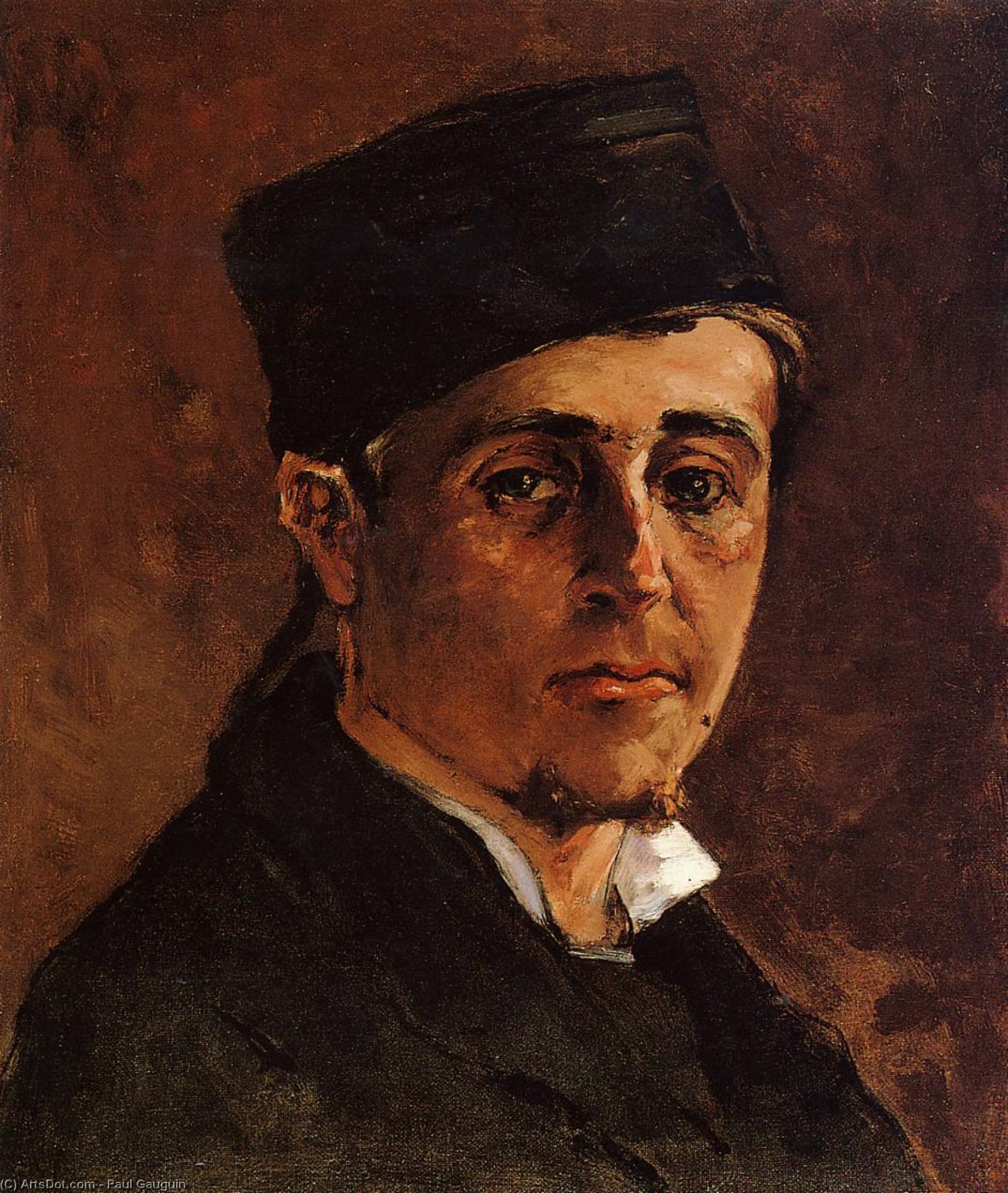
Man with a Toque: An Impressionistic Prelude by Paul Gauguin
Paul Gauguin’s “Man with a Toque,” completed around 1876, stands as an arresting glimpse into the formative years of one of Modern Art's most influential figures. More than just a portrait, it represents Gauguin’s initial foray into Impressionism—a stylistic exploration that would ultimately propel him toward the bolder expressive language of Post-Impressionism.
- Subject Matter: The painting depicts a man wearing a toque, a prevalent hat style during the Victorian era. This seemingly simple detail speaks volumes about Gauguin’s fascination with capturing everyday life and conveying psychological depth within familiar forms.
- Style & Technique: Gauguin's brushwork embodies the Impressionistic spirit—loose, textured strokes prioritizing atmosphere over precise representation. The muted color palette contributes to a contemplative mood, highlighting the subtle warmth of the man’s face against the darker hues of his clothing and surroundings.
The painting’s significance extends beyond its aesthetic qualities; it reflects Gauguin's burgeoning interest in capturing emotion rather than merely depicting visual reality. He deliberately eschewed academic conventions, prioritizing subjective experience—a characteristic that would define his artistic legacy.
Historical Context & Influences
“Man with a Toque” emerged during a pivotal moment in art history – the waning days of Impressionism and the dawn of Post-Impressionism. Gauguin’s exposure to Impressionist artists like Claude Monet and Camille Pissarro instilled in him a desire for luminosity and spontaneity, yet he swiftly moved beyond these stylistic constraints.
- Monet & Pissarro: Gauguin admired the Impressionists' ability to capture fleeting moments of light and color, influencing his approach to composition and palette.
- Symbolist Undertones: However, Gauguin’s artistic vision transcended mere imitation; he incorporated Symbolist ideas—drawing upon mythology and folklore—to imbue his paintings with deeper layers of meaning.
The Fogg Art Museum in Cambridge houses this remarkable artwork, serving as a cornerstone for art historical research. Its presence underscores Gauguin’s enduring impact on the trajectory of artistic innovation.
Beyond Technique: Emotional Resonance
"Man with a Toque" isn't merely an exercise in visual artistry; it’s a conduit for conveying emotion. The man’s direct gaze engages the viewer, inviting contemplation and prompting questions about his inner life. Gauguin skillfully utilizes color and brushwork to evoke a sense of melancholy—a mood that resonates powerfully even today.
- Psychological Depth: Gauguin's masterful depiction captures not just physical appearance but also psychological state, demonstrating the artist’s commitment to portraying human experience with sensitivity and nuance.
- Legacy: This early work foreshadowed Gauguin’s later explorations of exotic landscapes and spiritual themes—solidifying his position as a pioneer of Modern Art.
Consider commissioning a high-quality reproduction of “Man with a Toque” to infuse your interior space with the evocative spirit of Impressionism and the profound emotional resonance of Gauguin’s artistic genius.