Introduction to Post-Impressionism and Paul Gauguin
Paul Gauguin, a French Post-Impressionist artist, is renowned for his bold and innovative use of color. His artistic style, known as Synthetism, diverged sharply from Impressionism. Gauguin's work was largely unappreciated until after his death, but his final decade in French Polynesia generated a body of work deeply expressive of his unique vision. Post-Impressionism, an art movement that developed roughly between 1886 and 1905, emerged as a reaction against Impressionists' concern for the naturalistic depiction of light and color.
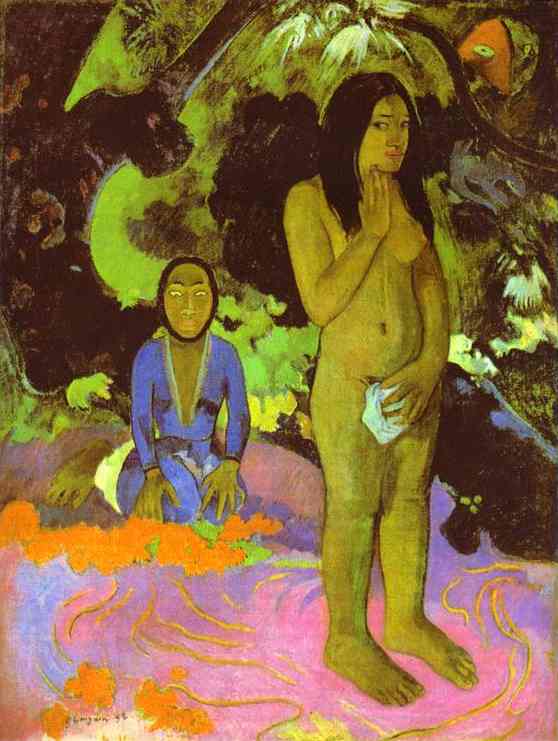
Parau na te varua ino, also known as
Words of the Devil, is a powerful and enigmatic painting by
Paul Gauguin. Created during his time in French Polynesia, this work embodies the artist's exploration of non-Western cultures and traditions. The painting features bold colors, expressive forms, and a unique visual language that reflects Gauguin's desire to convey the essence of Tahitian culture and mythology. You can find more information about this painting on
ArtsDot.com.
Interpreting the Painting
The title
Words of the Devil suggests a narrative or thematic element to the painting, which may be related to Tahitian mythology or Gauguin's personal beliefs. The work features several figures, including a central figure who appears to be a deity or spiritual being. The background is filled with lush vegetation and vibrant colors, creating a sense of depth and space that draws the viewer into the painting. For more insights into
Paul Gauguin's work and Post-Impressionism, visit
ArtsDot.com's artist page.
Conclusion
Parau na te varua ino is an important example of Post-Impressionist art, and its influence can be seen in the work of many subsequent artists. The painting's bold use of color, expressive forms, and unique visual language have inspired generations of artists to explore new ways of representing the world around them.
Handmade oil paintings reproductions of
Parau na te varua ino can be found on
ArtsDot.com, allowing art lovers to appreciate the beauty and mystique of this enigmatic painting.
You can also learn more about other famous paintings by
Paul Gauguin, such as
Te papa nave nave on
ArtsDot.com.