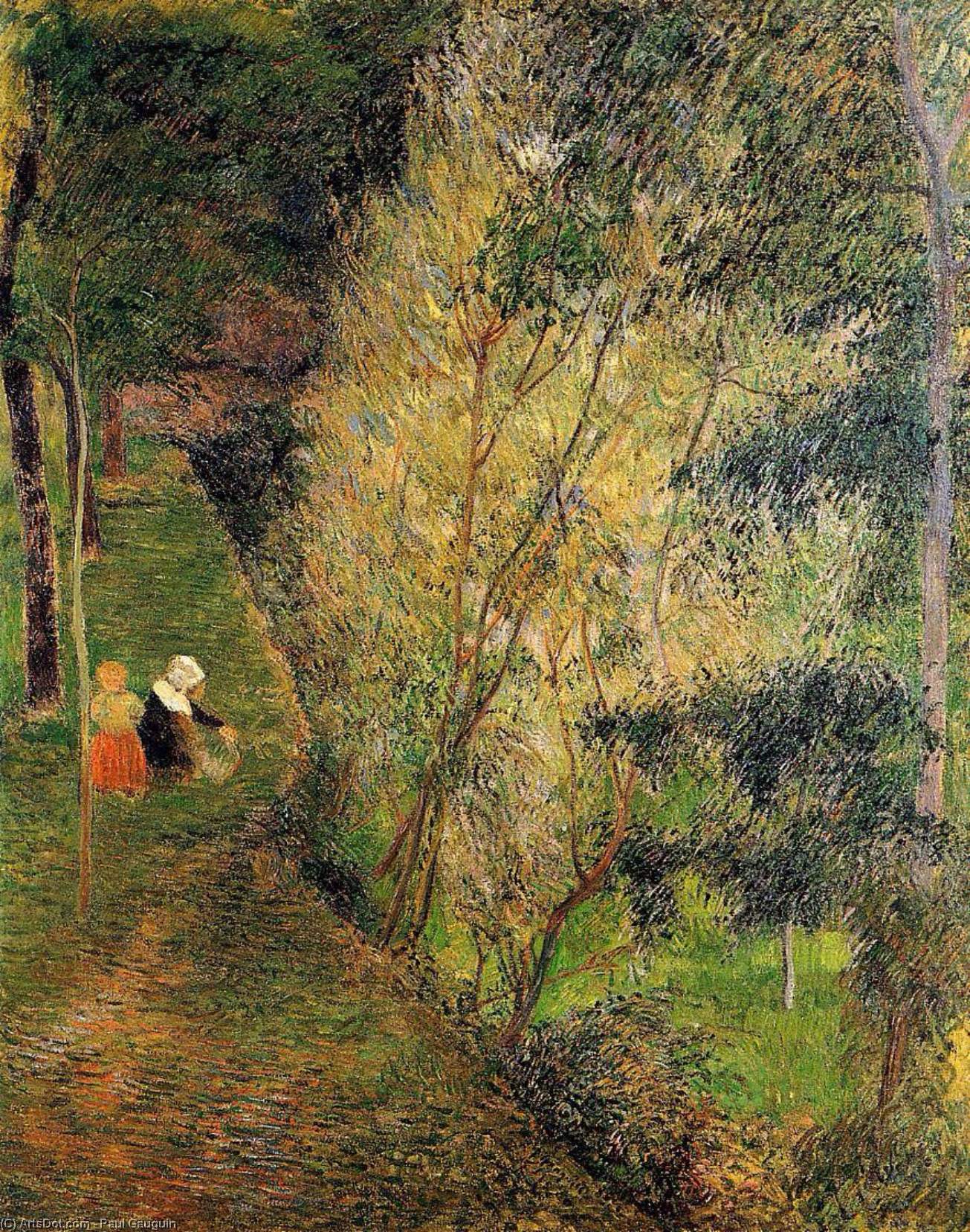
Paul Gauguin's 'Pont-Aven Woman and Child': A Synthesis of Breton Landscapes and Human Connection
Paul Gauguin’s “Pont-Aven Woman and Child,” painted in 1886, is more than just a depiction of two women seated by a tree; it’s a profound statement about the burgeoning Post-Impressionist movement and Gauguin's own radical exploration of color, form, and human experience. Created during his pivotal time in Brittany – a region he would repeatedly return to for inspiration – this work embodies his shift away from the fleeting effects of light favored by Impressionists towards a more deliberate and emotionally charged representation of reality. The scene unfolds with a quiet intensity, capturing a moment of domestic tranquility that feels both timeless and deeply personal.
- Subject Matter: The painting centers on a woman holding her child, set against the backdrop of the Breton countryside. This seemingly simple subject matter was revolutionary at the time, representing a move away from the prevalent depictions of Parisian life and towards a celebration of rural existence and traditional values.
- Style & Technique: Gauguin’s masterful use of Synthetist style is immediately apparent. Flat planes of color, bold outlines, and simplified forms dominate the composition, creating a sense of stylized abstraction rather than strict realism. This technique was intended to evoke emotional responses directly, bypassing intellectual interpretation.
- Color Palette: The vibrant hues – rich ochres, deep blues, and warm reds – are not used to mimic natural light but to express mood and feeling. Gauguin’s color choices were deliberately jarring at times, reflecting his desire to disrupt conventional artistic norms and create a more powerful visual impact.
The Roots of Synthetism: Breton Inspiration and a Quest for Authenticity
Gauguin's sojourn in Brittany was instrumental in shaping his artistic vision. He sought refuge from the increasingly industrialized and superficial world of Paris, drawn to the rugged beauty of the landscape and the perceived simplicity of rural life. This immersion profoundly influenced his work, leading him to explore themes of primitivism and a yearning for authentic human connection. The "Pont-Aven" region itself became synonymous with Gauguin’s artistic output, representing a deliberate rejection of academic conventions in favor of a more direct and emotionally resonant approach.
Furthermore, Gauguin's personal background – his Peruvian ancestry and his father's journalistic pursuits – contributed to his unique perspective. He was fascinated by non-Western cultures, viewing them as embodying a purer form of existence untainted by European materialism and intellectualism. This fascination is subtly reflected in the painting’s simplified forms and bold color palette, hinting at a desire to strip away superficial details and reveal the essential nature of things.
Symbolic Resonance and Emotional Impact
"Pont-Aven Woman and Child" resonates with powerful symbolic undertones. The woman and child represent innocence, vulnerability, and the enduring bonds of family – themes that were central to Gauguin’s artistic concerns. The setting itself—a tranquil grove of trees—evokes a sense of serenity and connection to nature, reinforcing the painting's underlying spirituality. The inclusion of the handbag adds a touch of everyday realism, grounding the scene in a tangible reality while simultaneously elevating it to a symbolic level.
Ultimately, this artwork is a testament to Gauguin’s revolutionary spirit and his profound impact on modern art. It invites viewers to contemplate not only the beauty of the Breton landscape but also the complexities of human relationships and the enduring search for meaning in a rapidly changing world. Its bold colors, simplified forms, and emotional intensity continue to captivate audiences today, solidifying its place as a cornerstone of Post-Impressionism.