Portrait of William Molard: A Window Into Gauguin’s Symbolist Vision
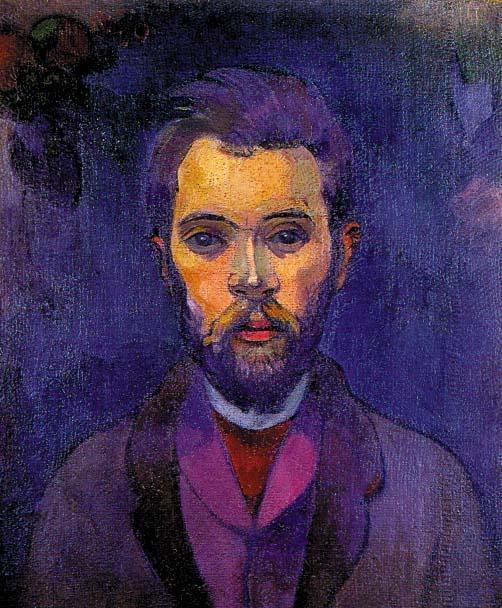
Paul Gauguin's *Portrait of William Molard*, painted in 1894, stands as a pivotal work within the artist’s Parisian period and embodies the core tenets of Post-Impressionism. More than just a likeness, it’s an exploration of inner emotion rendered through bold color palettes and expressive brushstrokes—a testament to Gauguin's unwavering commitment to conveying psychological depth rather than mere visual representation. Currently residing in the Musée d'Orsay, Paris, this canvas invites contemplation on both artistic innovation and the artist’s personal journey.
The Artistic Style: Post-Impressionism Revisited
Following the Impressionists’ focus on capturing fleeting moments of light and color, Gauguin rejected their aesthetic principles, forging a path toward Symbolism. Unlike his predecessors who sought to depict observable reality, Gauguin aimed to express subjective experience—the artist's inner world translated onto canvas. This stylistic choice is immediately apparent in *Portrait of William Molard*, where vibrant blues dominate the background, contrasting sharply with the muted purple shirt worn by Molard. The deliberate distortion of form contributes to this emotional intensity, conveying a sense of seriousness and contemplation that transcends a simple portraiture. Gauguin’s technique—characterized by thick impasto—creates palpable texture, reinforcing the painting's expressive qualities.
The Artist: Paul Gauguin – Exploring Inner Landscapes
Paul Gauguin (1848–1903) was a French painter who revolutionized artistic expression during his lifetime. Initially influenced by Impressionism and Camille Pissarro’s guidance, he swiftly distanced himself from the movement's conventions, prioritizing emotional resonance over optical accuracy. His fascination with primitive cultures—particularly Tahiti—fueled his artistic vision, inspiring him to depict subjects imbued with spiritual significance. *Portrait of William Molard* reflects this preoccupation with conveying inner landscapes and psychological states. The gaze of Molard directs towards the viewer, establishing a connection that transcends the formal portrait genre. Gauguin’s deliberate simplification of form – particularly in the depiction of Molard's face – underscores his desire to capture essence rather than surface appearance.
A Detailed Examination: Color Palette & Composition
The painting’s color scheme is deliberately restrained yet impactful. The dominant blues evoke feelings of tranquility and introspection, mirroring Molard’s solemn expression. These hues are juxtaposed against the purple shirt, creating visual tension that subtly communicates emotion. Gauguin's masterful brushwork—evident in the textured surface of the canvas—further enhances this expressive effect. Notice how he uses short, choppy strokes to define Molard’s features and hair, conveying a sense of immediacy and spontaneity. The composition is balanced, with Molard positioned centrally against a subtly textured background, guiding the viewer's eye toward his gaze.
Historical Context & Legacy
Painted during Gauguin’s Parisian period—a time marked by experimentation and intellectual ferment—*Portrait of William Molard* represents a crucial step in establishing Gauguin’s distinctive style. It aligns with broader artistic trends of the era, reflecting Symbolist ideals that prioritized emotion and imagination over rational observation. The painting's enduring appeal lies in its ability to communicate profound psychological depth—a feat achieved through masterful technique and evocative color palettes. Its influence can be seen in subsequent artists who embraced expressive brushwork and symbolic imagery, cementing Gauguin’s place as a pioneer of modern art.
- Artist: Paul Gauguin
- Year: 1894
- Location: Musée d'Orsay (Paris, France)
- Medium: Oil on Canvas
- Style: Post-Impressionism
Related Works by Paul Gauguin
* Pont-Aven in the Snow
* More about Paul Gauguin
Where to Acquire a Reproduction
For those seeking to experience the beauty and emotional power of *Portrait of William Molard*, ArtsDot offers high-quality reproductions crafted with meticulous attention to detail. Visit
ArtsDot today!