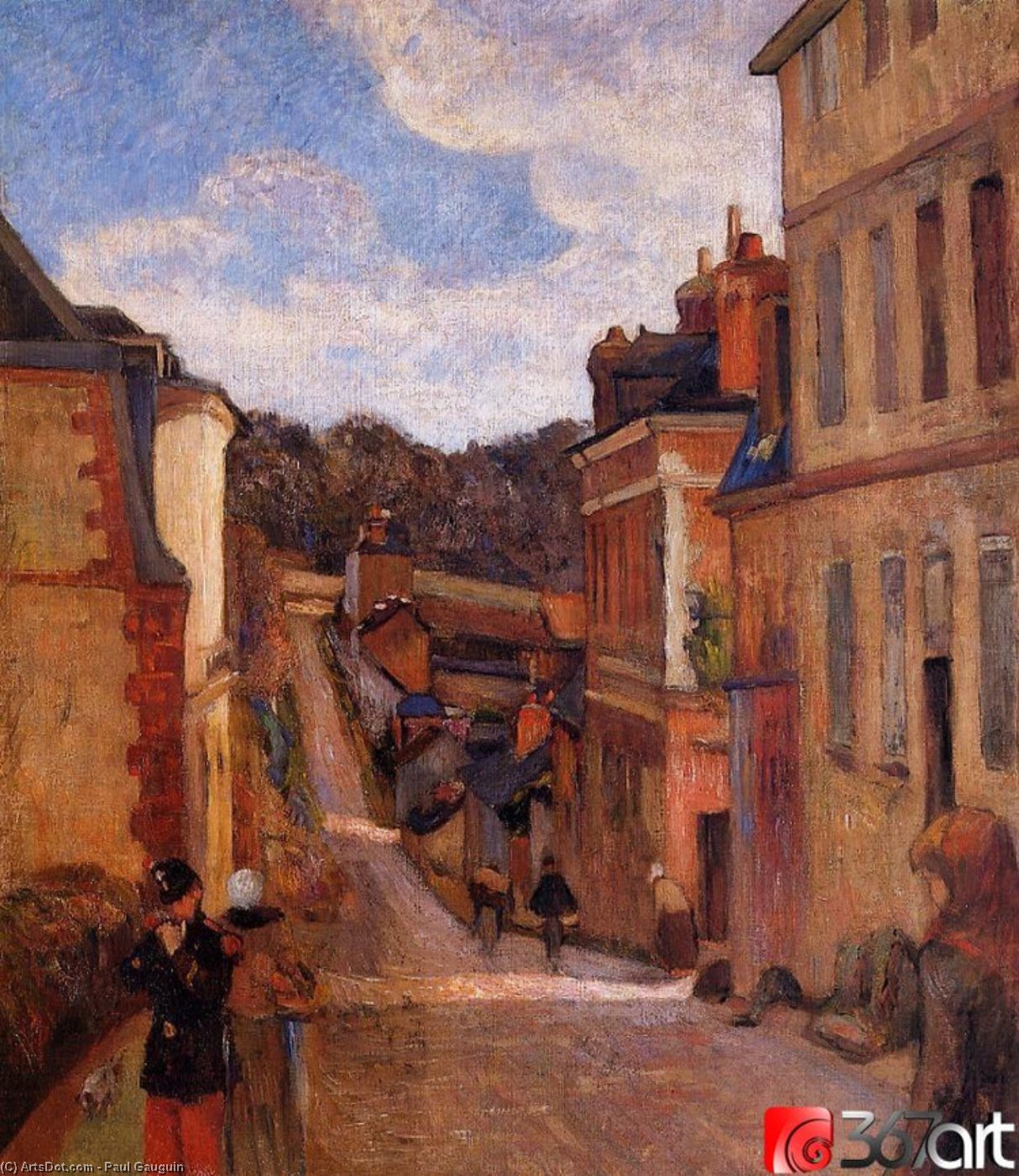
Rue Jouvenet, Rouen: A Window into Gauguin's Soul
Paul Gauguin’s “Rue Jouvenet, Rouen,” painted in 1884, isn’t merely a depiction of a street scene; it’s a visceral plunge into the heart of urban life as experienced by one of modern art’s most revolutionary figures. This oil on canvas captures the essence of Rouen, France, with an intensity that foreshadowed his later explorations of primitive cultures and non-Western aesthetics. The painting vibrates with a restless energy – a dynamic composition dominated by bold brushstrokes and a palette of vibrant colors that refuse to settle into quiet observation. It’s a testament to Gauguin's burgeoning desire to move beyond the constraints of Impressionism, seeking instead to express raw emotion and subjective perception.
- Subject Matter: The scene unfolds on Rue Jouvenet, a bustling street in Rouen, teeming with pedestrians, a dog, and the solid presence of buildings that frame the narrative.
- Style & Technique: Gauguin’s technique is characterized by thick impasto – layers of paint applied with vigorous strokes – creating a tactile surface that seems to pulse with life. The colors are not blended in a harmonious way; instead, they are juxtaposed and layered, contributing to the painting's overall sense of movement and unrest.
- Historical Context: Painted during a pivotal moment in art history, “Rue Jouvenet, Rouen” reflects the artistic ferment surrounding Gauguin’s contemporaries – Van Gogh, Manet, and others – who were challenging traditional academic styles.
Decoding Symbolism and Emotion
Beyond its immediate visual impact, "Rue Jouvenet, Rouen" is rich in symbolic potential. The figures within the scene are not simply portraits of individuals; they represent a broader commentary on human existence – their hurried movements, their interactions, and their anonymity all contribute to a sense of alienation and detachment. The dog, often interpreted as a symbol of loyalty or instinct, adds another layer of complexity to the composition. Gauguin’s deliberate use of color—the deep blues and greens contrasted with warmer tones—evokes a mood that is both captivating and unsettling, hinting at the darker aspects of urban life.
The painting's emotional impact stems from Gauguin's ability to translate his personal experiences and philosophical concerns onto the canvas. His fascination with Peruvian culture, nurtured during his childhood, undoubtedly influenced his artistic vision, prompting him to seek authenticity in a world increasingly dominated by Western values. “Rue Jouvenet, Rouen” can be seen as an early manifestation of this quest – a yearning for a simpler, more genuine way of life.
A Bridge Between Impressionism and Expressionism
“Rue Jouvenet, Rouen” occupies a crucial position in the development of both Post-Impressionism and Expressionism. Gauguin’s bold brushwork and expressive use of color paved the way for the radical innovations of artists like Van Gogh, who would later push the boundaries of artistic expression even further. While rooted in Impressionistic principles – particularly its focus on light and color – the painting transcends mere optical representation, delving into the realm of subjective emotion and psychological insight. It’s a pivotal work that demonstrates Gauguin's willingness to experiment and challenge established norms, solidifying his place as a visionary artist.
Recreating the Masterpiece: A ArtsDot Reproduction
ArtsDot offers meticulously crafted, hand-painted reproductions of “Rue Jouvenet, Rouen,” ensuring that you possess an authentic representation of this iconic artwork. Our skilled artisans employ traditional oil painting techniques to faithfully recreate Gauguin’s vibrant colors and dynamic composition. Each reproduction is a testament to our commitment to preserving the beauty and significance of masterworks like this one. Bring the energy and emotion of “Rue Jouvenet, Rouen” into your home or office – a timeless piece for collectors, art enthusiasts, and interior designers alike.