A Portrait of Rebellion: Exploring Gauguin’s Self-Portrait
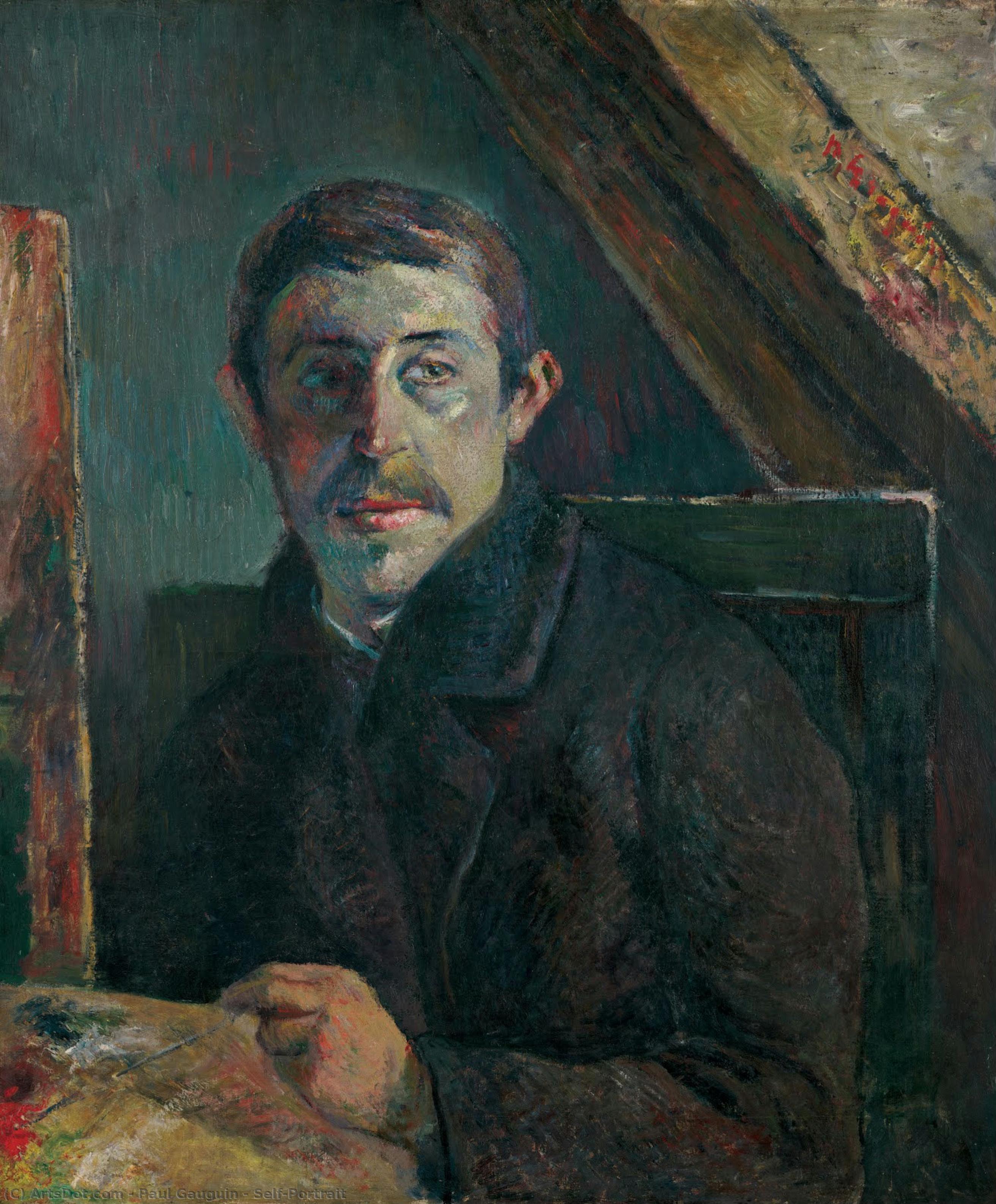
Paul Gauguin's "Self-Portrait," painted in 1885 during his formative years as an artist, transcends mere representation; it embodies a profound exploration of the artist’s psyche and marks a decisive step away from Impressionistic conventions toward the burgeoning expressive currents of Symbolism. Created shortly before he abandoned Copenhagen for Paris—a pivotal moment signifying his commitment to artistic freedom—the painting captures Gauguin in a contemplative posture within his studio, bathed in the diffused light of an attic window. This seemingly simple composition belies a complex layering of symbolism and meticulous technique that speaks volumes about Gauguin’s evolving artistic sensibilities.
- Style & Technique: Gauguin eschewed Impressionism's fleeting effects of light and color, opting instead for bold, flattened planes of pigment—a hallmark of Post-Impressionist style—that prioritize emotional impact over optical accuracy. He employed a technique known as cloisonné painting, reminiscent of Byzantine icons, dividing the canvas into distinct zones of color separated by thin lines of paint, creating an illusionistic depth that contrasts sharply with Impressionistic realism.
- Historical Context: The painting emerged during a period of significant artistic upheaval. Impressionism had dominated Parisian art circles for decades, yet Gauguin felt increasingly stifled by its limitations. Influenced by Japanese prints—particularly Ukiyo-e—which celebrated bold outlines and decorative patterns—he sought to liberate his imagination from the constraints of academic tradition.
Symbolism & Emotion: The artist’s gaze directs unflinchingly at the viewer, conveying a sense of defiance and introspection. Gauguin deliberately positioned himself in an uncomfortable space—a slanted attic room illuminated by a single beam of light—symbolizing isolation and confronting societal expectations. The coldness of his demeanor, accentuated by the tightly wrapped lapels of his jacket, reflects the artist’s inner turmoil and underscores his rejection of bourgeois comfort. Notably, Gauguin included reproductions of his own paintings on the background wall, mirroring his belief that art should be self-referential—a concept central to Symbolist thought.
Detailed Observation: Infrared imaging and radiography revealed subtle alterations made by Gauguin during its creation. Initially portraying himself in profile, he shifted to a frontal stance, reflecting a desire for direct engagement with the viewer. The artist’s left hand—held aloft as if gesturing—suggests an openness to new ideas and experiences—a characteristic that aligns with his adventurous spirit. Furthermore, the piercing eye—the focal point of the portrait—captures a moment of profound contemplation, hinting at Gauguin's preoccupation with exploring the darker recesses of human consciousness.
- Comparative Insight: Gauguin famously likened himself to Jean Valjean from Victor Hugo’s Les Misérables, recognizing in Valjean’s plight—a figure ostracized by society yet driven by moral conviction—a parallel to the Impressionist painter's struggle for artistic recognition. This comparison encapsulates Gauguin’s broader ambition: to depict not merely what he sees but what he feels—to imbue his artwork with emotional resonance and psychological depth.
Conclusion: “Self-Portrait” stands as a testament to Gauguin's unwavering commitment to artistic innovation and his profound engagement with the complexities of human experience. It remains an enduring symbol of rebellion against convention, a beacon of expressive freedom, and a captivating glimpse into the soul of one of art history’s most enigmatic figures—a masterpiece that continues to inspire artists and collectors alike.