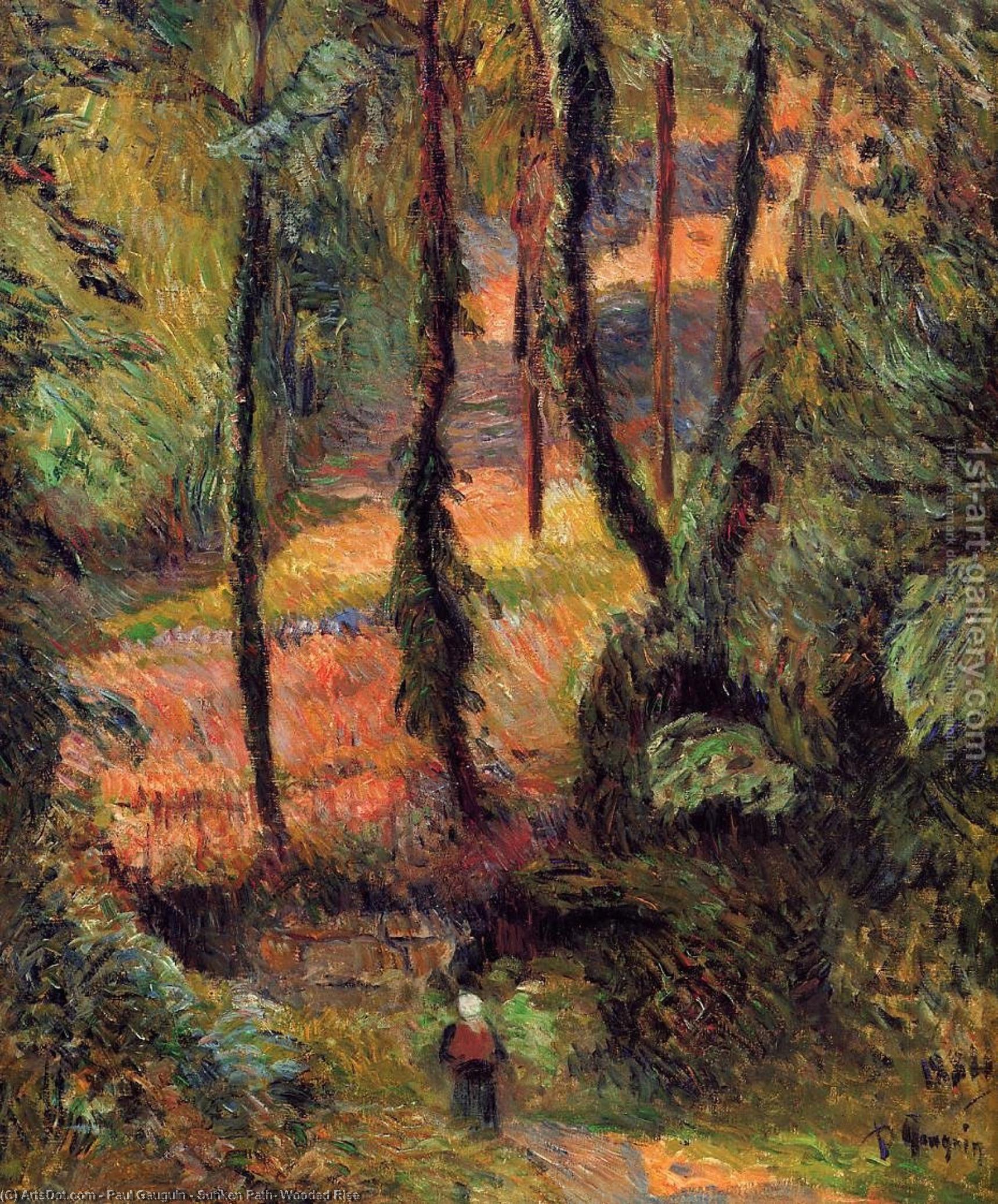
Experience Paul Gauguin's 'Sunken Path, Wooded Rise'! A captivating post-impressionist masterpiece depicting serene nature & human presence. Explore its rich colors & unique composition on ArtsDot.
Paul Gauguin: A revolutionary Post-Impressionist painter known for bold colors, exotic subjects & Symbolist themes. Explore his journey from finance to artistic legend.
Explore world-class art at the Museum of Fine Arts, Boston! Discover masterpieces spanning cultures & centuries in this iconic institution's stunning collection and historic building.
Sunken Path, Wooded Rise: A Journey into Gauguin’s Soul
Paul Gauguin's "Sunken Path, Wooded Rise," painted in 1884 and now residing within the esteemed halls of the Museum of Fine Arts in Boston, is more than just a depiction of a forest scene; it’s an immersive experience, a portal into the artist’s deeply felt connection with nature and humanity. This captivating work, rendered in rich oils on canvas, stands as a testament to Gauguin's revolutionary approach to art – one that deliberately rejected the constraints of academic tradition and embraced a raw, expressive style profoundly influenced by his travels and experiences. The painting immediately draws the viewer into a serene yet subtly unsettling atmosphere, inviting contemplation on themes of solitude, spirituality, and the delicate balance between the tangible world and something far more profound.
Composition and Technique: A Masterclass in Perspective
At first glance, "Sunken Path, Wooded Rise" appears deceptively simple. Gauguin masterfully employs a technique that blends elements of Impressionism with his own unique Synthetist style. The composition centers around a solitary figure traversing a sunken path winding through a dense forest. Trees of varying sizes and distances create an illusion of depth, drawing the eye into the heart of the scene. Notice how Gauguin doesn’t meticulously render every leaf or branch; instead, he utilizes bold brushstrokes and carefully chosen colors to suggest form and texture, prioritizing emotional impact over photographic realism. The use of complementary colors – vibrant greens and blues juxtaposed with earthy browns and ochres – intensifies the sense of depth and creates a luminous quality that seems to emanate from within the canvas. Gauguin’s deliberate layering of paint adds a tactile richness, inviting the viewer to almost feel the damp earth beneath their feet and the cool shade of the forest canopy.
Influences and Context: Echoes of Hodler and Beyond
Gauguin's artistic vision was shaped by a diverse range of influences. He admired the serene landscapes of Ferdinand Hodler, particularly his “Canto Silvestre,” which shares a similar theme of capturing the tranquility of nature while subtly hinting at human presence. However, Gauguin’s work transcends mere imitation; he infused these influences with his own distinctive sensibility, rooted in his experiences in Tahiti and his fascination with indigenous cultures. The painting reflects a broader movement away from traditional European art forms, embracing a more primitive and expressive style reminiscent of Primitivism. This desire to connect with the “authentic” – both geographically and spiritually – is a recurring theme throughout Gauguin’s oeuvre. The Galleria d'Arte Moderna in Brescia, Italy, houses an impressive collection that provides further context for understanding this artistic shift, showcasing how artists like Gauguin challenged established conventions and paved the way for new forms of artistic expression.
Symbolism and Emotional Resonance: A Path to the Unknown
Beyond its technical brilliance, "Sunken Path, Wooded Rise" is laden with symbolic meaning. The solitary figure walking the path can be interpreted as a representation of humanity’s journey – a quest for self-discovery or perhaps a search for spiritual enlightenment. The sunken path itself suggests a descent into the unknown, a willingness to venture beyond the familiar and confront the mysteries of existence. The dense forest evokes feelings of both tranquility and unease, mirroring the complexities of the human experience. Gauguin’s use of muted colors and atmospheric perspective creates a sense of isolation and introspection, inviting the viewer to contemplate their own place within the vastness of nature and the universe. The painting's emotional impact is profound – it’s not merely a landscape; it’s an invitation to lose oneself in contemplation and connect with something deeper than the everyday world.
A Legacy of Innovation: Gauguin’s Enduring Influence
“Sunken Path, Wooded Rise” stands as a pivotal work in Paul Gauguin's artistic development and a cornerstone of Post-Impressionism. His bold experimentation with color, brushstroke, and subject matter profoundly influenced generations of artists who followed, including Picasso and Matisse. For those seeking to explore more of Gauguin’s captivating works, reproductions like the ones available on ArtsDot.com – alongside pieces by Hodler – offer a valuable opportunity to delve deeper into his artistic genius and appreciate the enduring legacy of this revolutionary artist. Consider acquiring a high-quality reproduction of “Sunken Path, Wooded Rise” to bring a touch of Gauguin’s evocative spirit into your home or office.