A Window into Tahitian Soul: Decoding Paul Gauguin’s ‘Tahitian Faces’
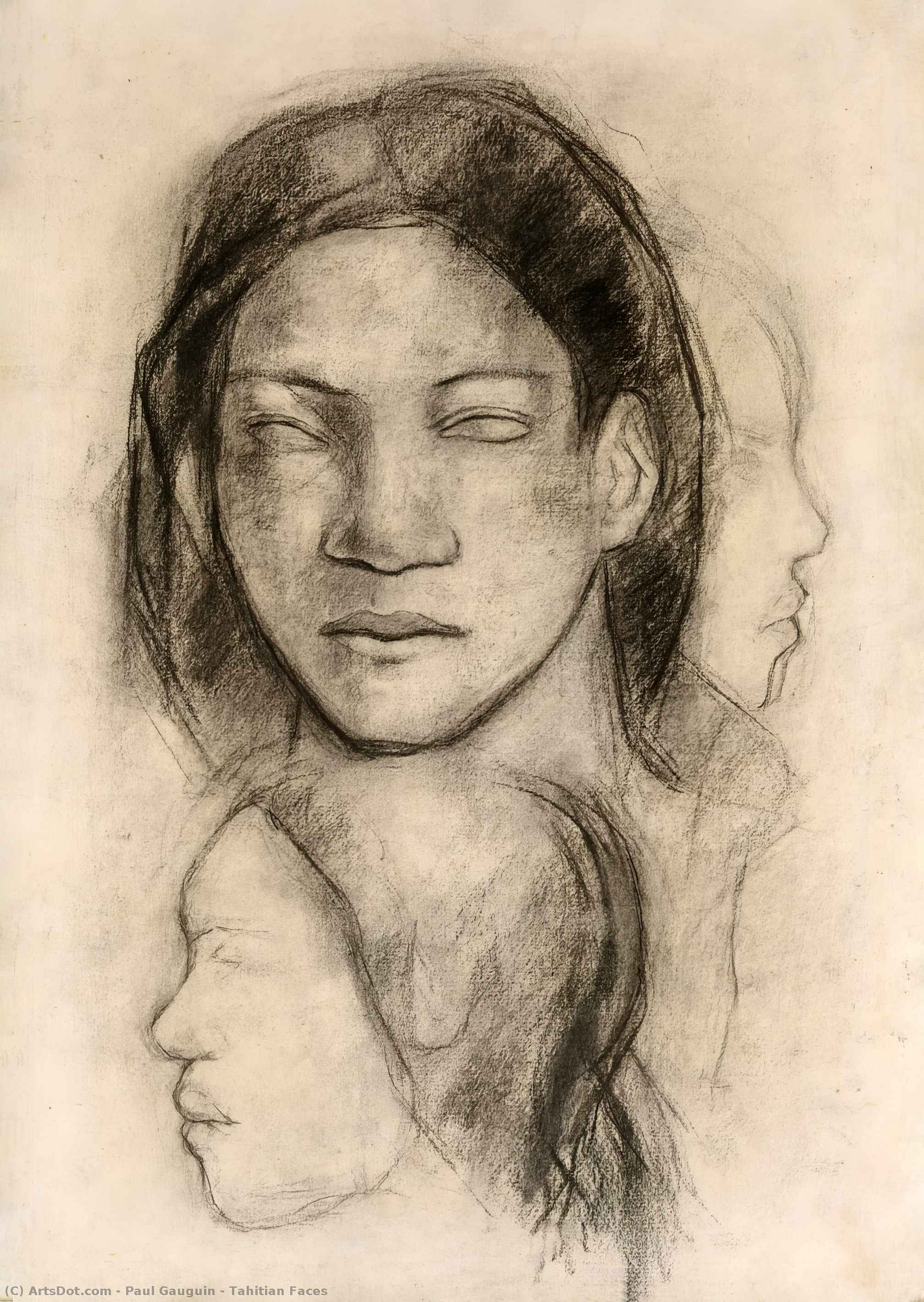
Paul Gauguin's *Tahitian Faces* is more than just a portrait; it’s a profound exploration of human emotion and the artist’s evolving artistic vision. Executed during his pivotal 1891-1893 stay in Tahiti, this charcoal drawing offers an intimate glimpse into Gauguin’s fascination with the indigenous people and their perceived connection to a more primal, authentic existence. It stands as a powerful example of his shift away from Impressionism towards Synthetism and Symbolism – movements that prioritized subjective experience and symbolic meaning over strict realism.
Stylistic Innovation & Technique
The artwork is rendered in charcoal, a medium Gauguin masterfully employed to achieve dramatic contrasts and nuanced textures. The stark black and white palette isn’t merely aesthetic; it intensifies the emotional weight of each face. Notice the deliberate use of shading – not simply to depict form, but to convey psychological states. Gauguin's technique is characterized by bold, expressive lines and a rejection of traditional academic rendering. He prioritizes capturing *the essence* of his subjects rather than photographic accuracy. The overlapping composition—three faces presented in varying views (front, profile left, profile right)—creates a dynamic interplay between them, suggesting both unity and individual complexity.
Historical Context: A Search for Paradise
Gauguin’s journey to Tahiti was driven by a desire to escape the perceived decadence of European civilization and find inspiration in what he believed was a more unspoiled culture. He sought a “paradise” where art could be reborn, free from the constraints of Western tradition. This period marked a turning point in his career, as he embraced non-Western artistic influences and developed a style that would profoundly impact modern art. It’s crucial to remember this context when viewing *Tahitian Faces*; it wasn't simply an ethnographic study but part of Gauguin’s larger philosophical quest.
Decoding the Expressions: Symbolism & Emotional Resonance
The three faces are not merely portraits, they are studies in contrasting emotions. The face on the left appears to frown, perhaps conveying sorrow or contemplation. The central figure smiles openly, while the face on the right exhibits a more restrained, almost forced smile. This juxtaposition invites viewers to contemplate the complexities of human emotion and the masks we wear.
What stories do these faces tell? The ambiguity is intentional; Gauguin wasn’t interested in providing definitive answers but rather prompting introspection. Some scholars suggest these expressions reflect Gauguin's own internal conflicts during his time in Tahiti, grappling with loneliness, illness, and cultural displacement.
Gauguin’s Oeuvre & Lasting Influence
*Tahitian Faces* is intrinsically linked to other iconic works from Gauguin’s Tahitian period, such as
Where Do We Come From? What Are We? Where Are We Going?. Both paintings explore themes of life, death, and the human condition within a non-Western context. His bold use of color, flattened perspective, and symbolic imagery paved the way for movements like Fauvism and Cubism, solidifying his place as a pivotal figure in modern art history.
For Collectors & Interior Designers
A reproduction of *Tahitian Faces* offers a compelling statement piece for any collection or interior space. Its monochromatic palette lends itself to versatile styling – complementing both minimalist and eclectic décor schemes. The artwork’s introspective quality adds depth and sophistication, inviting contemplation and conversation. Consider pairing it with textiles featuring earthy tones and natural textures to echo the Tahitian landscape that inspired Gauguin.
- Complementary Works: Explore other pieces from Gauguin's Tahitian period for a cohesive aesthetic.
- Styling Tip: Frame with a simple, dark wood frame to enhance the charcoal’s dramatic effect.
- Artistic Connections: Pair with works by artists influenced by Gauguin, such as Henri Matisse or Pablo Picasso.
Ultimately, *Tahitian Faces* is a testament to Gauguin's artistic genius and his enduring fascination with the human spirit. It’s an artwork that continues to resonate with viewers today, prompting us to question our own perceptions of beauty, identity, and the search for meaning in a complex world.