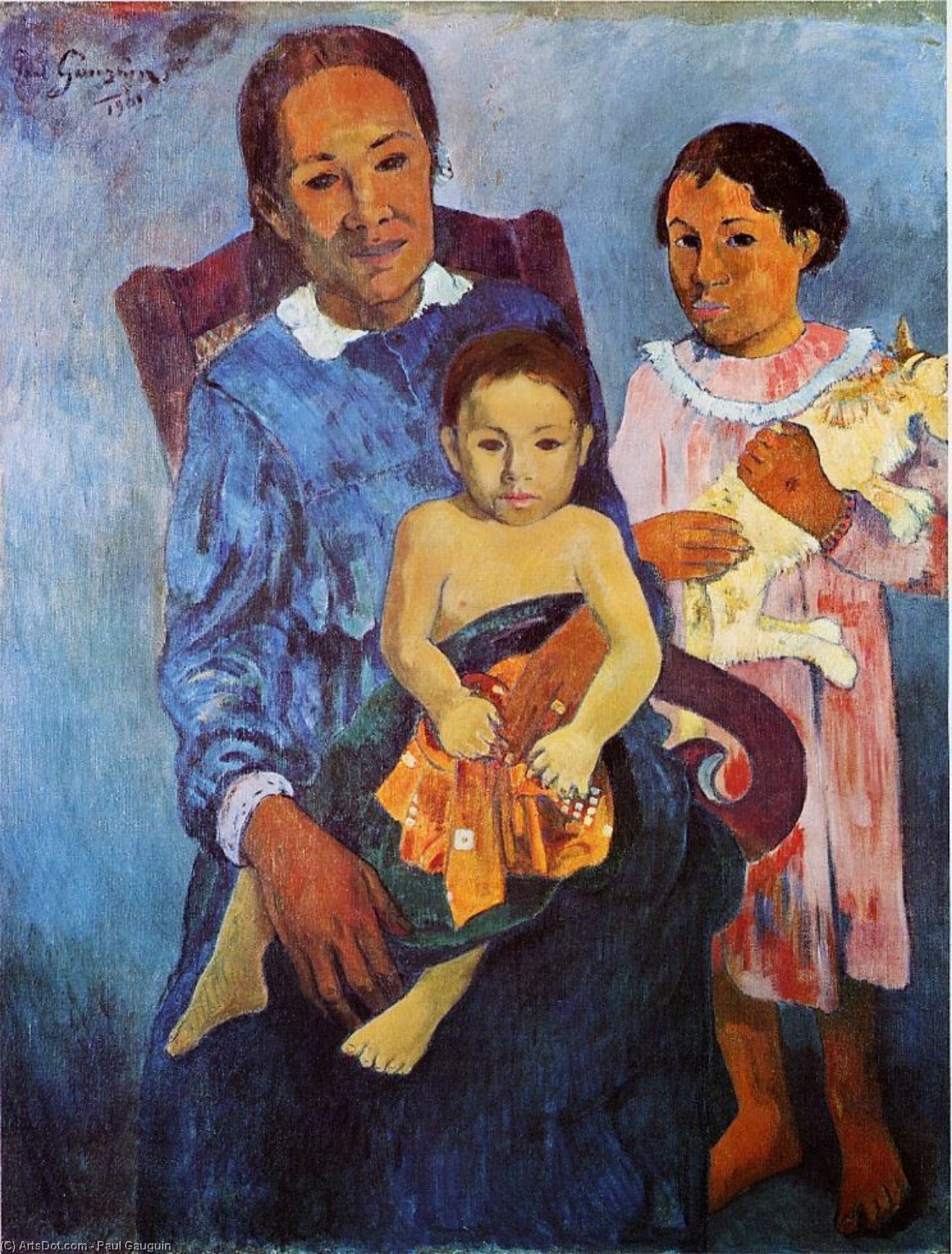
The Painting
"CITE>Tahitian Woman and Two Children" by
Paul Gauguin is a captivating oil on canvas painting created in 1901. It is currently housed at the
Art Institute of Chicago in Chicago, United States. This piece exemplifies Gauguin's unique style, blending elements of Cloisonnism with his own distinct approach to color and composition.
The Scene
The painting depicts a tender moment between a Tahitian woman and her two children. The woman is seated on a chair, embracing the children closely. Three cats are also present in the scene, adding an element of domesticity and tranquility. The use of vibrant colors and bold lines creates a sense of warmth and intimacy, drawing the viewer into the serene atmosphere of the painting.
Artistic Style
Gauguin's work is characterized by his experimental use of color and Synthetist style, which diverged from traditional Impressionism. His time in Tahiti significantly influenced his art, as he sought to capture the essence of native life and landscapes. This painting showcases his ability to blend the exotic with the familiar, creating a unique visual language.
Historical Context
Paul Gauguin was born in Paris in 1848 and later settled in Peru before returning to France. He began painting seriously after the financial crisis of 1882 impacted his brokerage career. His association with Camille Pissarro introduced him to Impressionist techniques, but he soon developed his own distinct style.
Legacy
Gauguin's work became popular posthumously, thanks in part to dealer Ambroise Vollard, who organized exhibitions of his work late in his career. His influence can be seen in the French avant-garde and modern artists such as Pablo Picasso and Henri Matisse.
Relevance
"CITE>Tahitian Woman and Two Children" is a significant piece in Gauguin's oeuvre, reflecting his fascination with Tahitian culture and his innovative approach to art. It stands as a testament to the enduring power of maternal love and the beauty of everyday life.
Related Works
For those interested in exploring more of Gauguin's work,
Tahitian Idyll and
Two Women (also known as Mother and Daughter) are notable pieces that showcase his unique style.
Conclusion
"CITE>Tahitian Woman and Two Children" by
Paul Gauguin is a masterpiece of Post-Impressionism, capturing the essence of maternal love in a vibrant and intimate setting. Its significance lies not only in its artistic merit but also in its reflection of Gauguin's journey towards creating a distinct visual language.
For more information on Paul Gauguin and his works, visit
Paul Gauguin at ArtsDot.