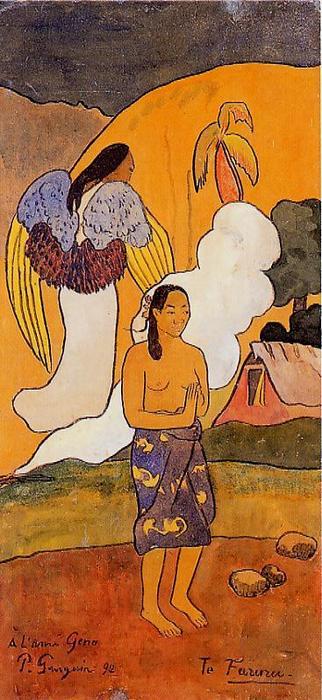
Te faruru (aka The Encounter): A Polynesian Dreamscape Painted in Bold Color
Paul Gauguin’s “The Encounter,” completed in 1892 during his second voyage to Tahiti, stands as a cornerstone of Post-Impressionism and embodies the artist's fervent desire to transcend Western artistic conventions and delve into the primal beauty of Polynesian culture. More than just a depiction of two figures—a man and a woman—the painting is an exploration of spirituality, intimacy, and the transformative power of encountering the unknown.
- Subject Matter: The scene portrays a man standing before a woman who appears to be an angel or spirit. Their postures convey a palpable connection, suggesting a moment of profound contemplation and perhaps even reverence. Alongside them is another person, likely representing a third participant in this sacred ritual.
- Style & Technique: Gauguin employed Cloisonnism, a technique characterized by applying pigment onto raised surfaces separated by thin lines of enamel—a method he adopted from Japanese art influences. This meticulous layering creates a textured surface and enhances the vibrancy of the colors, resulting in an image brimming with luminous hues that capture the essence of Tahiti’s tropical landscape.
- Historical Context: Painted amidst Gauguin's ongoing fascination with Melanesian spirituality and mythology, “The Encounter” reflects his belief that art should aspire to express universal truths beyond rational thought. It aligns perfectly with the broader artistic movement questioning academic realism and embracing subjective experience.
Symbolism permeates every aspect of the artwork. The woman’s ethereal presence symbolizes divine grace and purity, contrasting sharply with the earthy tones of the man's attire—a deliberate juxtaposition highlighting the tension between earthly desires and spiritual aspiration. The birds perched atop the hillside serve as emblems of freedom and transcendence, mirroring the protagonists’ quest for enlightenment.
“The Encounter” transcends mere visual representation; it evokes a feeling of serene contemplation and wonder. Gauguin's masterful use of color—particularly blues and reds—creates an atmosphere of tranquility punctuated by bursts of energetic vibrancy. This painting continues to captivate viewers today, offering a glimpse into the artist’s visionary worldview and reminding us of the enduring allure of primal landscapes infused with spiritual significance.