A Symphony of Labor and Light: Paul Gauguin’s “The Haystacks”
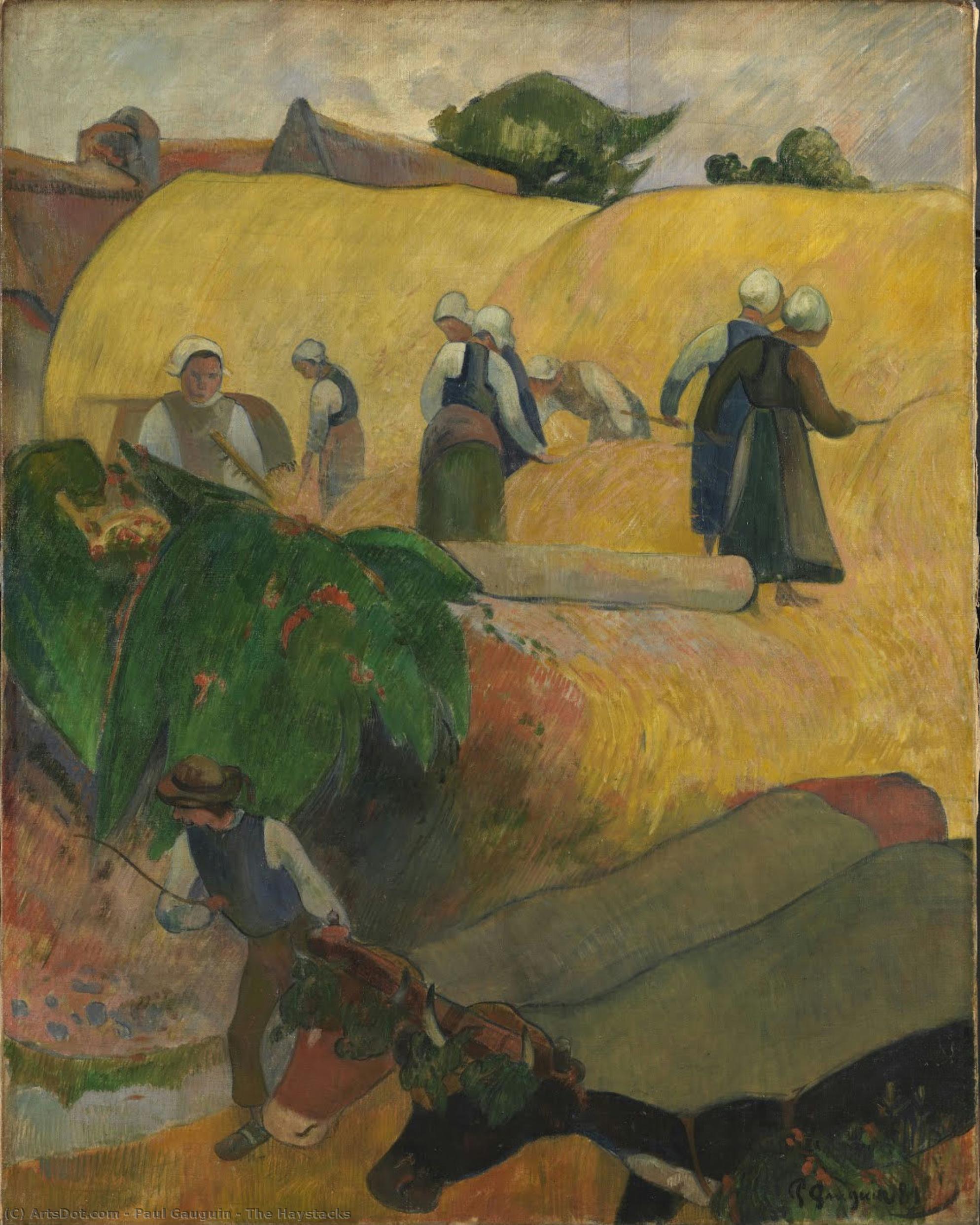
Paul Gauguin's "The Haystacks," painted in 1889, isn’t merely a depiction of rural life; it’s a carefully constructed meditation on labor, isolation, and the burgeoning currents of modern art. This large-scale oil on canvas, measuring 115 x 92 cm, transports us to a Brittany field bathed in the golden light of late afternoon, a scene both familiar and imbued with an unsettling stillness. Gauguin, already pushing against the conventions of Impressionism, sought to capture not just what he saw but also the *feeling* of a place – a feeling that resonated deeply within him after his own experiences in Peru and later, amongst the indigenous populations of Tahiti.
The painting’s immediate impact is one of vibrant color and bold brushstrokes. Gauguin employs a technique known as cloisonnisme, utilizing thick outlines to define shapes and forms, creating a sense of solidity and presence within the scene. The haystacks themselves are rendered with an almost sculptural quality, their rough textures and imposing size dominating the right side of the canvas. The color palette is rich and earthy – ochres, browns, greens, and yellows – punctuated by the startling blues of the sky and the deep reds of the figures’ clothing. This deliberate use of color wasn't simply decorative; it was a conscious effort to evoke specific emotions and sensations, reflecting Gauguin’s desire to move beyond mere representation.
The Figures: Echoes of Isolation
At the heart of “The Haystacks” are nine figures engaged in the arduous task of loading hay onto carts. Their postures – bent over their work, faces obscured by shadow – suggest a profound sense of isolation and repetitive labor. They aren’t depicted as joyful participants in communal activity; rather, they exist within a silent, almost ritualistic performance. The cow, positioned near the center-left, adds another layer to this atmosphere of quiet contemplation, its placid gaze seemingly mirroring the workers' stoic endurance.
Interestingly, Gauguin himself was notoriously uncomfortable with social interaction and often felt alienated from society. This personal experience undoubtedly informed his portrayal of these figures – they are not idealized representations of rural life but rather embodiments of a shared human condition: the burden of work and the solitude it can engender. The lack of direct eye contact between the figures further emphasizes this sense of detachment, creating a powerful visual metaphor for the isolation inherent in modern existence.
Symbolism and Modernity
“The Haystacks” is often interpreted as a symbolic representation of Gauguin’s own struggles with identity and belonging. The haystacks themselves can be seen as metaphors for the obstacles that stand between individuals and their aspirations, while the figures represent humanity's relentless pursuit of survival. The painting’s composition—a stark contrast between the monumental stacks and the diminutive human forms—underscores this theme of scale and perspective.
Furthermore, “The Haystacks” marks a significant departure from traditional landscape painting. Gauguin deliberately flattened the perspective, eliminating any sense of depth or distance, creating a more immediate and emotionally charged experience for the viewer. This flattening of space, combined with his bold use of color and simplified forms, foreshadows the development of Post-Impressionism and ultimately paved the way for the radical innovations of artists like Van Gogh and Cézanne. It’s a pivotal work in Gauguin's journey toward forging his own unique artistic language.
A Timeless Resonance
“The Haystacks” continues to resonate with viewers today because it taps into universal themes of labor, isolation, and the human condition. Its raw emotional power, combined with its masterful technique, makes it a compelling and enduring work of art. Whether viewed as a commentary on modern society or simply as a beautiful depiction of rural life, this painting offers a profound glimpse into the mind of one of the most influential artists of the late 19th century. Reproductions capture much of the original's impact, offering a stunning addition to any collection or interior space.