The Soulful Echoes of Suffering: An Exploration of Gauguin’s “Human Misery”
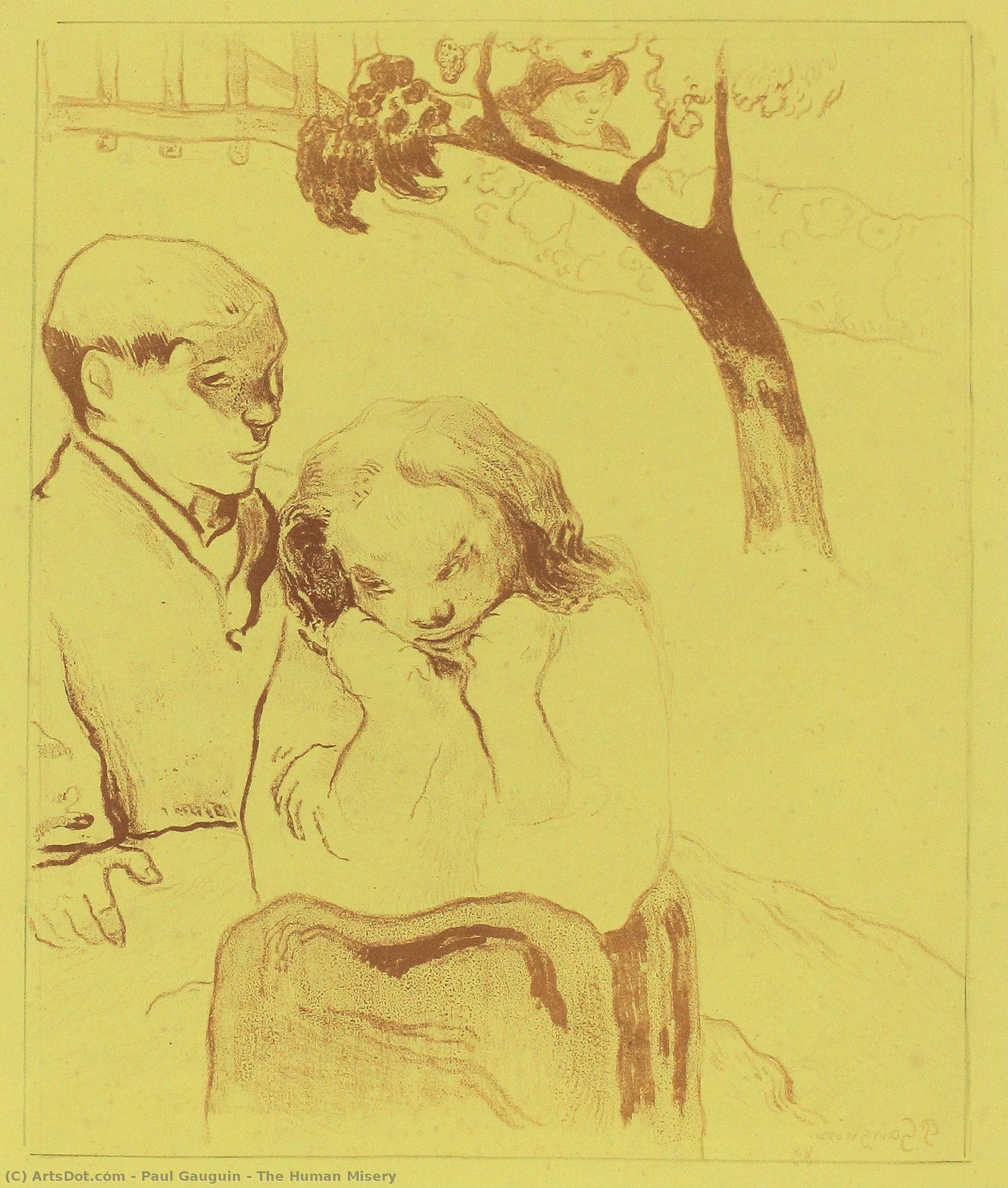
Eugène Henri Paul Gauguin's "Human Misery," painted in 1889, transcends mere depiction; it embodies a profound meditation on compassion and empathy—themes central to Gauguin’s artistic philosophy and deeply rooted in his experiences traversing the landscapes of Tahiti. This watercolor masterpiece exemplifies Cloisonnism, a technique pioneered by Gauguin himself that prioritizes flattened planes of color applied in distinct blocks, creating an illusionistic depth reminiscent of Byzantine mosaics. The artist meticulously renders two figures intertwined, their embrace conveying a palpable tenderness amidst the stark simplicity of the surrounding environment—a lone palm tree silhouetted against a muted sky.
- Style: Cloisonnism – Gauguin’s signature style emphasizes bold color palettes and geometric forms, rejecting Impressionistic blending for a more sculptural effect.
- Technique: Watercolor on Tissue Paper – Gauguin favored this medium for its translucency, allowing him to achieve luminous washes of color that capture the ethereal quality of Tahiti's atmosphere.
The painting’s historical context is inextricably linked to Gauguin’s burgeoning fascination with Polynesian culture and spirituality. Having abandoned Parisian society after a failed marriage and financial struggles, he sought refuge in Tahiti, where he immersed himself in the traditions and beliefs of the indigenous population—a deliberate rejection of Western materialism and intellectualism. This pilgrimage fueled his artistic impulse to portray subjects untouched by urban life, prioritizing emotional resonance over realistic representation. The figures’ posture suggests vulnerability and solace, mirroring Gauguin's own yearning for spiritual connection amidst the hardships of exile.
Symbolism: The intertwined embrace represents unity and compassion—a powerful antidote to the anxieties of the era. The palm tree symbolizes resilience and endurance, reflecting Tahiti’s enduring beauty despite its isolation from Europe. The muted color palette contributes to the painting's melancholic mood, conveying a sense of quiet contemplation and profound emotion.
Emotional Impact: “Human Misery” resonates deeply with viewers due to its ability to evoke empathy and introspection. Gauguin skillfully captures the essence of human connection—a reminder that even in moments of suffering, compassion and tenderness can prevail. It stands as a testament to the artist’s unwavering commitment to portraying authentic emotion and exploring universal themes of humanity.
- Further Research: Explore Henri Le Sidaner's influence on Gauguin's stylistic choices.
- Related Artwork: Discover “Portrait of a Young Woman, Vaite (Jeanne) Goupil” – another poignant depiction of intimacy and vulnerability by Gauguin.
The painting’s enduring appeal lies in its ability to transcend time and culture—a timeless meditation on human compassion that continues to inspire artists and collectors alike. Its quiet beauty serves as a powerful reminder of the importance of empathy and connection in our daily lives.