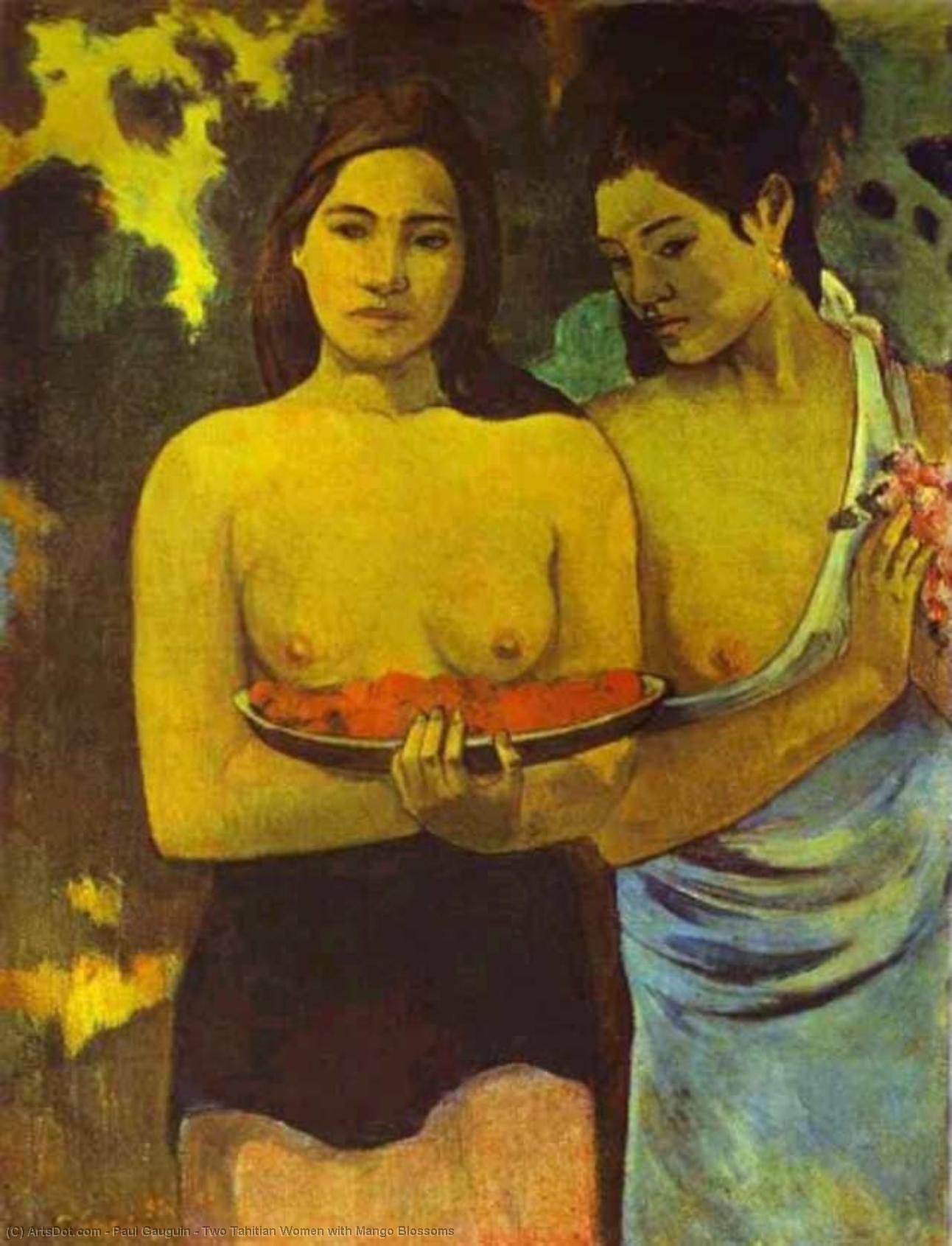
Two Tahitian Women with Mango Blossoms – A Symphony of Color and Symbol
Paul Gauguin’s “Two Tahitian Women with Mango Blossoms,” painted in 1899 during his second expedition to Tahiti, stands as a cornerstone of Post-Impressionism and embodies the artist's unwavering commitment to capturing the essence of Polynesian culture. More than just a depiction of two women amidst tropical flora, it’s an exploration of primal beauty, feminine allure, and Gauguin’s deliberate rejection of academic conventions—a bold declaration that resonated powerfully with his contemporaries.
- Historical Context: Gauguin's journey to Tahiti represented a radical departure from Parisian artistic circles. Influenced by Symbolist ideals and fueled by his fascination with indigenous traditions, he sought to liberate art from the constraints of realism, prioritizing emotional expression over meticulous observation. This quest for authenticity is palpable in every brushstroke of “Two Tahitian Women.”
- Stylistic Innovation: Gauguin’s distinctive style—characterized by flattened perspectives, simplified forms, and vibrant hues—marked a decisive break from Impressionism. He eschewed blending colors on the canvas, opting instead for juxtaposing complementary shades to heighten visual impact. This technique is brilliantly showcased in the luminous yellows of the mango blossoms against the deep blues and greens of the surrounding foliage.
- Technique: Gauguin employed a Cloisonnism style, which involved applying paint in separate blocks or compartments—a method reminiscent of enamel painting—to achieve striking color contrasts and textural richness. The artist meticulously layered pigments to create depth and luminosity, capturing the subtle nuances of light and shadow within the tropical landscape.
- Symbolic Significance: The mango blossoms themselves hold profound symbolic weight. In Polynesian culture, mango trees represent fertility, prosperity, and renewal—themes that Gauguin skillfully conveyed through his artistic vision. Similarly, the nude figures embody idealized femininity, reflecting Gauguin’s belief in the inherent beauty of the human form and its connection to nature.
- Emotional Impact: “Two Tahitian Women” evokes a sense of serenity and contemplation, inviting viewers into a realm untouched by Western civilization's anxieties. Gauguin’s masterful use of color—particularly the vibrant yellows—creates an atmosphere of warmth and optimism, mirroring the artist’s own desire to escape the pressures of Parisian society and reconnect with primal instincts.
This captivating artwork resides within the Metropolitan Museum of Art's permanent collection, a testament to Gauguin’s enduring legacy as one of the most influential artists of the late 19th century. Its reproductions offer an opportunity to immerse oneself in the splendor of Tahiti and experience the transformative power of Gauguin’s artistic genius.
To delve deeper into Gauguin's oeuvre, explore his other masterpieces like “Mimi and Her Cat” and “Night Café,” alongside “Arles,” available on ArtsDot.com/@/Paul-Gauguin. Discover more about Gauguin’s artistic style and techniques at ArtsDot.com/@/Paul-Gauguin.
Furthermore, admire Vincent Van Gogh's “Field with Two Sowers” and “Trees,” showcased on art/list/?Filter=8XZ5K3-Vincent-Van-Gogh-Field-with-Two-Sowers-and-Trees. Explore the Museum of Mohamed Mahmoud Khalil and His Wife on art/list/?Filter=A@D3C6D3-The-Museum-of-Mohame.