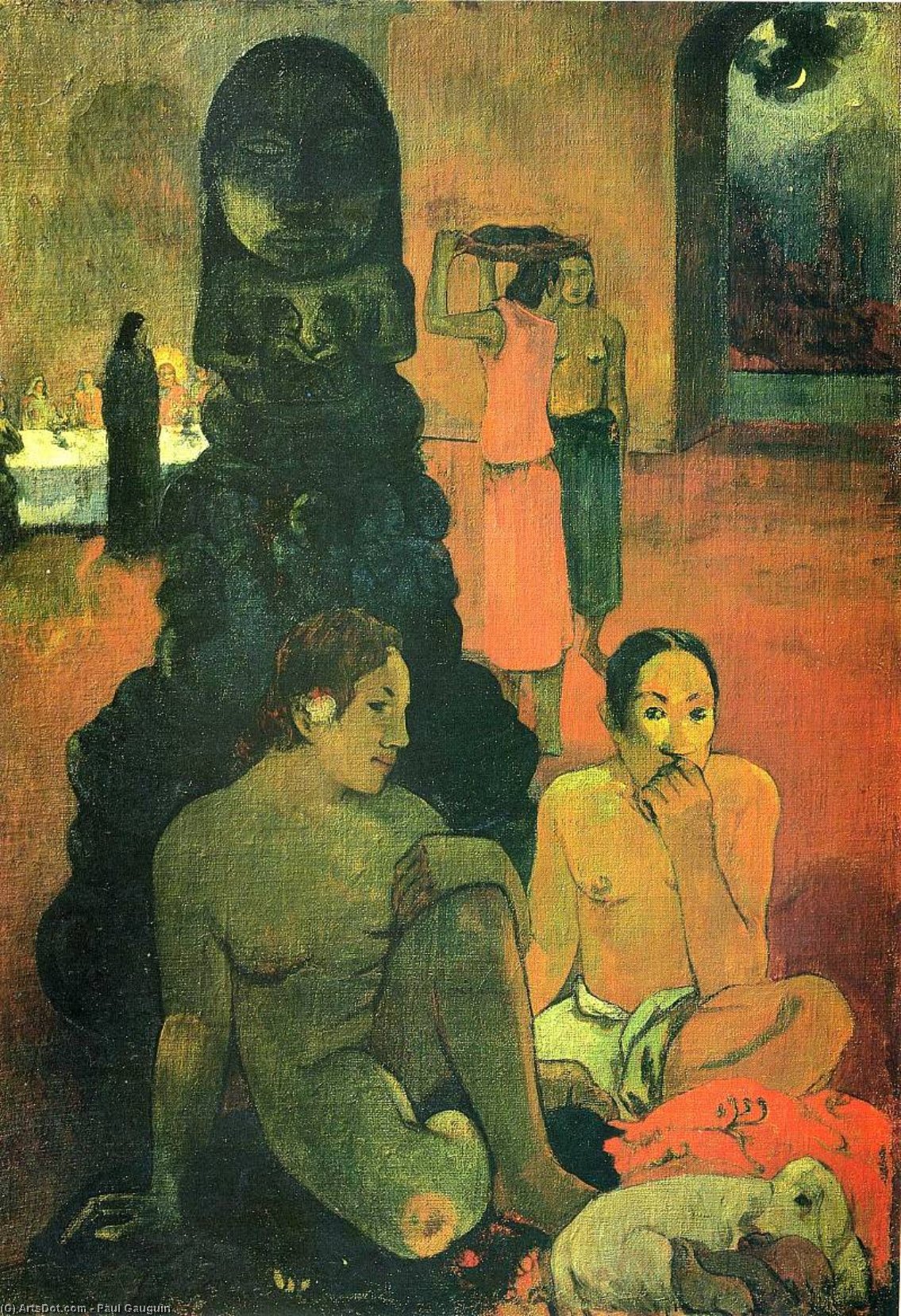
An Exploration of "Untitled (6837)" by Paul Gauguin
- Artist: Paul Gauguin
- Date: Unknown
- Medium: Oil on Canvas
- Size: Unknown
Subject and Composition
“Untitled (6837)” is a striking oil painting by the Post-Impressionist master Paul Gauguin, characterized by its enigmatic subject matter and powerful emotional resonance. The artwork depicts a scene populated by nude male figures within an ambiguous outdoor setting—possibly a courtyard or plaza—dominated by a monumental statue. A larger group of people fills the background, rendered with loose brushstrokes and indistinct details, contributing to a sense of mystery and dreamlike quality. Gauguin’s deliberate flattening of perspective creates a shallow space where the figures appear to exist on a single plane, intensifying their emotional impact.
Style and Technique
Gauguin's style in "Untitled (6837)" exemplifies his departure from traditional realism and embrace of Symbolism and Expressionism. The painting showcases expressive brushwork—thick impasto application is evident particularly in the darker areas—and a vibrant, somewhat discordant color palette that amplifies the scene’s dramatic tension. Lines are loose and gestural, contributing to the dynamic quality of the composition. Shapes are largely organic and amorphous, reflecting Gauguin's interest in conveying emotion over precise representation. The visible brushstrokes and layering of colors create a rich, textured surface characteristic of his later works.
Historical Context and Symbolism
Created during Gauguin’s exploration of non-Western cultures and spiritual themes, "Untitled (6837)" reflects the artist's desire to move beyond European artistic conventions. The imposing statue in the center of the composition serves as a focal point, potentially symbolizing power, authority, or even mortality. The contemplative expressions of the figures suggest introspection and perhaps alienation within this ambiguous environment. Gauguin’s use of symbolism invites viewers to interpret the artwork on multiple levels, exploring themes of human interaction, spirituality, and the search for meaning beyond the material world. His time in Tahiti heavily influenced his artistic choices during this period.
Emotional Impact
“Untitled (6837)” evokes a powerful sense of unease and psychological complexity. The dramatic lighting, distorted perspective, and intense colors contribute to an atmosphere of heightened emotion. Gauguin’s masterful use of color and form creates a visually arresting experience that resonates with viewers long after they have looked away. The painting's ambiguity—the lack of a clear narrative or definitive meaning—allows for individual interpretation, making it a compelling work of art that continues to captivate audiences today.