A Glimpse into Nature’s Sanctuary: Decoding Paul Gauguin's *Willows* (1885)
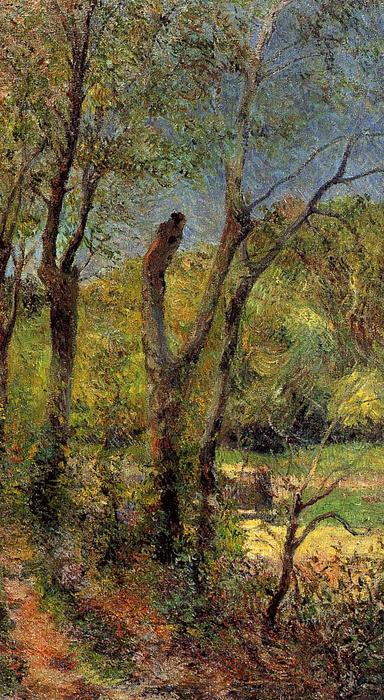
Paul Gauguin’s *Willows*, painted in 1885, is more than just a forest scene; it’s an evocative exploration of tranquility and the burgeoning artistic shift away from strict Impressionism. This captivating work invites viewers into a verdant world where light filters through foliage, creating a sense of peaceful immersion. The painting exemplifies Gauguin's early experiments with color and form that would define his unique contribution to Post-Impressionism.
Subject & Composition: A Moment Suspended in Time
The artwork depicts a dense woodland setting dominated by willow trees, their branches cascading towards the ground. A winding path draws the eye deeper into the composition, suggesting a journey or an invitation to explore. Subtle figures – birds flitting amongst the branches and a solitary person standing near a tree – animate the scene without disrupting its overall serenity. The arrangement isn’t about precise representation; rather, it's about capturing *a feeling* of being within nature’s embrace. Gauguin masterfully uses verticality to emphasize the height and grandeur of the trees, while the path provides a grounding horizontal element.
Style & Technique: Embracing Synthetism
*Willows* showcases Gauguin's move towards what would become known as Synthetism – a style characterized by simplified forms, bold colors, and an emphasis on subjective experience over objective reality. Unlike the broken brushstrokes of Impressionism, Gauguin employs broader, more deliberate strokes that build up texture and form. The color palette is rich in greens, browns, and subtle highlights of yellow and orange, creating a harmonious yet vibrant atmosphere. He doesn’t blend colors seamlessly; instead, he allows them to exist side-by-side, enhancing the painting's visual energy. This technique anticipates his later work in Brittany and Tahiti, where color would become even more expressive and symbolic.
Historical Context: The Dawn of Post-Impressionism
Painted during a pivotal period in art history, *Willows* reflects the growing dissatisfaction with Impressionism’s focus on fleeting moments and optical effects. Artists like Gauguin sought to imbue their work with deeper meaning and emotional resonance. Post-Impressionism (roughly 1886-1905) wasn't a unified movement but rather an umbrella term encompassing various styles – including Symbolism, Neo-Impressionism, and Cloisonnism – all reacting against the limitations of Impressionism. Gauguin’s exploration of subjective experience and simplified forms paved the way for many 20th-century art movements.
Symbolism & Emotional Impact: A Refuge from Modernity
The willow tree itself carries symbolic weight, often associated with mourning, remembrance, and flexibility. In *Willows*, however, it evokes a sense of peaceful contemplation and resilience. The solitary figure within the landscape suggests a desire for solitude and connection with nature – a yearning that resonated with many artists and intellectuals during this era. The painting’s overall effect is one of quietude and escape. It offers a refuge from the rapidly changing modern world, inviting viewers to find solace in the beauty and tranquility of the natural realm.
Gauguin's Legacy & Collecting Today
Paul Gauguin (1848-1903) remains one of the most influential figures in Post-Impressionism, inspiring generations of artists with his bold vision and innovative techniques. His work continues to captivate audiences worldwide, and high-quality reproductions like those available allow art enthusiasts to experience the beauty of *Willows* within their own homes.
- Gauguin’s experimentation with color and form profoundly influenced movements such as Fauvism and Expressionism.
- His rejection of academic conventions paved the way for greater artistic freedom and self-expression.
- Owning a reproduction of *Willows* is not merely acquiring an image, but inviting a piece of art history – and a moment of serene contemplation – into your space.
This painting serves as a powerful reminder of the enduring allure of nature and the transformative power of artistic vision.