A Moment of Divine Encounter
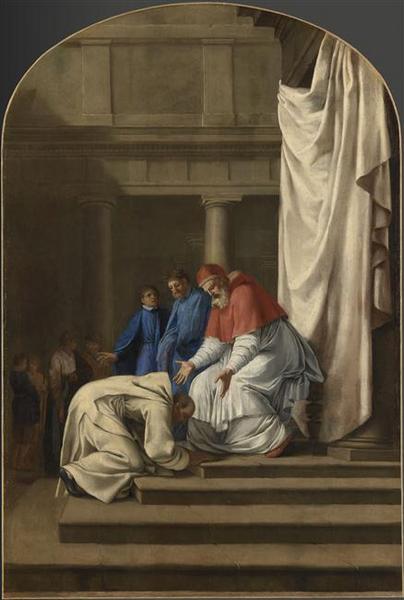
In the grand, sweeping theater of the seventeenth century, few moments capture the intersection of earthly authority and spiritual devotion as poignantly as Eustache Le Sueur’s "Arrivée de Saint Bruno à Rome." This masterpiece serves as a window into a world where the sacred and the monumental collide. The scene unfolds within a breathtaking architectural expanse, where the soaring columns and classical arches of a Roman interior frame a profound spiritual encounter. At the heart of this composition, we witness the arrival of Saint Bruno, a moment thick with the weight of destiny and religious fervor. The painting does not merely depict an event; it invites the viewer to stand upon the very steps where history and holiness meet, feeling the palpable tension between the physical grandeur of Rome and the humble, inward journey of the saint.
The emotional resonance of the work is driven by a masterful use of chiaroscuro, a technique that breathes life into the shadows. Le Sueur employs dramatic lighting to guide our eyes through the complex narrative, casting a brilliant glow upon the cardinal’s vibrant red robes and the faces of those caught in this moment of spiritual scrutiny. This interplay of light and dark creates a sense of deep, atmospheric mystery, suggesting that while the physical architecture is visible, much of the true spiritual struggle remains hidden in the velvety shadows. The contrast between the bright, illuminated figures and the muted, somber tones of the background architecture evokes a feeling of solemnity and reverence, making the painting an ideal centerpiece for those seeking to bring a sense of contemplative depth into a sophisticated living space.
The Mastery of French Baroque Technique
As a founding member of the prestigious French Academy, Eustache Le Sueur brought a refined, almost neoclassical precision to the exuberant Baroque style. In "Arrivée de Saint Bruno à Rome," this technical mastery is evident in every brushstroke. The artist demonstrates an extraordinary ability to render textures that demand tactile recognition—from the heavy, voluminous folds of the cardinal’s silken drapery to the cold, unyielding stone of the Roman steps. His palette, a sophisticated arrangement of creams, deep blues, and earthy browns punctuated by sudden bursts of liturgical red, creates a balanced yet dynamic visual rhythm. The composition is meticulously structured; the verticality of the architecture draws the gaze upward, mirroring the spiritual aspirations of the subjects, while the semi-circular arrangement of the onlookers creates a sense of communal witness.
For the discerning collector or interior designer, this painting offers more than just historical significance; it offers a profound aesthetic versatility. The work’s ability to command attention through its structural elegance and rich color palette makes it a timeless choice for high-end decor. Whether placed in a formal library, a grand hallway, or a curated gallery wall, a hand-painted reproduction of this caliber serves as an anchor of sophistication. It brings with it the prestige of the French Baroque era, offering a sense of permanence and cultural richness that transcends modern trends. To possess such a piece is to hold a fragment of the seventeenth century’s soul, captured through the meticulous lens of one of France's most gifted masters.