A Divine Encounter in Ephesus
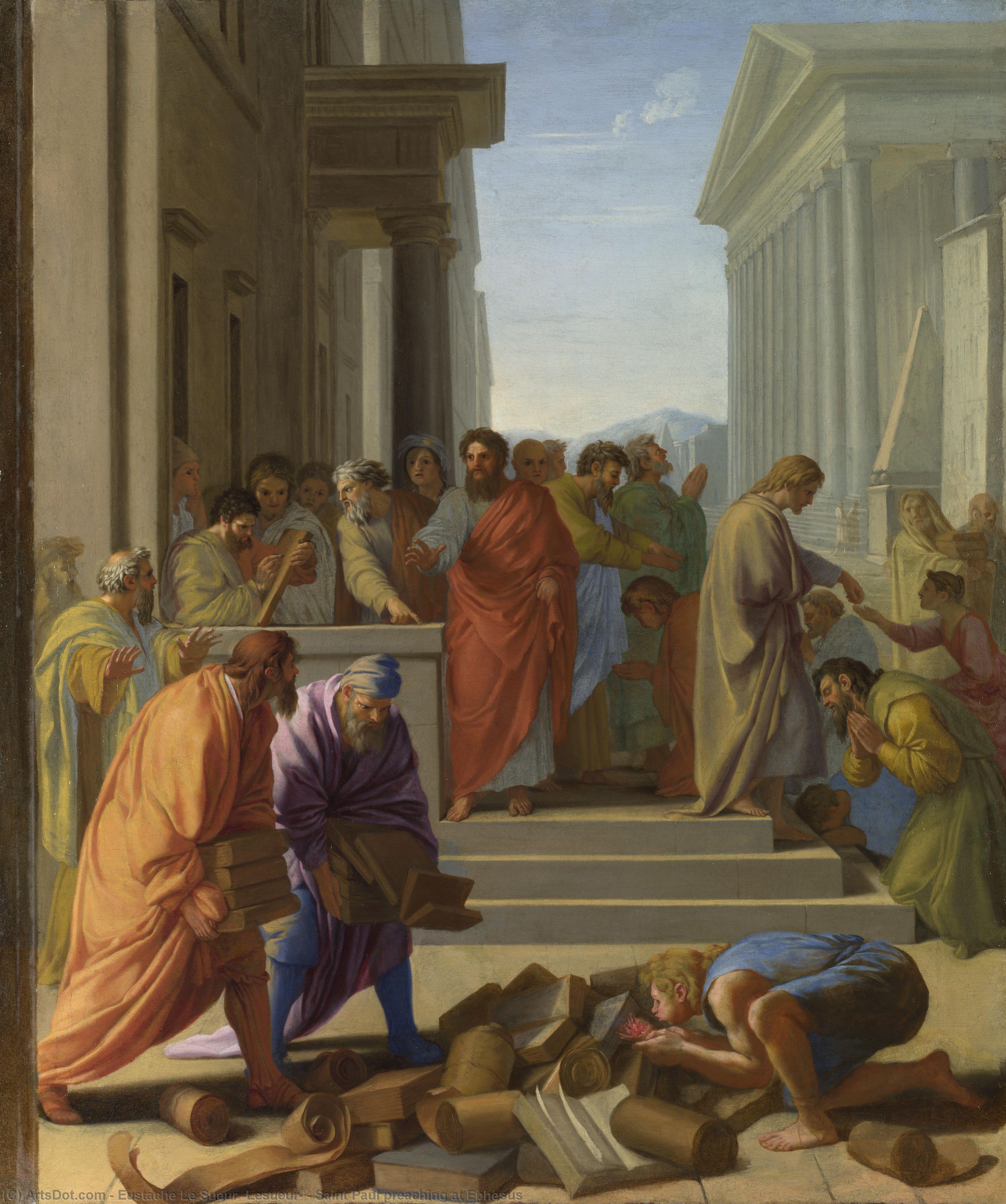
In the quiet, luminous depths of Eustache Le Sueur’s Saint Paul preaching at Ephesus, we are invited into a moment of profound spiritual transformation. Painted in 1649, this masterpiece captures the very essence of the early Christian mission, where the spoken word becomes a vessel for divine truth. The scene is not merely a historical reconstruction but an emotional landscape; Le Sueur masterfully orchestrates a gathering of souls, ranging from the contemplative figures in the foreground to the attentive crowds draped in classical togas. As Saint Paul stands as the focal point of this sacred assembly, his presence commands a stillness that transcends the canvas, drawing the viewer into the hushed reverence of an ancient pulpit.
The composition is a triumph of 17th-century French Baroque sensibility, blended with a burgeoning neoclassical restraint. Unlike the more turbulent and dramatic compositions of his contemporaries, Le Sueur employs a balanced, almost architectural arrangement of figures that guides the eye through the narrative arc of the sermon. The light does not merely illuminate the scene; it sanctifies it, casting a soft, ethereal glow upon the faces of the listeners, highlighting their expressions of wonder, skepticism, and devotion. This delicate use of chiaroscuro creates a sense of depth and volume, making the textures of the heavy fabrics and the architectural elements feel tangibly present within the viewer's space.
The Artistry of Devotion and Light
Technically, the work showcases Le Sueur’s unparalleled mastery of draftsmanship and color harmony. His palette is sophisticated, utilizing muted tones that evoke a sense of timelessness and dignity. The interplay between the warm skin tones of the apostles and the cooler, atmospheric shadows of the background creates a rhythmic visual flow that keeps the spectator engaged in the unfolding drama. For the discerning collector or interior designer, this painting offers more than just aesthetic beauty; it provides a window into the soul of the French Academy. The meticulous attention to the folds of the garments and the subtle gestures of the hands speaks to a level of craftsmanship that defines the era's highest artistic achievements.
Beyond its formal qualities, the painting serves as a powerful symbol of communication and enlightenment. The gathering at Ephesus represents the intersection of the classical world and the burgeoning Christian faith, a moment where ancient tradition meets new revelation. To possess a high-quality reproduction of this work is to bring a sense of intellectual depth and historical gravity into a contemporary setting. Whether placed in a grand library or a sophisticated living space, Saint Paul preaching at Ephesus acts as a centerpiece of contemplation, inspiring awe through its serene power and reminding us of the enduring impact of a single, transformative voice.