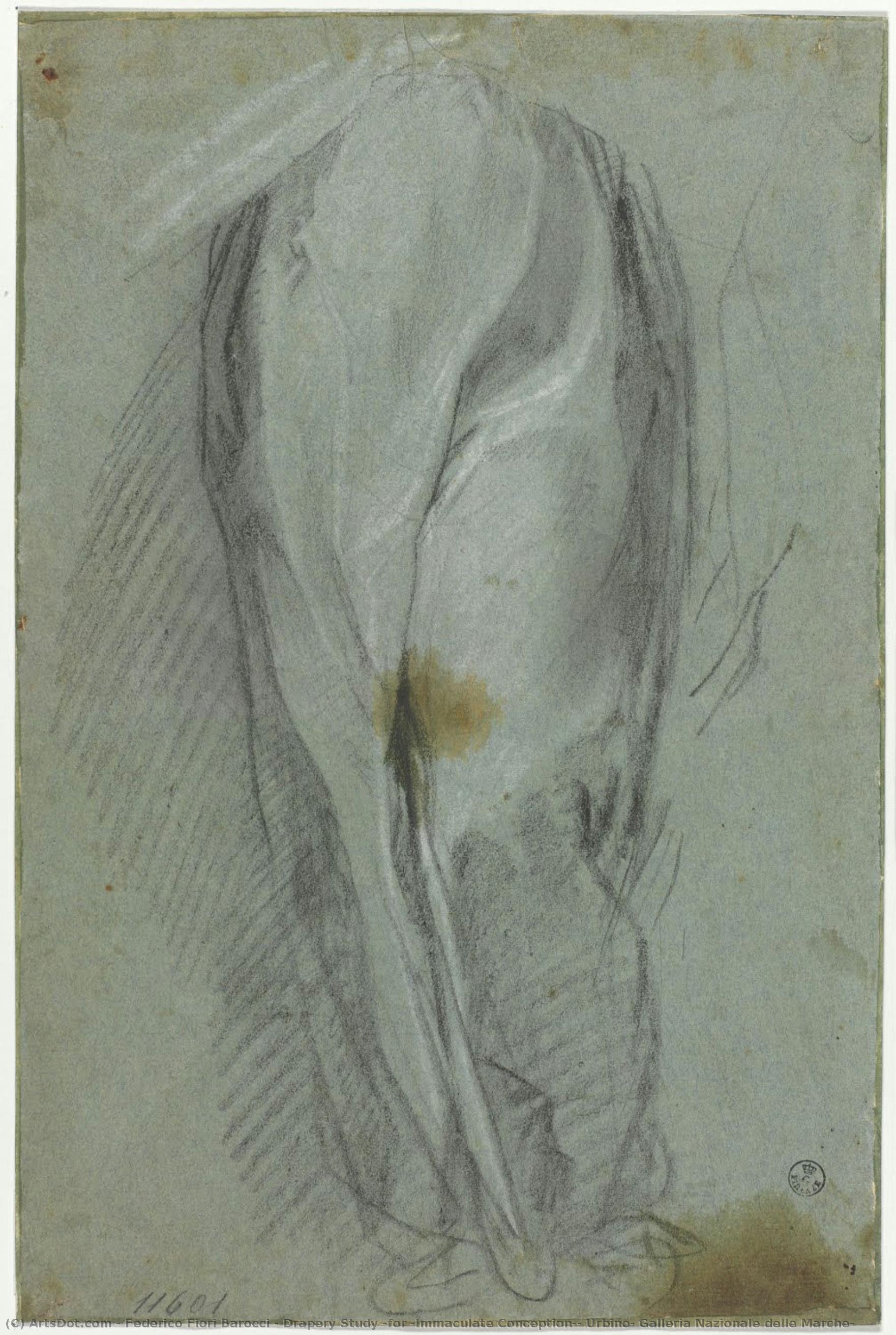
Admire Federico Barocci’s ‘Drapery Study,’ a captivating preparatory drawing for the Immaculate Conception. Explore Renaissance elegance & Baroque emotion. Hand-painted reproductions available.
Federico Barocci (1535-1612): Bridging Renaissance & Baroque! Explore his emotive religious scenes, tender Madonnas & pioneering pastel studies. Influenced Rubens.
Step into the Renaissance heart of Florence at the Uffizi Gallery! Explore masterpieces by Botticelli, Leonardo da Vinci & Michelangelo – an unforgettable art experience.
Federico Barocci’s Drapery Study (for “Immaculate Conception”, Urbino) – A Prelude to Baroque Grandeur
The drawing of a naked woman's backside with her arm bent behind her, executed by Federico Fiori Barocci in 1583-6, stands as a remarkable testament to the burgeoning Baroque aesthetic and represents more than just a preparatory sketch; it’s a microcosm of the artistic fervor gripping Italy during its formative years. Located at Galleria Nazionale delle Marche in Urbino, this unassuming piece offers an unparalleled glimpse into Barocci's creative process and foreshadows the dramatic dynamism that would characterize his monumental altarpieces – notably “The Visitation” and “Presentation of the Virgin.”
Early Life & Artistic Foundations
Born in Urbino in 1535, Federico Fiori Barocci’s artistic journey began under the tutelage of his father, Ambrogio Barocci, a sculptor whose influence instilled in young Federico a profound appreciation for sculptural form and expressive gesture. Subsequently apprenticed with Battista Franco Veneziano, Barocci honed his skills in Urbino, absorbing the stylistic nuances of Mannerism – a movement characterized by elongated figures, stylized drapery, and an emphasis on illusionistic perspective. This formative period established the bedrock upon which Barocci would build his distinctive artistic vision.
The Studio of Zuccari & The Seeds of Baroque Style
Barocci’s career ascended rapidly as he joined the prestigious studio of Taddeo and Federico Zuccari in Rome, immersing himself in an environment brimming with artistic innovation. Exposure to Rubens' masterful compositions profoundly impacted Barocci’s approach, fostering a fascination for theatrical grandeur and emotional intensity – qualities that would soon become hallmarks of the Baroque style. The Zuccari studio served as incubator for stylistic experimentation, pushing boundaries and challenging conventions.
A Study in Texture & Light
The drapery study itself exemplifies Barocci's meticulous attention to detail and his pioneering use of pastel technique. Executed with delicate chalks on paper, the drawing captures the subtle nuances of light and shadow, skillfully conveying a sense of palpable physicality. Unlike the polished surfaces of oil paintings prevalent at the time, pastel offered an ethereal quality—a softness that contrasted sharply with the monumental scale of Baroque art. The artist’s masterful rendering of fabric folds demonstrates his understanding of anatomy and drapery as expressive elements.
Symbolism & Spiritual Resonance
Beyond its technical brilliance, the drapery study embodies deeper symbolic significance. It represents not merely clothing but also vulnerability and grace—themes central to Barocci's artistic explorations of faith and human emotion. The pose itself conveys a quiet dignity, reflecting the contemplative spirit of Renaissance spirituality. As a preparatory drawing for “Immaculate Conception,” it underscores Barocci’s commitment to portraying sacred subjects with profound psychological depth – anticipating the Baroque tradition’s focus on conveying spiritual experience through visual drama.
A Legacy of Artistic Innovation
Federico Barocci's drapery study stands as an enduring symbol of artistic ingenuity and a pivotal precursor to the Baroque revolution. Its understated elegance belies its monumental influence, securing his place among the greatest artists of his era and cementing Urbino’s Galleria Nazionale delle Marche as a repository of Renaissance brilliance.