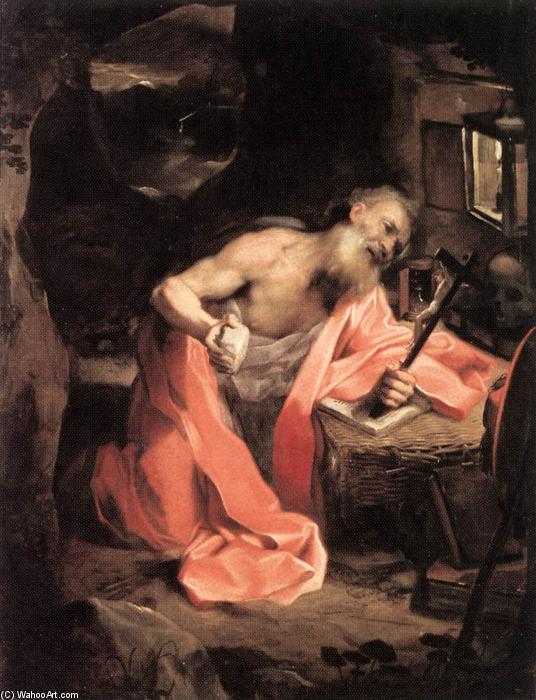
Explore Federico Barocci's masterpiece 'St Jerome,' a Baroque painting showcasing St. Jerome's contemplative pose and masterful use of light & shadow within the Borghese Gallery. Discover its history, analysis & influence.
Federico Barocci (1535-1612): Bridging Renaissance & Baroque! Explore his emotive religious scenes, tender Madonnas & pioneering pastel studies. Influenced Rubens.
Explore the Galleria Borghese in Rome! Discover masterpieces by Bernini, Raphael & Caravaggio within Villa Borghese's stunning Baroque setting. Book your timed tickets now!
St Jerome by Federico Barocci - A Symphony of Light and Contemplation
Federico Barocci (1535-1612) stands as a pivotal figure bridging the Renaissance’s harmonious ideals with the Baroque’s dramatic exploration of emotion. His masterpiece, “St Jerome,” housed in the Borghese Gallery in Rome, exemplifies this transformative shift—a testament to his meticulous observation and masterful execution that continues to captivate audiences today. More than just a depiction of Saint Jerome wrestling with his demons, it's an immersive experience rendered in pastel hues and imbued with profound spiritual resonance.
The Painter’s Vision: Baroque Innovation
Barocci’s artistic trajectory was profoundly influenced by the burgeoning Baroque movement spearheaded by Rubens, marking a decisive departure from Mannerism’s stylized forms. He honed his craft within Taddeo and Federico Zuccari's studio in Rome, absorbing stylistic cues from titans like Michelangelo and Raphael—yet he transcended mere imitation, forging an independent path characterized by innovative techniques and a commitment to capturing the essence of human experience. Unlike his predecessors who prioritized idealized beauty, Barocci sought to evoke genuine feeling through masterful manipulation of light and shadow – a cornerstone of Baroque aesthetics.
A Detailed Examination: Composition and Technique
The painting’s composition is remarkably balanced, mirroring the Renaissance preoccupation with geometric harmony while simultaneously embracing Baroque dynamism. Observe how Barocci utilizes chiaroscuro—the interplay between light and dark—to sculpt St Jerome's figure against the backdrop of a darkened cave. The subtle illumination emanating from a lantern on the right casts dramatic shadows, emphasizing the saint’s solemn posture and conveying a palpable sense of introspection. Detailed preparatory sketches reveal Barocci’s methodical approach – akin to Leonardo Da Vinci – prioritizing observation as the basis for creating models imbued with spontaneity and natural grace despite complex elaboration. The artist meticulously rendered textures—from the rough stone of Jerome's chest to the folds of his robe—demonstrating a dedication to realism that anticipates Baroque’s expressive power.
Symbolism and Spiritual Depth
Beyond its technical brilliance, “St Jerome” resonates with layers of symbolic meaning rooted in Christian iconography. The skull serves as a poignant reminder of mortality – confronting viewers with the inescapable reality of human existence alongside divine grace. The cross symbolizes faith and redemption—a central motif reflecting St Jerome’s unwavering devotion to God. Furthermore, Barocci's masterful use of pastel hues contributes to the painting's ethereal quality, fostering an atmosphere of contemplative serenity. This deliberate choice aligns perfectly with the Baroque tradition of elevating emotion and conveying spiritual truths through visual artistry.
Legacy and Influence
Federico Barocci’s legacy extends far beyond his own lifetime, establishing him as a progenitor of Baroque painting—a visionary artist who skillfully blended Renaissance principles with Baroque dynamism. His work continues to inspire artists and collectors alike, securing its place among the most celebrated masterpieces of the seventeenth century. The Borghese Gallery proudly showcases this enduring testament to artistic genius, inviting visitors to immerse themselves in the profound beauty and contemplative spirit captured within “St Jerome.”