Federico Fiori Barocci: Bridging Renaissance & Baroque!
Federico Baroccio (1535-1612) stands as an extraordinary figure in Italian art history—a pivotal conduit between the serene elegance of Mannerism and the exuberant dynamism of the Baroque era. Born in Urbino, Italy, he inherited a legacy of artistic excellence from his father, Ambrogio Barocci, a sculptor renowned for his monumental works celebrating papal grandeur. This formative influence propelled him into apprenticeship with Battista Franco, honing his skills amidst the burgeoning artistic fervor of Urbino’s studio. However, it was his subsequent association with Taddeo and Federico Zuccari in Rome that truly cemented his position at the forefront of artistic innovation—immersing him in a crucible of stylistic experimentation and fostering connections with luminaries like Rubens.
- Early Style: Mannerist Precision Barocci’s initial output showcased the hallmarks of Mannerism – meticulous detail, stylized poses, and an emphasis on intellectual contemplation. His “St. Margaret” exemplifies this aesthetic, capturing a profound spiritual serenity through exquisitely rendered drapery and facial expressions.
- Roman Influence & Baroque Vision Moving to Rome, Barocci absorbed the revolutionary spirit of Rubens, embracing bold color palettes, dramatic lighting effects, and dynamic compositions that foreshadowed the Baroque’s theatrical grandeur.
- Notable Commissions: Pesaro Altarpiece Perhaps his most celebrated achievement was the monumental “Pesaro Altarpiece,” commissioned for the Church of the Brotherhood of the Name of Jesus—a testament to Barocci's mastery of technique and his ability to convey complex emotions through visual storytelling.
Composition Study (for “Circumcision”, Paris, musée du Louvre)
Baroccio’s meticulous approach extended beyond monumental sculptures; he undertook detailed compositional studies—particularly for the “Circumcision,” now housed in the Musée du Louvre—demonstrating an unwavering commitment to capturing nuanced psychological states. These preparatory sketches reveal his fascination with capturing fleeting expressions and conveying profound spiritual depth—a characteristic that would define much of his subsequent oeuvre. The study showcases a masterful use of perspective and shading, anticipating the Baroque’s penchant for illusionistic realism.
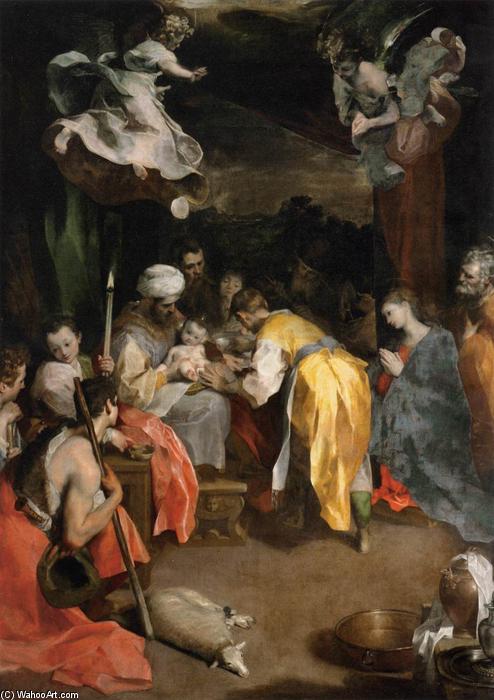
The Circumcision Of Christ, 1590 Painting by Federico Fiori Barocci Or Baroccio
“The Circumcision Of Christ,” painted around 1590, exemplifies Barocci's signature style—a harmonious blend of Mannerist refinement and Baroque dynamism. The artwork portrays the sacred rite of circumcision performed upon Jesus Christ, featuring Mary holding the infant Jesus while Joseph assists her. The scene is populated by angels and other figures adorned in opulent attire, conveying a sense of divine majesty and solemn reverence. Barocci’s masterful brushwork captures the tenderness of maternal devotion alongside the grandeur of religious symbolism—creating an unforgettable visual experience that resonates with profound spiritual emotion.
Further Research
For deeper exploration into Federico Barocci's artistic journey, consider visiting these resources:
Additional Information
The Circumcision of Christ was executed following a series of preliminary drawings for the church of the Brotherhood of the Name of Jesus at Pesaro. This altarpiece showcases Barocci’s dedication to capturing spiritual emotion and conveying complex theological ideas—a hallmark of his artistic legacy.