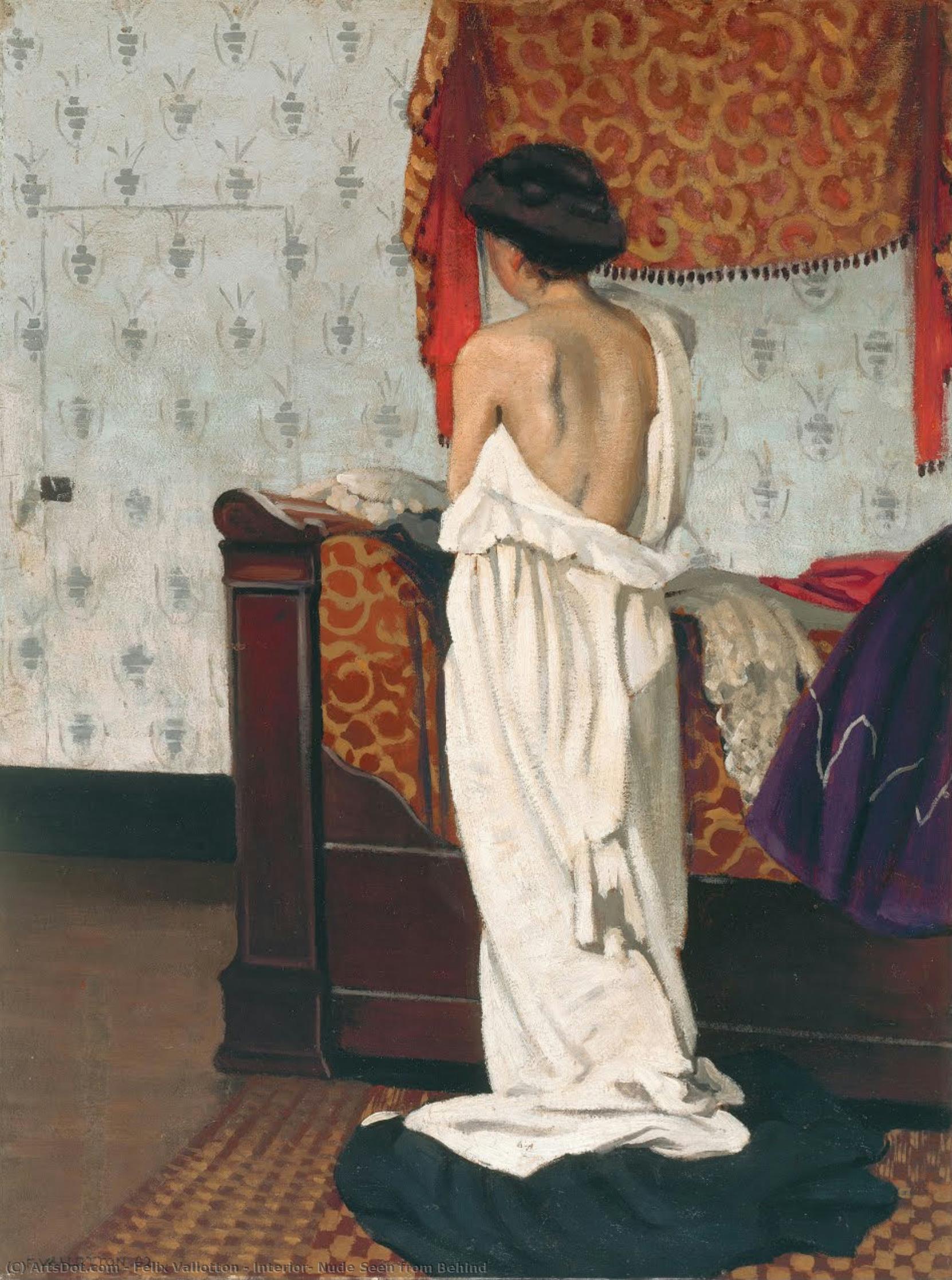
Experience Félix Vallotton’s ‘Interior, Nude Seen From Behind,’ a captivating Symbolist painting of 1902 featuring a vulnerable nude figure and muted tones. Explore the artist's masterful study in quiet tension – perfect for art lovers seeking a timeless piece.
Discover Félix Vallotton (1865-1925), a Swiss/French painter & printmaker renowned for his Post-Impressionist style, striking woodcuts, and the 'Intimacies' series exploring complex relationships. Influenced artists like Munch & Kirchner.
Explore Kunsthalle Bremen: Discover European masterpieces from Dürer to Monet! Immerse yourself in art history and modern media installations at Germany's oldest society-owned museum.
Felix Vallotton’s Interior, Nude Seen From Behind: A Study in Quiet Tension
Félix Vallotton's “Interior, Nude Seen From Behind,” painted in 1902, stands as a cornerstone of Symbolist art and exemplifies Vallotton’s masterful exploration of psychological nuance within the domestic sphere. More than just a depiction of a woman dressing—a motif recurrent throughout Vallotton’s oeuvre—the painting embodies a profound stillness punctuated by subtle gestures that speak volumes about unspoken desires and hidden anxieties. Examining its composition, stylistic choices, and historical significance reveals layers of artistic intention that continue to resonate with viewers today.
Composition and Technique: Embracing Minimalism
Vallotton eschewed the flamboyant ornamentation characteristic of Impressionism, opting instead for a strikingly reductive approach. The canvas is dominated by muted earthy tones—warm browns and ochres—creating an atmosphere of subdued warmth despite the inherent vulnerability conveyed by the nude figure. Precise geometric forms define the room’s architecture: a starkly delineated wall serves as backdrop to the woman's posture, emphasizing her isolation within the space. Vallotton’s technique is characterized by broad brushstrokes that build up texture and depth without resorting to excessive detail. This deliberate simplification underscores the artist’s focus on conveying emotion rather than merely representing reality—a hallmark of Symbolist aesthetics. The use of chiaroscuro – dramatic contrasts between light and shadow – subtly sculpts the woman's form, highlighting her contours and intensifying the sense of intimacy.
Symbolism and Narrative Depth
The painting’s symbolism transcends its surface appearance. The concealed door—barely visible in the gloom—represents a gateway to an inner world, hinting at clandestine affairs and unresolved emotions. Vallotton deliberately avoids providing explicit narrative cues; instead, he invites contemplation about the woman's psychological state. Her gaze directed towards the door suggests preoccupation and perhaps longing for connection—a yearning that is simultaneously palpable and elusive. The scattered clothing – a deliberate absence of grandeur – symbolizes vulnerability and exposes the woman’s nakedness not just physically but emotionally. Vallotton skillfully utilizes visual metaphors to communicate complex ideas about desire, secrecy, and the anxieties inherent in human relationships.
Historical Context: Vallotton's Engagement with Symbolism
Vallotton emerged during a period of artistic experimentation marked by a rejection of academic conventions and an embrace of subjective experience. Influenced by artists like Edvard Munch and Aubrey Beardsley, he aligned himself with Les Nabis—a group committed to exploring the expressive potential of color and form without resorting to illusionistic representation. This stylistic choice reflects broader cultural anxieties surrounding sexuality and domestic life in the fin de siècle – a time characterized by social upheaval and intellectual questioning. Vallotton’s exploration of psychological themes anticipates developments in Expressionism, demonstrating his pioneering role in shaping modern art's trajectory.
Emotional Impact: A Portrait of Quiet Contemplation
“Interior, Nude Seen From Behind” transcends mere visual depiction; it evokes a powerful emotional response. The painting captures a moment of profound stillness—a pause before action—that invites viewers to consider the unspoken complexities of human emotion. Vallotton’s masterful use of light and shadow creates an atmosphere of melancholy and introspection, prompting reflection on themes of vulnerability, desire, and hidden longing. It remains a compelling testament to Vallotton's ability to distill profound psychological insight into a deceptively simple visual form—a masterpiece of understated elegance and enduring artistic significance.