The Enigmatic Gaze of Woman with a Black Hat
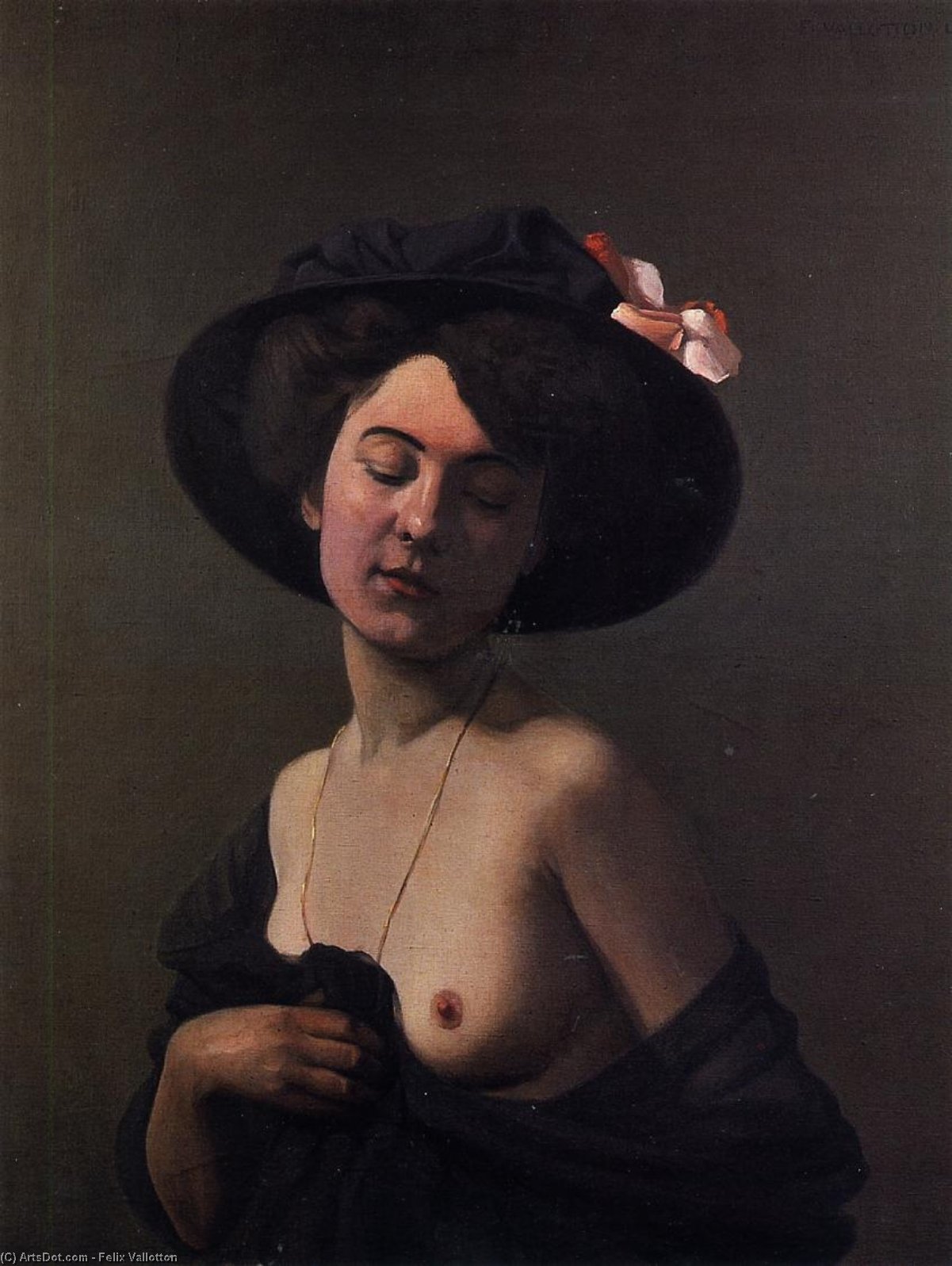
To stand before "Woman with a Black Hat" is to step into a moment suspended in time—a quiet tableau imbued with the sophisticated melancholy characteristic of the turn of the 20th century. Félix Vallotton captures not merely a portrait, but an atmosphere; one of studied elegance and profound introspection. The subject, adorned in a striking black hat accented by a delicate pink bow, directs her gaze downward toward her own chest. This averted vision is perhaps the most compelling element of the piece, inviting the viewer to lean closer, to decipher the secrets held just beneath the surface of her composure. It speaks volumes without uttering a single word.
Mastery in Realism and Technique
Vallotton’s command over oil on canvas is evident in every meticulously rendered fold of fabric and subtle gradation of shadow. His adherence to Realism allows for an almost photographic clarity, yet his touch elevates the depiction far beyond mere documentation. Observe how the light plays across her skin and the texture of her attire; it is a masterful interplay that gives the composition a palpable depth. The technique employed highlights the richness of the materials—the sheen on the hat, the softness suggested by the dress—all rendered with an almost jewel-like precision. For those who appreciate the technical brilliance of early modern painting, this work serves as a profound lesson in how light itself can become a primary subject.
A Whisper from the Fin de Siècle
Painted in 1908, "Woman with a Black Hat" anchors us firmly within the *fin de siècle*, an era brimming with artistic ferment and shifting social mores. Vallotton, navigating between his Swiss origins and the vibrant currents of Parisian modernism, captured the complex spirit of this time. The painting feels both deeply rooted in tradition—the formality of the attire—and startlingly contemporary in its psychological depth. It embodies that delicate tension between outward societal expectation and inner emotional life, a hallmark of turn-of-the-century portraiture.
Symbolism and Emotional Resonance
The symbolism within this quiet scene is rich for contemplation. The black hat itself can suggest mystery or formality, while the downward gaze often symbolizes modesty, introspection, or perhaps even a veiled sorrow. The contrast between the stark black of the headwear and the soft blush of the bow introduces a subtle note of vulnerability against an otherwise controlled exterior. Owning a reproduction of this piece is not simply acquiring art; it is curating a mood—a sophisticated contemplation that adds layers of narrative intrigue to any interior space, making it a perfect focal point for collectors and designers alike.