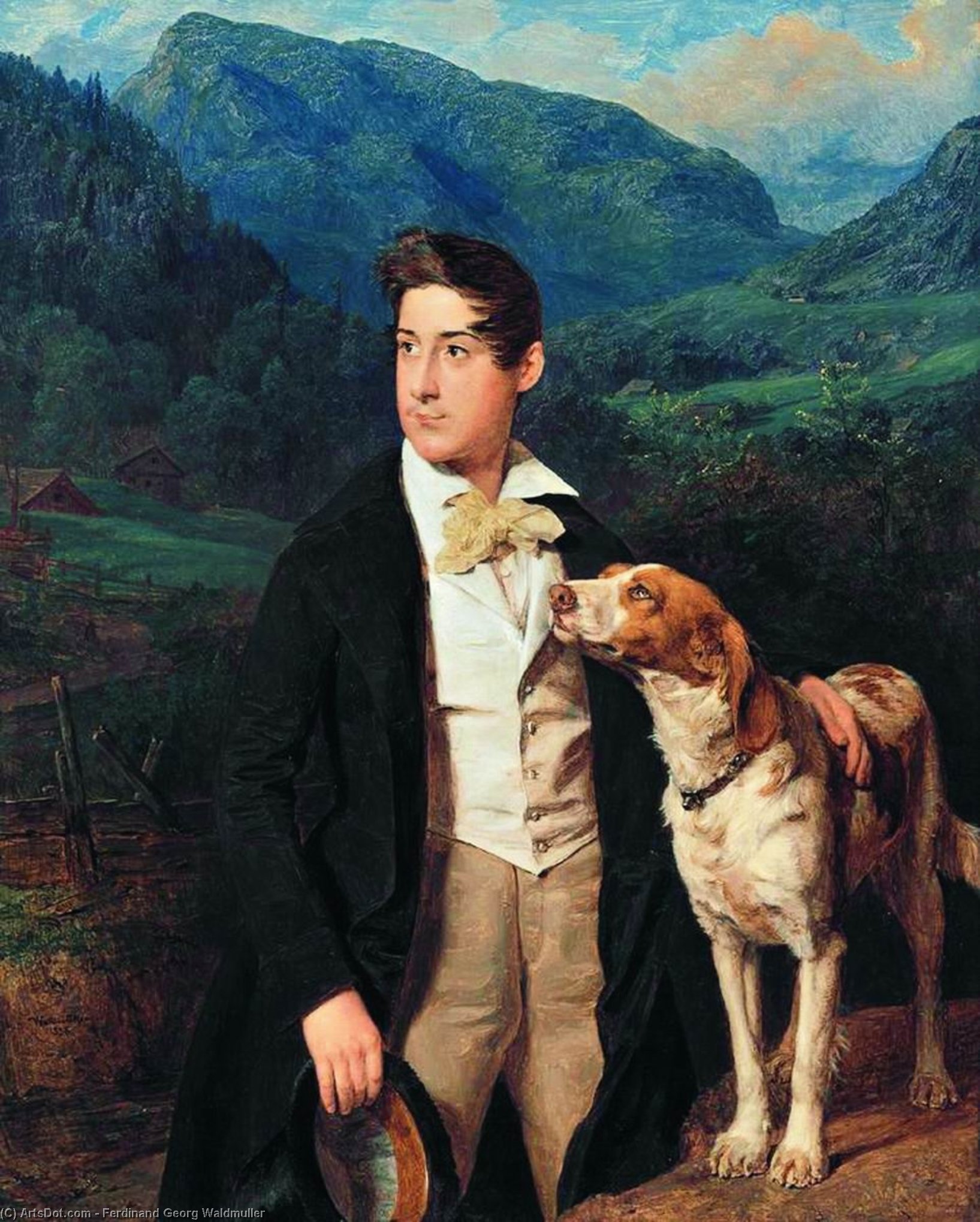
A Portrait Amidst Pastoral Tranquility: Ferdinand Waldmüller's Son Ferdinand with Dog
Ferdinand Georg Waldmüller’s “Son Ferdinand with Dog,” painted in 1836, stands as a testament to the Romantic era’s fascination with nature and its exploration of familial bonds. More than just a depiction of a father and son outdoors, this artwork embodies a profound meditation on human connection within the grandeur of the Austrian countryside.
Subject Matter & Composition: The painting portrays Ferdinand Georg Waldmüller's son, Ferdinand Georg Waldmüller Jr., accompanied by his loyal canine companion. Positioned centrally against a backdrop of rolling hills and grazing horses, the figures are rendered with meticulous detail—a hallmark of Waldmüller’s artistic style. The careful arrangement contributes to a sense of serenity and intimacy, inviting viewers into this quiet moment of familial affection.
Style & Technique: Waldmüller adhered to Romantic principles, prioritizing emotional expression over strict realism. His brushstrokes are loose and expressive, capturing the subtle nuances of light and shadow on the horse’s coats and the foliage of the surrounding landscape. The artist skillfully employs chiaroscuro—the dramatic interplay between light and dark—to sculpt the forms of his subjects and heighten the painting's visual impact. Waldmüller favored oil paints on canvas, allowing for rich color saturation and textural depth.
Historical Context: Created during a period of burgeoning artistic innovation in Vienna, “Son Ferdinand with Dog” reflects the Romantic movement’s preoccupation with idealized visions of rural life and its celebration of human emotion. The Austrian Empire was experiencing significant social reforms and intellectual debates concerning notions of family and morality—themes subtly interwoven into Waldmüller's portrayal.
Symbolism & Emotional Impact: Beyond its immediate depiction, the painting carries symbolic weight. The horse represents strength and nobility, mirroring the paternal figure’s role as protector and provider. Simultaneously, the dog symbolizes loyalty and companionship – qualities essential to familial relationships. Waldmüller's masterful execution evokes feelings of warmth, peace, and nostalgia, capturing a timeless image of domestic harmony.
Conclusion: “Son Ferdinand with Dog” remains an enduring masterpiece of Romantic art. Its evocative composition, expressive technique, and poignant symbolism continue to resonate with audiences today, cementing Waldmüller’s legacy as one of Austria's most celebrated landscape painters and portraitists. Reproductions offer a captivating glimpse into this serene scene and the artistic sensibilities of its time.