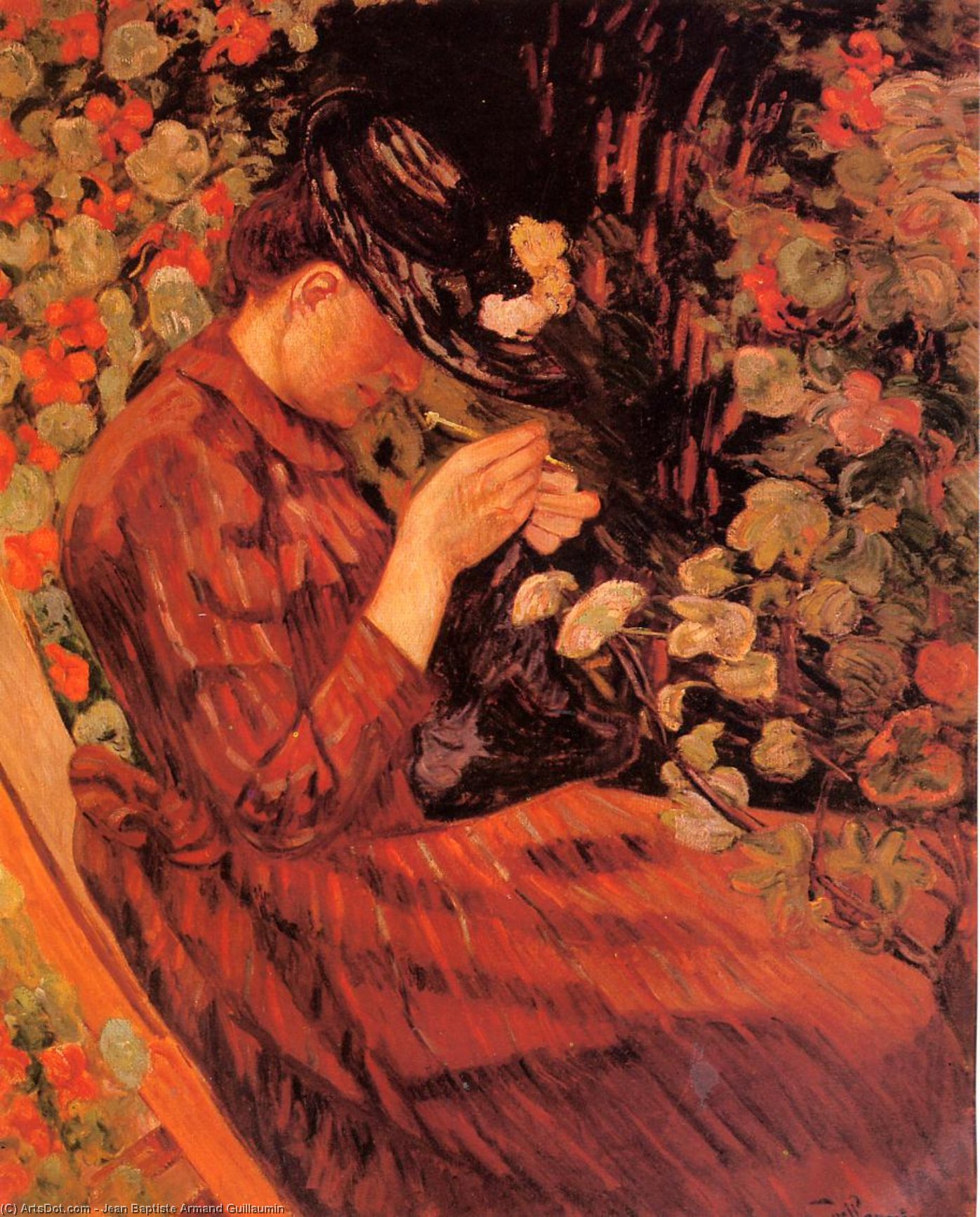
Capture the serenity of Impressionism with 'Madame Guillaumin Sitting in a Garden.' This 1890 oil painting by Jean-Baptiste Armand Guillaumin depicts his wife amidst vibrant blooms, showcasing soft brushstrokes and luminous light.
Discover Ferdinand Guillaumin, a French Impressionist painter known for dreamy landscapes & vibrant colors. Explore his symbolic style & legacy alongside Monet.
Subject and Composition
The artwork, "Madame Guillaumin Sitting in a Garden," painted by Jean Baptiste Armand Guillaumin in 1890, presents an intimate portrait of the artist's wife amidst a vibrant garden setting. The composition centers around Madame Guillaumin seated comfortably in a chair, her attention focused on the delicate task of threading a needle. This seemingly mundane activity is elevated to artistic significance through Guillaumin’s masterful use of color and light. The background explodes with a dense array of red roses, creating a rich and slightly enclosed atmosphere that draws the viewer's focus directly to the subject. The shallow perspective emphasizes the immediacy of the scene, fostering a sense of closeness and quiet observation.
Artistic Style and Influences
Jean Baptiste Armand Guillaumin’s style is deeply rooted in Impressionism, reflecting the movement’s emphasis on capturing fleeting moments and the effects of light and color in outdoor settings. This painting exemplifies this approach with its soft brushstrokes and vivid hues. The influence of Impressionist masters like Claude Monet and Pierre-Auguste Renoir is evident in Guillaumin's ability to convey a sense of atmosphere and movement through his application of paint. However, Guillaumin’s work also anticipates elements of Post-Impressionism, particularly in its expressive use of color and visible brushwork that prioritizes emotional impact over strict realism.
Technique and Materials
The painting is executed in oil on canvas, allowing for the rich layering and blending of colors characteristic of Impressionist technique. Guillaumin employed a loose, expressive brushstroke, building up volume and texture through thick impasto application. This technique is particularly noticeable in the rendering of the roses, where individual petals are suggested rather than meticulously defined. The lighting appears soft and diffused, creating subtle shadows that enhance the three-dimensionality of both Madame Guillaumin and the floral backdrop. The artist’s skillful manipulation of light and shadow contributes to a sense of depth and dimensionality within the composition.
Symbolism and Emotional Impact
Beyond its aesthetic appeal, "Madame Guillaumin Sitting in a Garden" carries symbolic weight. The roses, traditionally associated with beauty, love, and passion, create a visually striking contrast with the quiet domesticity of the scene. Madame Guillaumin’s focused attention on threading a needle suggests themes of patience, diligence, and perhaps even a touch of solitude or introspection. The overall impression is one of serene contemplation amidst a vibrant natural setting. The painting evokes a sense of nostalgia for a bygone era, inviting viewers to reflect on the simple pleasures of everyday life and the enduring power of human connection.
Historical Context
Painted in 1890, this artwork reflects the artistic climate of late 19th-century France. Impressionism had already established itself as a major force in the art world, challenging traditional academic conventions and paving the way for new forms of artistic expression. Guillaumin’s work aligns with this broader trend, demonstrating a commitment to capturing the beauty of the natural world and exploring the complexities of human experience through vibrant color and expressive brushwork. The painting provides a glimpse into the domestic life of an artist and his wife during a period of significant social and cultural change.