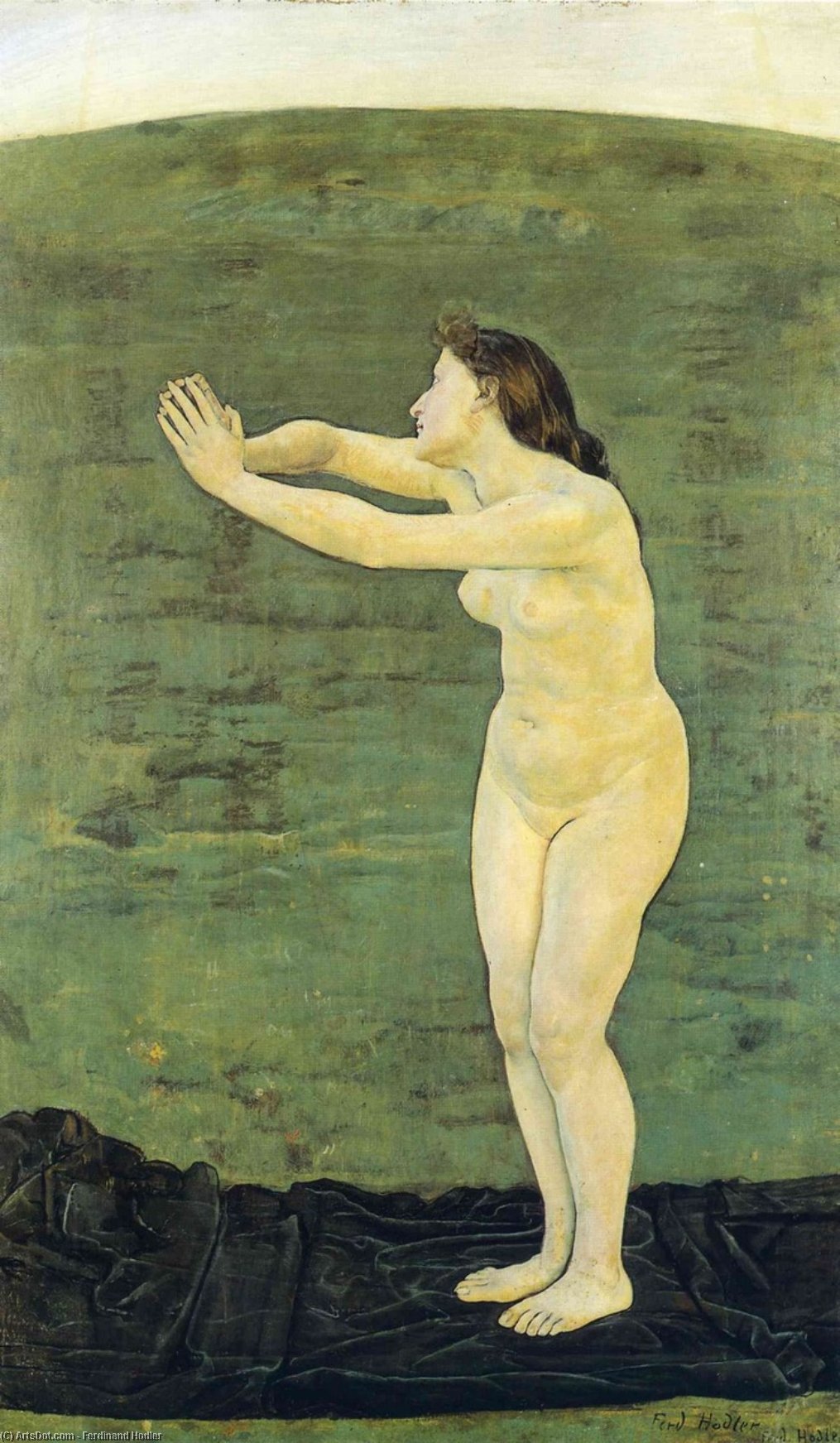
Ferdinand Hodler’s ‘Communion with Infinity,’ a Symbolist masterpiece from 1892, captures the sublime beauty of nature through bold colors and geometric shapes—a captivating invitation to explore this iconic Swiss artwork.
A Dialogue Between Flesh and Sky: Exploring Ferdinand Hodler’s Communion with Infinity
Ferdinand Hodler's "Communion with Infinity" stands as a testament to the profound influence of Symbolism on late 19th-century European art. Painted in 1892, this monumental canvas—measuring 159 x 97 cm—is housed at Kunstmuseum Basel and immediately commands attention with its arresting depiction of a nude woman poised against a verdant hillside. More than just a portrait, it’s an invitation to contemplate the relationship between humanity and the sublime, capturing a moment of transcendent stillness that speaks volumes about the artist's philosophical convictions.
- Subject Matter: The central figure embodies feminine beauty and vulnerability, elevated by her upward gaze—a gesture mirroring the aspiration for spiritual enlightenment and communion with the divine. Her pose deliberately eschews conventional artistic conventions, prioritizing expressive gesture over anatomical accuracy.
- Style & Technique: Hodler’s signature style is characterized by bold color palettes – predominantly earthy tones punctuated by vibrant greens and blues – skillfully blended to create an illusion of depth and luminosity. He employed a technique known as cloisonné painting, meticulously layering thin washes of pigment onto the canvas to achieve remarkable tonal gradations and textural nuances. This painstaking process underscores Hodler’s commitment to capturing not merely what he saw but also what he felt.
The Historical Context: Symbolism emerged as a reaction against Impressionism's focus on fleeting sensory experience, advocating instead for an exploration of inner psychological states and spiritual truths. Artists like Hodler sought to communicate ideas beyond the literal representation of reality, utilizing symbolic imagery—such as the hillside itself—to evoke emotions and convey moral lessons. Hodler’s work aligns seamlessly with broader artistic currents of his time, reflecting a fascination with mythology, folklore, and esoteric traditions.
- Symbolism & Interpretation: The woman's outstretched arms reach towards the sky, symbolizing an attempt to transcend earthly limitations and connect with something greater than oneself—a motif recurrent in Hodler’s oeuvre and powerfully resonant within the Symbolist movement. The hillside represents tranquility and fertility, mirroring the artist’s belief in the restorative power of nature and its role as a conduit for spiritual renewal.
- Emotional Impact: “Communion with Infinity” transcends mere visual beauty; it aspires to elicit contemplation and provoke introspection. Hodler's masterful manipulation of color and form generates an atmosphere of serene solemnity, inviting viewers to contemplate themes of mortality, faith, and the enduring quest for spiritual understanding.
Hodler’s influence extends beyond Symbolism itself. Artists like Boleslas Biegas similarly embraced expressive abstraction and psychological depth in their artistic endeavors. Examining Hodler's "Communion with Infinity" alongside other works—particularly “Gaze into Infinity (study)”—offers invaluable insight into the artist’s broader artistic vision and his enduring legacy as a pioneer of Symbolist art. Its meticulous execution and evocative symbolism continue to inspire admiration and provoke discussion among connoisseurs and scholars alike.