The Weight of Mortality in Hodler's Vision
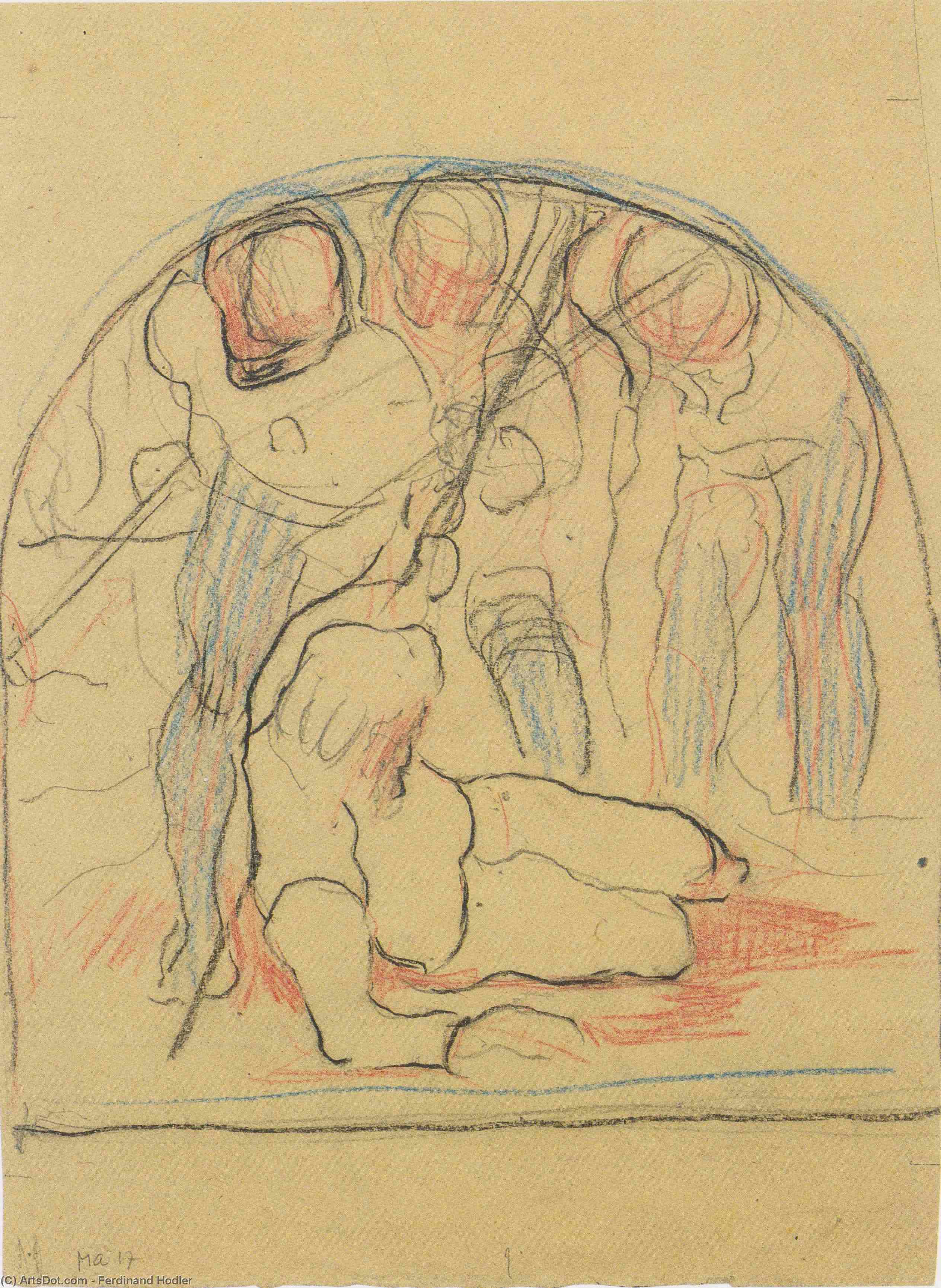
Ferdinand Hodler’s "Dying Cadet," painted in 1896, is not merely a depiction of an event; it is a profound meditation on vulnerability, fate, and the inescapable passage of time. The scene arrests the viewer with its palpable tension. A young man lies supine upon the ground, his hands bound behind him—a posture that speaks volumes of helplessness and surrender. He appears caught in the agonizing moment between life and oblivion. Surrounding this central figure are four other men, their presence forming a silent, watchful semi-circle. They observe from varying distances, their collective gaze creating an atmosphere thick with unspoken narrative and impending tragedy.
Symbolism and the Shadow of Loss
For Hodler, art was rarely about surface reality; it was always about the internal landscape of the soul. His life, marked by early personal losses—the passing of his father and brothers—infused his work with a deep, almost melancholic contemplation of mortality. In "Dying Cadet," this theme is rendered with stark symbolic power. The bound hands suggest a loss of agency, while the surrounding figures evoke themes of judgment, community witnessing, or perhaps even the inescapable nature of memory itself. Hodler masterfully uses these human interactions to explore universal existential questions: What does it mean to be observed in one's moment of greatest weakness? The painting invites us not just to look at the scene, but to feel the weight of its unspoken narrative.
Technique and Emotional Resonance
Though relatively small in scale at 26 x 18 cm, the impact of this piece is monumental. Hodler’s technique here balances a sense of dramatic realism with an underlying symbolic abstraction characteristic of Symbolism. The composition guides the eye immediately to the prone figure, while the surrounding figures are rendered with a careful attention to posture and grouping that builds palpable emotional tension. One can almost feel the cool earth beneath the cadet and the heavy silence hanging in the air. It is a masterclass in evoking deep feeling through controlled, deliberate brushwork.
A Timeless Piece for Contemplative Spaces
For collectors and those seeking art that sparks deep thought, "Dying Cadet" offers an unparalleled depth. Its brooding atmosphere and sophisticated handling of the human condition make it a powerful focal point. Whether placed in a study designed for reflection or a gallery space meant to provoke dialogue, this reproduction allows one to connect with the emotional gravity of late 19th-century Symbolism. It is a work that demands slow viewing, rewarding the observer with layers of meaning concerning endurance, community, and the fragile beauty of existence.