A Symphony of Stone and Ice
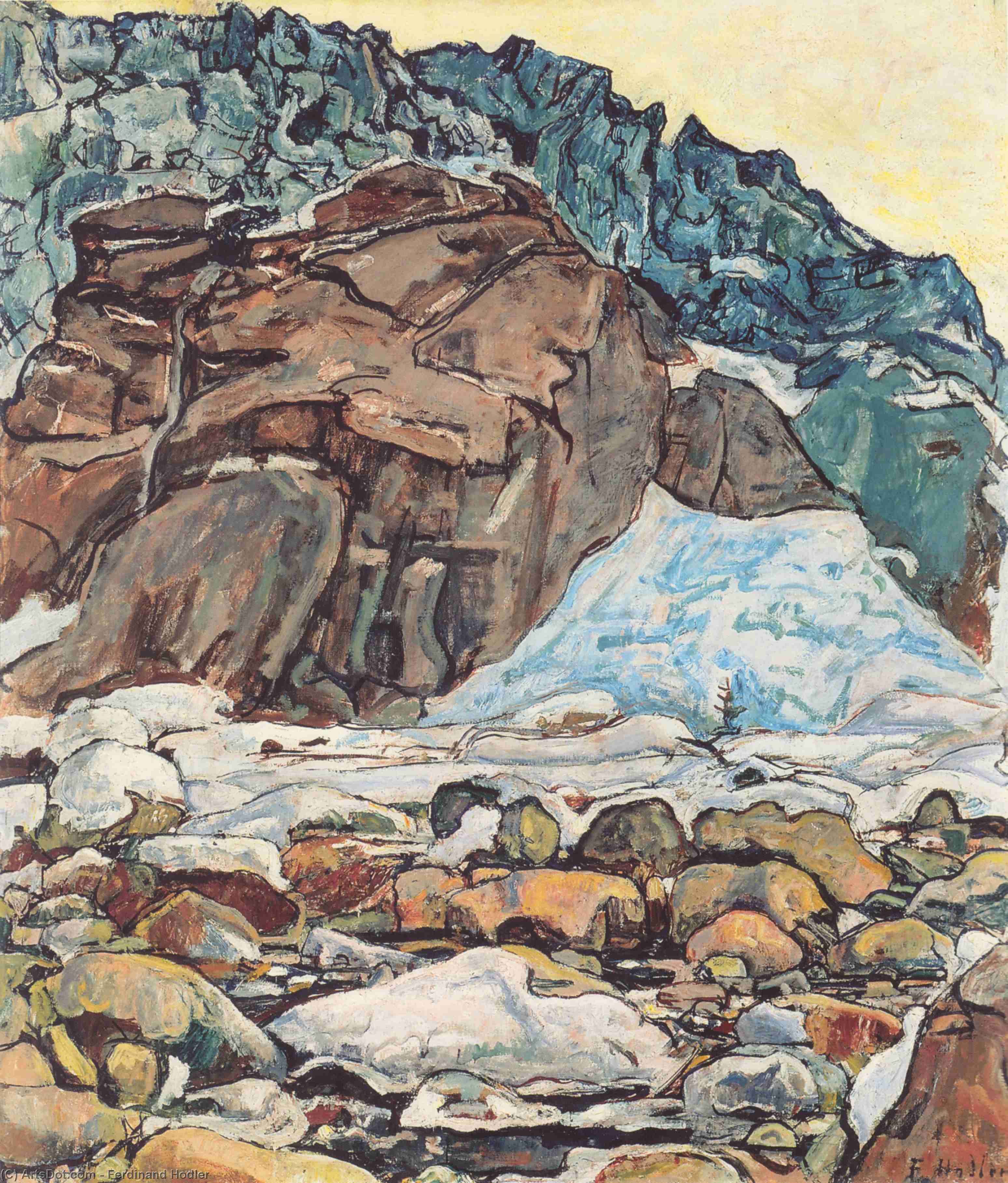
In the quiet majesty of The Grindelwald Glacier, we encounter a profound dialogue between the eternal and the ephemeral. Painted in 1912, this breathtaking work by the Swiss master Ferdinand Hodler captures more than just a mountain range; it captures the very soul of the Alps. The composition is anchored by a monumental rock formation that rises from the canvas with an almost architectural strength, serving as a silent sentinel over the frozen landscape. As the eye wanders across the snow-dusted peaks, one notices the delicate interplay of light and shadow that defines the rugged textures of the terrain. Scattered smaller rocks provide a rhythmic cadence to the scene, grounding the viewer in a world where every stone tells a story of geological time.
What elevates this piece from a mere landscape to a masterpiece of symbolic depth is Hodler’s intentional placement of life within the vastness. To the right, a solitary tree stands resilient against the alpine chill, while near the center-right, a lone figure appears, dwarfed by the sheer scale of the glacier. This juxtaposition creates a poignant sense of scale and vulnerability, reminding us of our own fleeting presence amidst the enduring power of nature. For the collector or interior designer, this painting offers a window into a realm of sublime tranquility, making it an ideal centerpiece for spaces that seek to evoke contemplation, strength, and a connection to the natural world.
The Mastery of Symbolism and Form
Ferdinand Hodler was not merely a painter of landscapes; he was a pioneer of Parallelism, a theory where rhythmic repetitions in nature reflect a deeper, underlying unity. In The Grindelwald Glacier, this technique is palpable. The repetition of the jagged mountain ridges and the rhythmic scattering of stones create a visual harmony that guides the viewer through the depth of the scene. His brushwork, though controlled, possesses a tactile quality that allows the coldness of the snow and the hardness of the granite to be felt almost physically. This mastery of texture ensures that the painting remains dynamic, even in its stillness.
The historical context of 1912 adds a layer of bittersweet beauty to the work. Created during a period of immense transition in Europe, Hodler’s focus on the immutable mountains serves as an anchor against the shifting tides of modernity. The painting carries an emotional weight that resonates with anyone who has found solace in the wilderness. It is a piece that does not merely decorate a wall; it transforms a room into a sanctuary of peace and grandeur. Whether displayed in a contemporary gallery setting or a classic study, this reproduction brings with it the prestige of Swiss art history and the timeless allure of the high Alps.