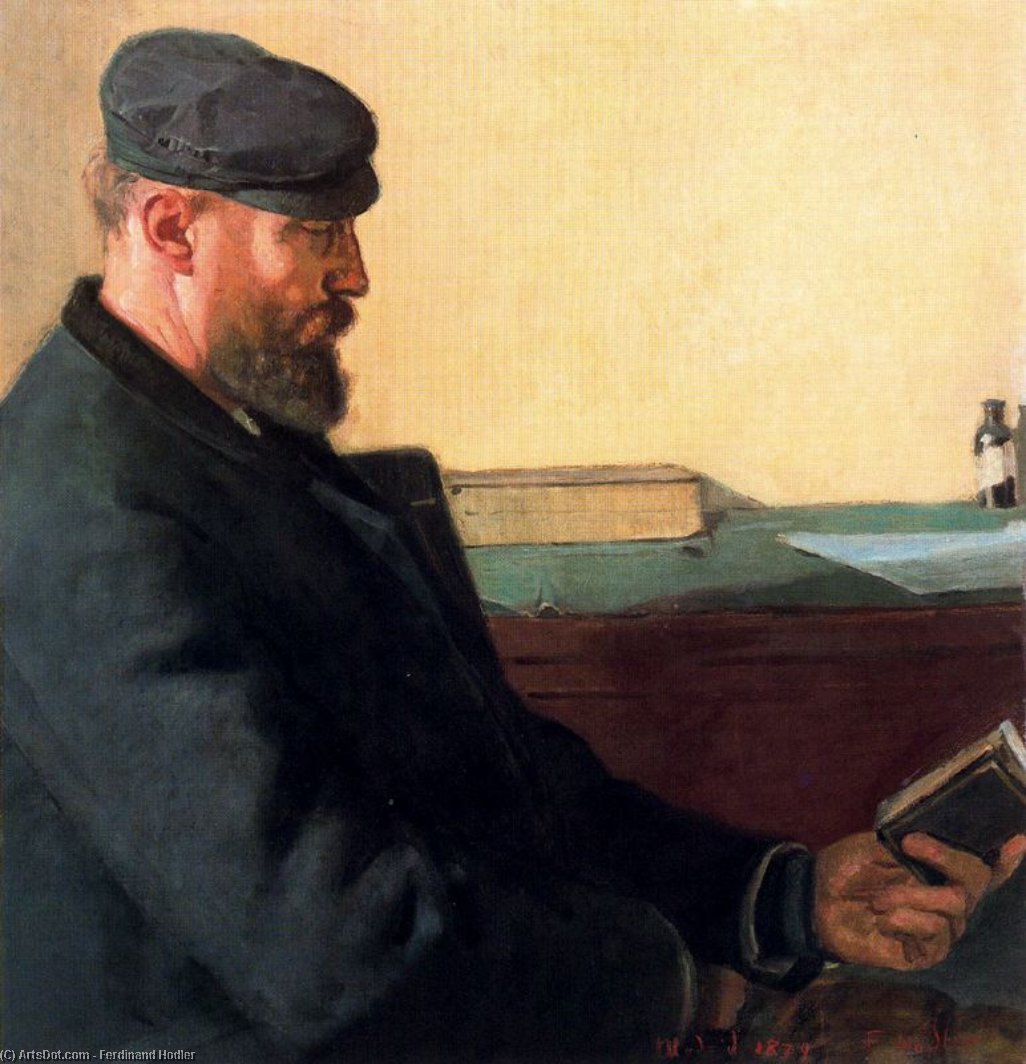
A Symphony of Light and Shadow: Ferdinand Hodler's "Femme au Chapeau"
Ferdinand Hodler’s “Femme au Chapeau” (Woman with Hat) is more than a simple portrait; it’s a distillation of the artist’s signature style – a mesmerizing blend of Symbolism and Impressionism that captures a fleeting moment of serene beauty. Painted in 1893, this work exemplifies Hodler's fascination with capturing not just appearances but also the emotional essence of his subjects, particularly through his innovative use of color and form.
The subject, a woman whose identity remains somewhat enigmatic, is rendered with an almost dreamlike quality. Her features are softened, her gaze distant, creating a sense of detachment that invites contemplation rather than direct observation. Hodler’s technique relies heavily on broken brushstrokes and subtle color gradations – a hallmark of his “parallelism” style. He layered thin washes of paint, building up the image through countless delicate applications, resulting in an ethereal effect where form seems to dissolve into light. The muted palette—dominated by blues, greens, and ochres—contributes significantly to this sense of tranquility and mystery. Notice how he uses color not to represent reality but to evoke a particular mood or feeling.
The Roots of Symbolism: Hodler's Artistic Journey
Hodler’s artistic development was deeply influenced by the intellectual currents of his time, particularly the rise of Symbolism in late 19th-century Europe. Rejecting the strict realism favored by many of his contemporaries, Hodler and other Symbolist painters sought to express subjective emotions and spiritual truths through art. This movement drew inspiration from literature, mythology, and esoteric philosophies, leading artists to explore themes of beauty, death, and the subconscious.
Hodler’s early training in decorative painting provided him with a strong foundation in color theory and composition, which he later combined with his Symbolist leanings. His travels – particularly his extended stay in Madrid – exposed him to the works of Spanish masters like Velázquez, influencing his approach to portraiture and his use of light and shadow. The influence of Dürer’s emphasis on proportion and harmony is also subtly present, grounding Hodler's more expressive style within a classical framework.
Symbolic Resonance: Decoding the Image
“Femme au Chapeau” is rich in symbolic meaning, reflecting Hodler’s broader artistic concerns. The woman’s hat, a recurring motif in his work, can be interpreted as representing both protection and concealment – shielding her from the harsh realities of the world while simultaneously obscuring her inner thoughts and feelings. Her pose, with her head slightly tilted and her gaze directed towards the viewer, creates an intimate connection, inviting us to share in her quiet contemplation.
The overall composition—characterized by its balanced symmetry and flowing lines—suggests a sense of harmony and order, reflecting Hodler’s belief that these principles underpinned human society. The painting's serene atmosphere evokes a feeling of timelessness, transporting the viewer to a realm beyond the everyday concerns of modern life.
A Timeless Masterpiece: Investing in Art
Hand-painted reproductions of “Femme au Chapeau” offer an unparalleled opportunity to bring this iconic work of art into your home or office. Each reproduction is meticulously crafted by skilled artisans, replicating Hodler’s unique technique and capturing the painting's luminous beauty with exceptional fidelity. Unlike prints or digital images, these hand-painted reproductions possess a depth and richness that cannot be achieved through mechanical means, ensuring they will remain treasured works of art for generations to come. Own a piece of artistic history – invest in a reproduction of this captivating masterpiece today.