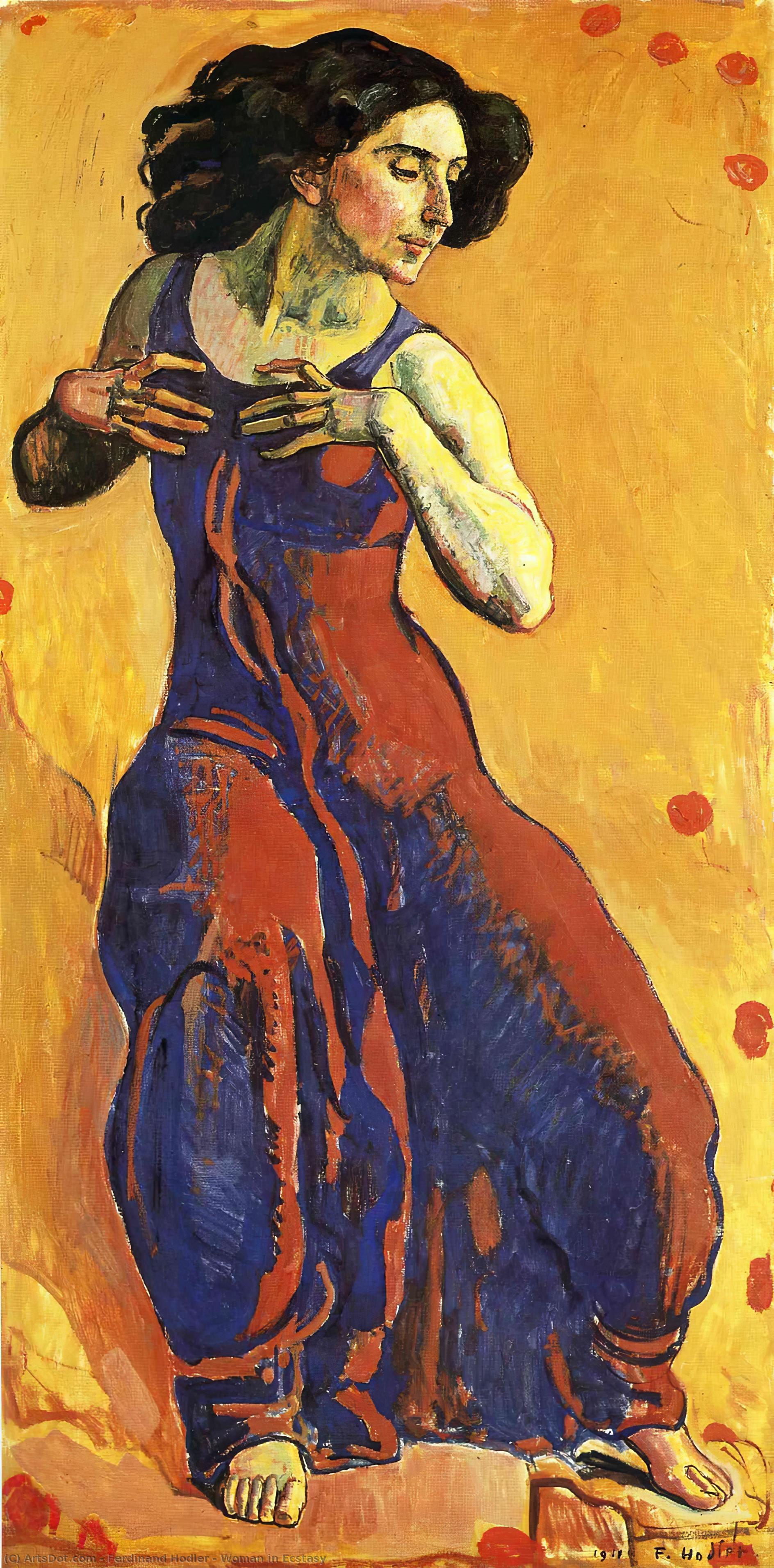
Ferdinand Hodler’s "Woman in Ecstasy," a vibrant Art Nouveau masterpiece capturing ethereal movement and liberation, portrays a dancer bathed in radiant yellows against a textured blue dress – explore this iconic Swiss painting.
A Dance of Liberation: Exploring Ferdinand Hodler’s Woman in Ecstasy
Ferdinand Hodler's Woman in Ecstasy stands as a cornerstone of Art Nouveau, capturing not merely an image but an entire ethos—a yearning for beauty, movement, and transcendence. Painted in 1911, this monumental canvas measuring 86 x 172 cm resides within the Musée d’Art et d’Histoire in Geneva, Switzerland, ensuring its legacy continues to inspire awe and admiration. Hodler's artistic journey began with apprenticeship under decorative painters, yet his ambition swiftly propelled him beyond mere craftsmanship toward a profound engagement with symbolism and emotion—a preoccupation that would define his distinctive style. The formative loss of his family instilled within him a contemplative spirit, mirroring the melancholic beauty found throughout his oeuvre.
- Subject Matter: The painting depicts a woman in mid-dance, embodying the ideals of grace, freedom, and sensual delight—a deliberate contrast to the restrictive societal conventions prevalent during Hodler’s time.
- Style & Technique: Hodler's approach aligns perfectly with Art Nouveau principles. Employing loose brushstrokes and vibrant color palettes—primarily reds, blues, and yellows—he achieves a mesmerizing fluidity that mimics the rhythm of movement. The technique prioritizes capturing ephemeral sensations rather than precise representation.
The influence of Émile Jaques-Dalcroze’s Eurhythmics is palpable; Hodler's fascination with music as embodied in movement directly informs the dancer’s posture and gesture, reflecting a broader intellectual current concerned with harmonizing art and science. This connection underscores the painting’s significance as more than just visual splendor—it represents an attempt to distill the essence of musical experience onto canvas.
Historical Context: Created during the early 20th century, Woman in Ecstasy speaks to a period marked by significant social upheaval and burgeoning feminist discourse. Hodler's portrayal challenges established norms surrounding femininity, presenting a figure liberated from corsets and societal constraints—a bold statement for its era. It’s a visual manifesto of aspiration toward autonomy and joy.
Symbolism: The dominant yellow hue serves as a beacon of optimism and spiritual illumination, symbolizing enlightenment and transcendence. Hodler utilizes color psychology to convey emotion, mirroring the ecstatic state depicted in the painting. Furthermore, the woman's outstretched arms evoke notions of aspiration and connection with something greater than oneself—a visual representation of inner harmony.
- Emotional Impact: Woman in Ecstasy transcends mere aesthetic pleasure; it evokes a profound sense of wonder and contemplation. The painting’s dynamism captures the fleeting beauty of movement, inviting viewers to immerse themselves in an experience of liberation and emotional resonance.
For those seeking to appreciate Hodler's artistic vision firsthand or explore high-quality reproductions, visit Ferdinand Hodler: Woman in Ecstasy on ArtsDot.com. This remarkable artwork continues to captivate audiences worldwide—a testament to Hodler’s enduring legacy as a pioneer of Art Nouveau and a champion of expressive art.