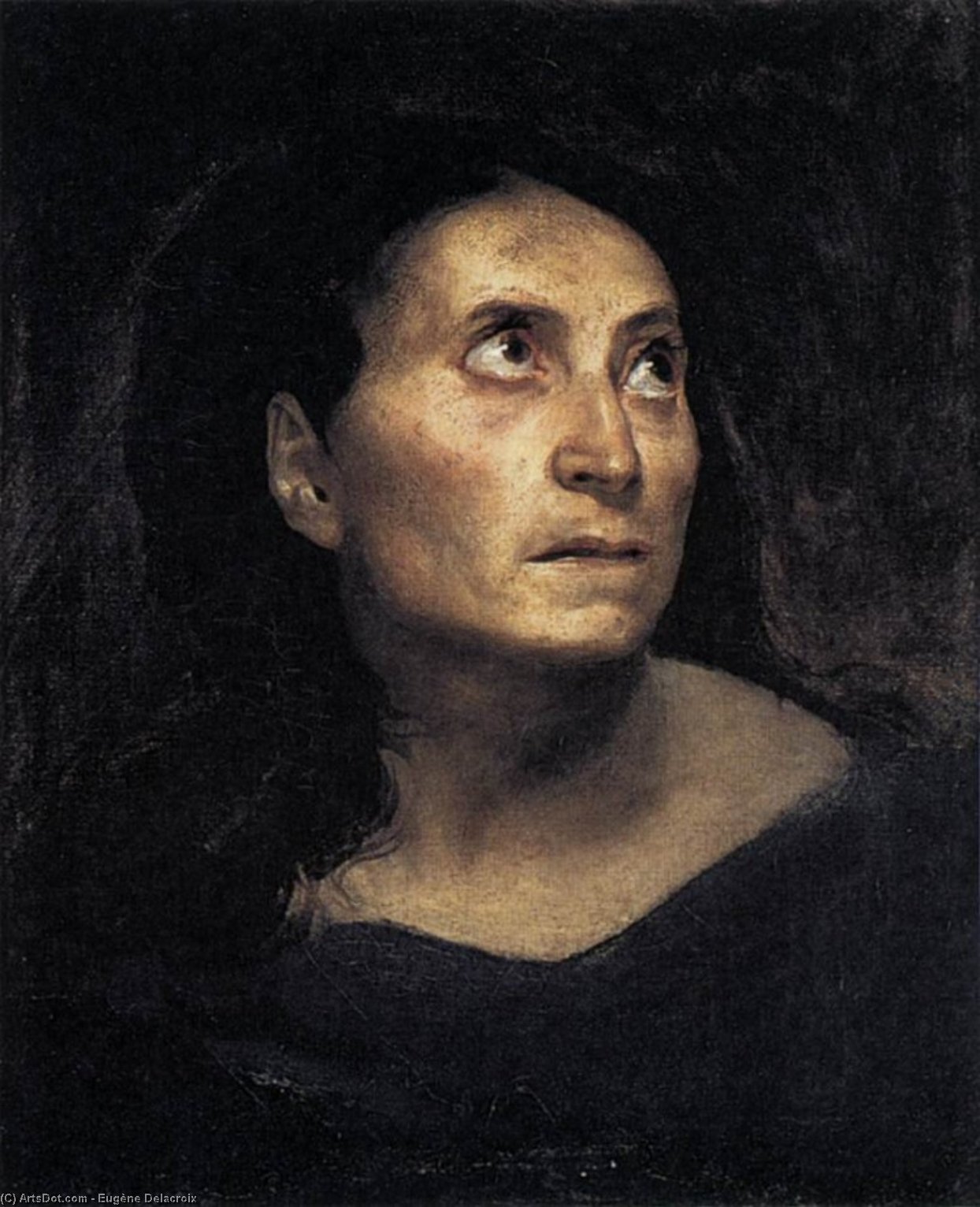
Experience Delacroix’s poignant "A Mad Woman," a dramatic oil study from 1822 capturing intense emotion and despair within the Romantic period. This evocative artwork, measuring 41x33cm, offers a glimpse into human suffering – discover or own this masterpiece.
A Study in Despair: Delacroix’s ‘A Mad Woman’
Eugène Delacroix's “A Mad Woman,” painted in 1822, is not merely a portrait; it’s an immersion into the turbulent heart of Romantic emotion. This intimate oil study, measuring just 41 x 33 cm, possesses a raw power that belies its modest size. Created during a period of profound social and political change in France – a time marked by the burgeoning Greek War of Independence and simmering revolutionary fervor – Delacroix’s work transcends simple representation, offering instead a visceral exploration of human suffering and psychological distress. The painting served as a preparatory study for his monumental “Massacre at Chios,” yet within its contained space resides a depth of feeling that stands alone as a testament to Delacroix's genius.
- Subject Matter: The central figure, a woman lost in a state of profound anguish, dominates the composition. Her vacant gaze, fixed on an unseen horizon, speaks volumes about isolation and despair.
- Technique: Delacroix’s masterful use of oil paint is immediately apparent. Thick impasto strokes build texture, conveying both the fragility of her form and the intensity of her emotional state. The color palette – dominated by somber blues, grays, and browns – reinforces the mood of melancholy and hopelessness.
- Historical Context: Painted against the backdrop of the Greek War of Independence, “A Mad Woman” reflects a broader Romantic preoccupation with themes of heroism, sacrifice, and the darker aspects of human nature. It’s a poignant reminder of the psychological toll exacted by conflict and upheaval.
Decoding the Symbolism
Beyond its immediate depiction of distress, “A Mad Woman” is rich in symbolic meaning. The woman's posture – slumped, almost fetal – suggests vulnerability and a loss of control. Her wide-open eyes, devoid of recognition, represent a detachment from reality, perhaps mirroring the disorientation and trauma experienced by those caught in the throes of war or personal tragedy. Delacroix deliberately avoids offering easy answers; instead, he presents a raw, unsettling image that invites contemplation about the nature of suffering and the human condition. The painting’s genesis as a study for “Massacre at Chios” further amplifies this symbolism, linking individual anguish to the broader horrors of collective violence.
Delacroix's Revolutionary Style
Delacroix was a pivotal figure in the shift away from Neoclassical restraint and towards Romantic expressiveness. His bold brushwork, vibrant color choices (particularly his use of blues), and dramatic composition were revolutionary for their time. “A Mad Woman” exemplifies these innovations perfectly. Unlike the idealized figures favored by Neoclassical painters, Delacroix presents a woman stripped bare – emotionally and visually – revealing her vulnerability with unflinching honesty. This approach profoundly influenced subsequent generations of artists, including Charles Baudelaire, who recognized in Delacroix’s work a kindred spirit exploring the darker recesses of human experience.
A Timeless Masterpiece
Currently housed at the Musée des Beaux-Arts in Orléans, France, “A Mad Woman” continues to resonate with viewers centuries after its creation. It is more than just an artwork; it’s a window into the soul of a brilliant artist and a powerful meditation on human suffering. Its enduring appeal lies in Delacroix's ability to capture a universal emotion – despair – with such poignant intensity, solidifying its place as a cornerstone of Romantic art.