Delacroix’s Duguesclin: A Portrait of Courage Amidst Medieval Grandeur
Ferdinand Victor Eugène Delacroix, born in Chantonnay, France in 1798, stands as a pivotal figure in the Romantic movement—a reaction against Neoclassical formalism and an embrace of emotion, imagination, and dramatic narrative. His artistic vision drew heavily from Rubens and Venetian Renaissance painters, prioritizing vibrant color palettes and dynamic compositions over precise anatomical rendering and meticulous detail. This fascination with expressive art is powerfully evident in “Duguesclin,” a monumental engraving depicting a pivotal moment in French history—the siege of Paris during the Hundred Years’ War.
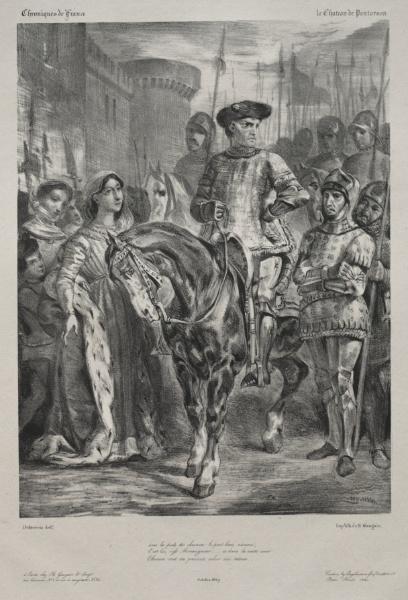
- Subject Matter & Historical Context: The artwork portrays Duguesclin, Robert III de Clermont, Count of Clermont-Ferrand and Montpensier, a valiant knight who rallied French forces against English occupation. Delacroix meticulously captures the atmosphere of siege warfare—the fortified city walls, the anxious faces of onlookers, and the palpable tension surrounding the military effort to defend Paris. This scene underscores Delacroix’s commitment to portraying significant historical events with artistic fervor.
- Style & Technique: Executed in engraving or lithograph, “Duguesclin” exemplifies the Romantic preoccupation with tonal variation and textural richness achieved through meticulous line work. The artist skillfully employs hatching and cross-hatching techniques to convey the ruggedness of stone walls and armor plating—elements crucial to conveying the seriousness of the depicted situation.
- Composition & Visual Elements: Delacroix’s compositional choices are deliberate, establishing a hierarchy that draws the eye toward Duguesclin and his companion. The positioning of figures against the backdrop of the castle reinforces the grandeur of the occasion while simultaneously emphasizing the importance of leadership and resilience. Careful attention to perspective contributes to an immersive experience for the viewer.
- Symbolism & Emotional Impact: Beyond its historical accuracy, “Duguesclin” resonates with symbolic significance—representing courage, determination, and the defense of national identity. The subdued lighting enhances the solemn mood of the scene, inviting contemplation on themes of duty and sacrifice. Delacroix’s masterful rendering evokes a feeling of grandeur and inspires admiration for the fortitude displayed by those who fought for France.
- Decorative Potential: “Duguesclin”'s dramatic aesthetic lends itself beautifully to interior design projects seeking to evoke a sense of history and nobility. A high-quality reproduction would serve as an impactful statement piece, capturing the spirit of Romantic idealism and reminding viewers of France’s enduring legacy.