A Bacchanalian Autumn: Delacroix’s ‘El Otoño. Baco y Ariadna’
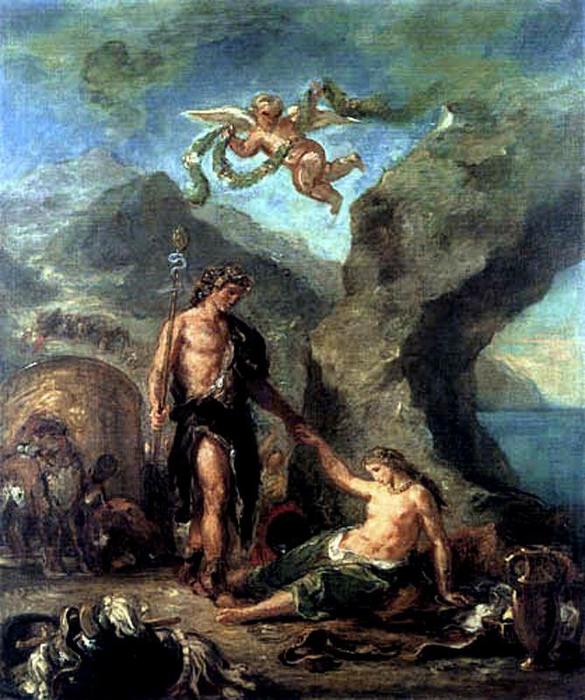
This captivating oil painting by Eugène Delacroix transports viewers to a realm of myth and emotion, embodying the core tenets of the Romantic movement. While titled “El Otoño” (Autumn), the work depicts a complex scene centered around the figures of Bacchus (Dionysus) and Ariadne – a moment brimming with sensuality, liberation, and the intoxicating spirit of revelry.
Subject & Narrative
The painting portrays Bacchus, god of wine and festivity, encountering Ariadne after she is abandoned by Theseus on the island of Naxos. Delacroix doesn’t depict a simple reunion; instead, he captures a moment of burgeoning passion and divine acceptance. Ariadne, reclining languidly, seems to surrender to Bacchus's embrace, while figures within a cave celebrate their union – hinting at the wild abandon associated with Dionysian worship. An angelic figure ascending towards the heavens adds a layer of spiritual significance, perhaps symbolizing the elevation of earthly love to a divine plane. The backdrop of a turbulent seascape and rocky cliffs reinforces the drama and isolation of Naxos, setting the stage for this pivotal encounter.
Style & Technique
Delacroix’s style is distinctly Romantic – a deliberate departure from the cool rationality of Neoclassicism. He prioritizes
emotion, dynamism, and vibrant color. The brushwork is loose and expressive, creating a sense of movement and immediacy. Notice how Delacroix uses impasto—thickly applied paint—to build texture in areas like the rocks and figures’ skin, contrasting with smoother passages elsewhere. The composition utilizes a pyramidal structure, drawing the eye towards the central figures, while diagonals and curves contribute to the overall feeling of unrestrained energy. The dramatic lighting, emanating from an unseen source, heightens the theatricality and emphasizes key elements within the scene.
Historical Context & Influences
Eugène Delacroix (1798-1863) was a leading figure in the French Romantic movement. Unlike his contemporary Ingres, who favored precise draftsmanship, Delacroix embraced color and dynamic composition, drawing inspiration from masters like Rubens and the Venetian Renaissance painters. His fascination with exoticism – fueled by travels to North Africa – is evident in his use of rich colors and dramatic settings. He shared artistic kinship with literary figures such as Lord Byron and Théodore Géricault, all of whom explored themes of passion, rebellion, and the sublime.
Symbolism & Interpretation
The painting is rich in symbolic meaning:
- Bacchus represents not only wine and revelry but also liberation, ecstasy, and the power of nature.
- Ariadne embodies vulnerability, abandonment, and ultimately, renewal through love.
- The laurel wreath held by the ascending angel symbolizes victory, glory, and perhaps Bacchus’s triumph over Theseus.
- The cave suggests a hidden world of mystery and sensual indulgence.
Emotional Impact & Aesthetic Appeal
“El Otoño. Baco y Ariadna” evokes a powerful emotional response, blending themes of love, loss, transformation, and divine intervention. The painting’s vibrant colors, dynamic composition, and dramatic lighting create an atmosphere of intense passion and unrestrained energy. It's a work that invites contemplation on the complexities of human desire and the transformative power of love.
Its aesthetic appeal lies in its ability to transport viewers to another world—a realm where myth and emotion intertwine. This piece would be a stunning focal point for any interior, adding a touch of Romantic grandeur and intellectual depth.