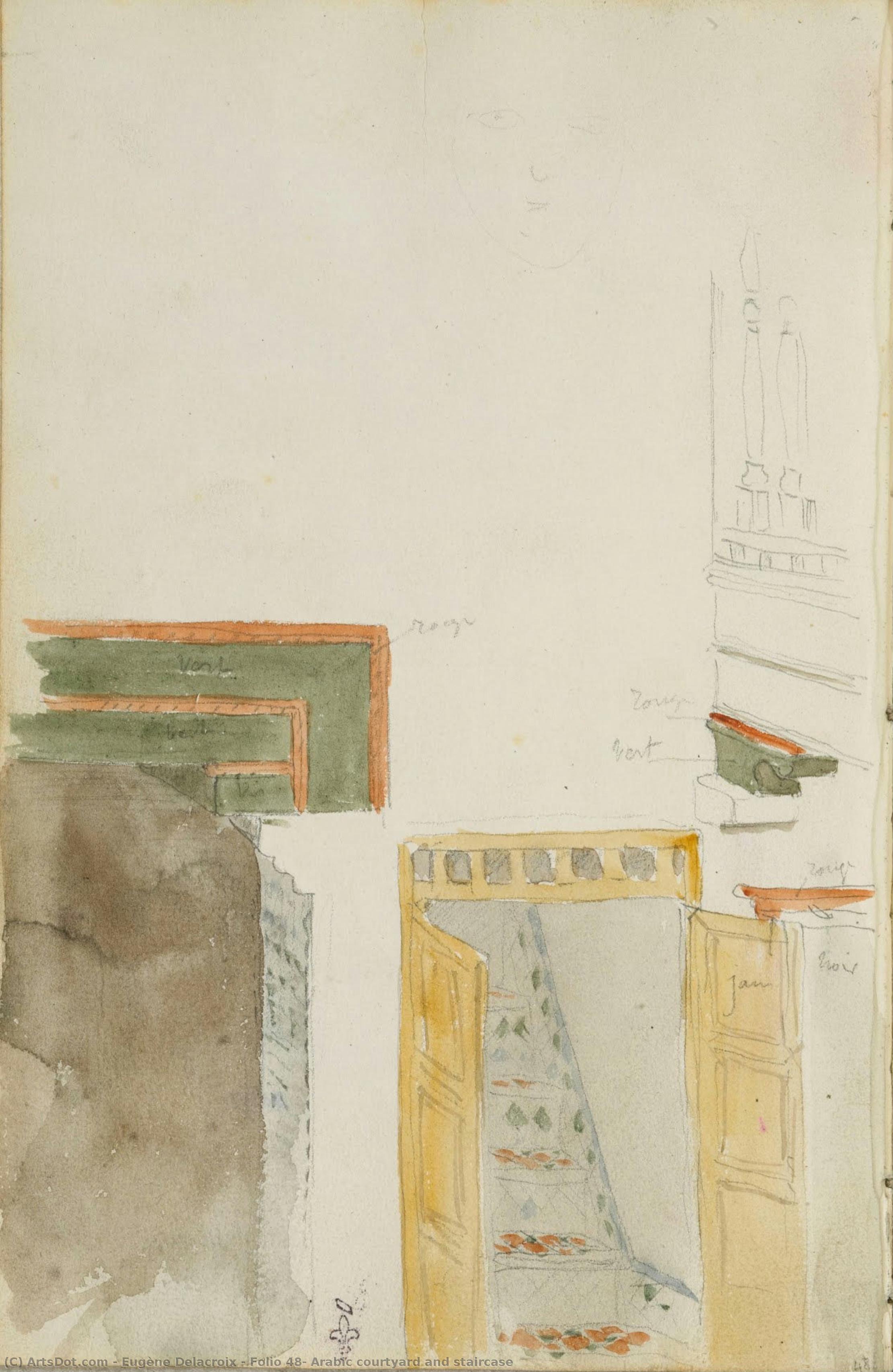
Delacroix’s watercolor sketch of an Arabic courtyard showcases a unique architectural study in loose, observational style. Explore this 1832 artwork's beauty & detail!
Explore the vibrant world of Eugène Delacroix, a leading French Romantic artist! Discover his dramatic scenes, exotic themes & masterful use of color. See iconic works like 'Liberty Leading the People'. #Delacroix #Romanticism #FrenchArt
Explore Château de Chantilly's art & history! Discover masterpieces by Raphael & Poussin, illuminated manuscripts, and the Duke of Aumale’s stunning collection. A royal legacy awaits!
A Glimpse into Delacroix’s Architectural Curiosity: Folio 48
This captivating watercolor sketch, *Folio 48, Arabic courtyard and staircase*, offers a rare and intimate look into the artistic process of Eugène Delacroix – a master not typically associated with architectural studies. Created in 1832, this work reveals a side of the Romantic painter driven by observation and a fascination with exotic locales. It’s less about finished presentation and more about capturing *impressions* of space, light, and form.
Subject & Composition: An Exotic Interior
The artwork depicts an interior scene – an Arabic courtyard accessed via a staircase – rendered with a remarkable looseness. Delacroix doesn’t present us with a polished architectural rendering; instead, we are given fragments of walls, doorways, and decorative elements. The composition is deliberately asymmetrical and multi-perspectival, creating a sense of spatial ambiguity that feels almost dreamlike. A chair subtly placed within an opening hints at the space's function and invites contemplation. It’s as if Delacroix were rapidly documenting what he saw, prioritizing capturing the *essence* of the place over precise accuracy.
Style & Technique: Romantic Observation
Delacroix’s signature Romantic style is evident even in this architectural study. Unlike the meticulous precision of his contemporary, Jean-Auguste-Dominique Ingres, Delacroix favored a more expressive and dynamic approach. The watercolor washes are layered to build form and texture, suggesting the materiality of stone and plaster with remarkable sensitivity. Lines aren’t rigid; they vary in pressure, adding nuance and visual interest. This isn't about cold architectural documentation but rather an *emotional response* translated through line and color.
Historical Context: North African Influences
Delacroix was deeply influenced by his travels to North Africa, particularly Algeria, which ignited a lifelong passion for the exotic and the dramatic. This sketch likely stems from observations made during or after these journeys. The Arabic courtyard subject matter reflects this fascination – a deliberate departure from traditional European architectural themes. It speaks to the Romantic era’s broader interest in non-Western cultures and aesthetics. His pursuit of the “exotic” aligns with contemporaries like Lord Byron, whose works also fueled the imagination with faraway lands.
Decoding the Details: Notes & Symbolism
Intriguingly, handwritten notes – ‘rouge’, ‘zour’, ‘font’, ‘jam’ – are visible within the sketch. These likely refer to specific colors or features Delacroix was noting during his observation, offering a glimpse into his working method and attention to detail. While symbolism isn't overtly present, the very choice of subject matter—an Arabic courtyard—can be interpreted as representing a longing for escape, adventure, and the allure of the unknown – core tenets of Romantic thought.
Emotional Impact & Aesthetic Appeal
*Folio 48* possesses a quiet intimacy that draws the viewer in. It’s not a grand statement but rather a personal exploration of space and light. The sketch evokes a sense of tranquility, mystery, and perhaps even nostalgia for a place Delacroix clearly found captivating. For interior designers, this artwork offers a sophisticated palette and an intriguing composition that would complement both modern and traditional spaces. Collectors will appreciate its rarity – a unique facet of Delacroix’s oeuvre beyond his celebrated history paintings. It's a testament to the artist’s versatility and enduring legacy.