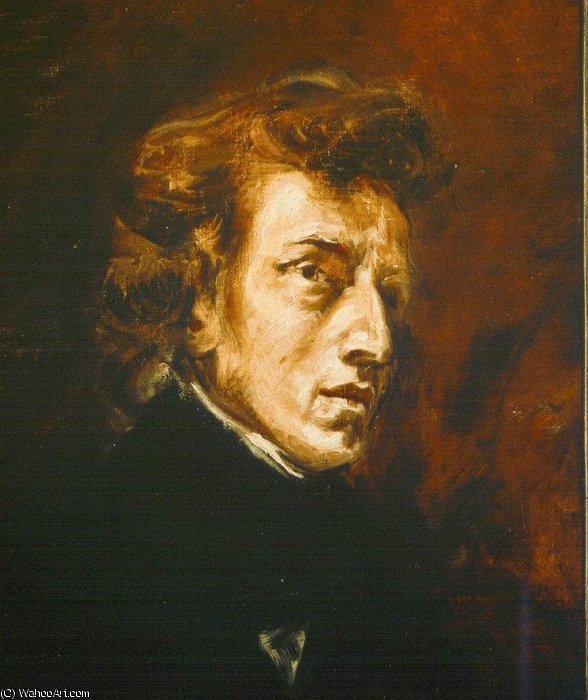
Delacroix's Reverie: Capturing Chopin’s Soul
Eugène Delacroix’s
Frédéric Chopin is more than just a portrait; it's an embodiment of Romantic idealism—a profound meditation on artistic genius and the elusive nature of inspiration itself. Completed in 1838, this oil on canvas masterpiece resides within the hallowed halls of the Musée du Louvre, inviting viewers to contemplate Delacroix’s masterful depiction of Poland’s beloved composer. The painting transcends mere representation, striving instead to convey Chopin's inner world—his contemplative gaze and the palpable stillness surrounding him—a testament to Delacroix’s ability to capture not just a likeness but an essence.
Historical Context: Romanticism at Its Zenith
Delacroix stands as a cornerstone of French Romanticism, reacting against the rigid formalism of Neoclassicism and embracing emotion, imagination, and subjective experience. Influenced by artists like Rubens and Rembrandt—masters who prioritized expressive brushwork and dramatic lighting—Delacroix sought to depict the world as perceived through human consciousness. The painting’s genesis coincided with a period of fervent nationalist sentiment in France following Napoleon's defeat, mirroring Chopin’s own unwavering devotion to his homeland and its cultural heritage. This shared passion for artistic integrity and national identity fueled Delacroix’s creative vision.
Style & Technique: Bold Strokes and Subtle Depth
Delacroix’s technique is characterized by loose brushstrokes—a deliberate departure from the meticulous precision demanded by earlier styles—that imbue the canvas with a sense of movement and dynamism. The artist skillfully employs color to heighten emotional impact, layering hues with remarkable subtlety to create an atmosphere of contemplative serenity. Notice how Delacroix utilizes diffused light to illuminate Chopin’s face, casting soft shadows that emphasize his features and conveying a feeling of inner stillness. This masterful manipulation of light contributes significantly to the painting's overall mood—one of quiet introspection and artistic contemplation.
Symbolism: Beyond Appearance
The blurred background serves as more than just an aesthetic element; it symbolizes Chopin’s preoccupation with thought and imagination, distancing him from the tangible world. The composer’s gaze is directed outwards, seemingly lost in contemplation—a gesture that speaks to the Romantic ideal of confronting profound questions about existence and beauty. Delacroix's choice of pose reinforces this symbolic dimension, portraying Chopin as an artist wrestling with his own creative impulses. Furthermore, the painting subtly references Chopin’s musical legacy, suggesting that he embodies the very spirit of artistic transcendence—a timeless pursuit of sublime expression.
Emotional Resonance: A Portrait of Genius
Ultimately,
Frédéric Chopin succeeds in capturing the profound emotional core of its subject—a portrait not merely of a man but of an artist consumed by his craft and driven by an unwavering belief in the power of beauty. Delacroix’s masterpiece continues to inspire admiration for its artistic brilliance and its ability to evoke feelings of serenity, contemplation, and intellectual curiosity—a testament to the enduring legacy of Romantic art and Eugène Delacroix's unparalleled skill as a painter.