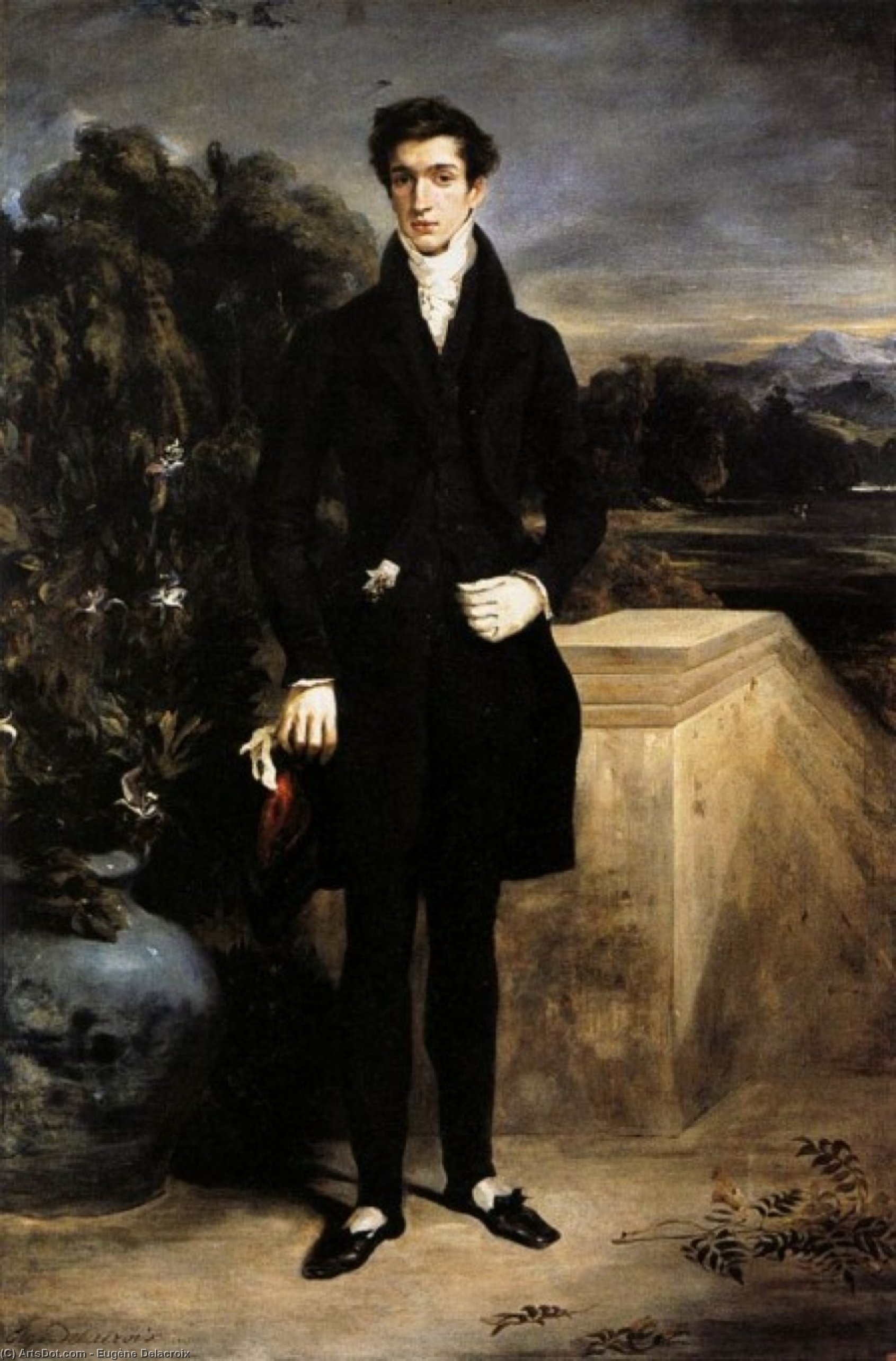
A captivating study of light and emotion, Eugène Delacroix's Portrait of Louis-Auguste Schwiter captures the vibrant essence of Romanticism through expressive color, inviting you to explore this masterpiece of French art.
Portrait of Louis-Auguste Schwiter
Eugène Delacroix’s Portrait of Louis-Auguste Schwiter stands as a pivotal moment in Delacroix’s artistic journey—a bold experiment that foreshadowed his mastery of Romantic painting and cemented his reputation as one of France's greatest artists. Painted between 1826 and 1827, this oil on canvas masterpiece isn’t merely a likeness; it’s an immersive experience of light, color, and emotion, reflecting Delacroix’s fascination with blending portraiture with the grandeur of landscape.
- The Subject: Louis-Auguste Schwiter was the son of Henri César Auguste Schwiter, a close confidant of Delacroix. The painting captures their friendship beautifully, portraying Schwiter as a thoughtful gentleman gazing into the distance—a deliberate choice by Delacroix to convey not just physical appearance but also inner character.
- Delacroix’s Style: Delacroix championed a revolutionary approach to portraiture, rejecting the stiff formality of earlier styles and embracing dynamism and expressive color. He sought to capture the spirit of his subject—Schwiter—within a landscape setting, an audacious technique that distinguished him from many of his contemporaries.
- Technique: Delacroix employed loose brushstrokes and vibrant hues—particularly blues and greens—to depict the backdrop of Schwiter’s portrait. This technique wasn't simply decorative; it served to heighten the emotional impact of the piece, mirroring Schwiter’s contemplative gaze and suggesting a connection between man and nature.
- Historical Context: The painting emerged during Delacroix’s formative years as a Romantic artist, coinciding with the burgeoning interest in dramatic narratives and emotive landscapes. It reflects the broader artistic trends of the era—a desire to move beyond mere representation toward conveying profound feelings and ideas.
- Provenance: Having passed through the hands of Edgar Degas and subsequently acquired by the National Gallery in London in 1918, the National Gallery continues to cherish this artwork as a testament to Delacroix’s artistic legacy and the enduring power of Romantic painting.
Beyond its immediate aesthetic qualities, Portrait of Louis-Auguste Schwiter holds significance as a precursor to Delacroix’s monumental canvases like Liberty Leading the People and Greece on the Ruins of Missolonghi—works that exemplify Delacroix’s unwavering commitment to capturing dramatic historical events and conveying intense emotional experiences.
For those seeking inspiration or contemplating a stunning reproduction, consider exploring Delacroix's other celebrated paintings. Liberty Leading the People remains a powerful symbol of French republican ideals and artistic innovation—a masterpiece that continues to captivate audiences worldwide.