Explore the vibrant world of Eugène Delacroix, a leading French Romantic artist! Discover his dramatic scenes, exotic themes & masterful use of color. See iconic works like 'Liberty Leading the People'. #Delacroix #Romanticism #FrenchArt
Mephistopheles Aloft: A Symphony of Shadow and Flame
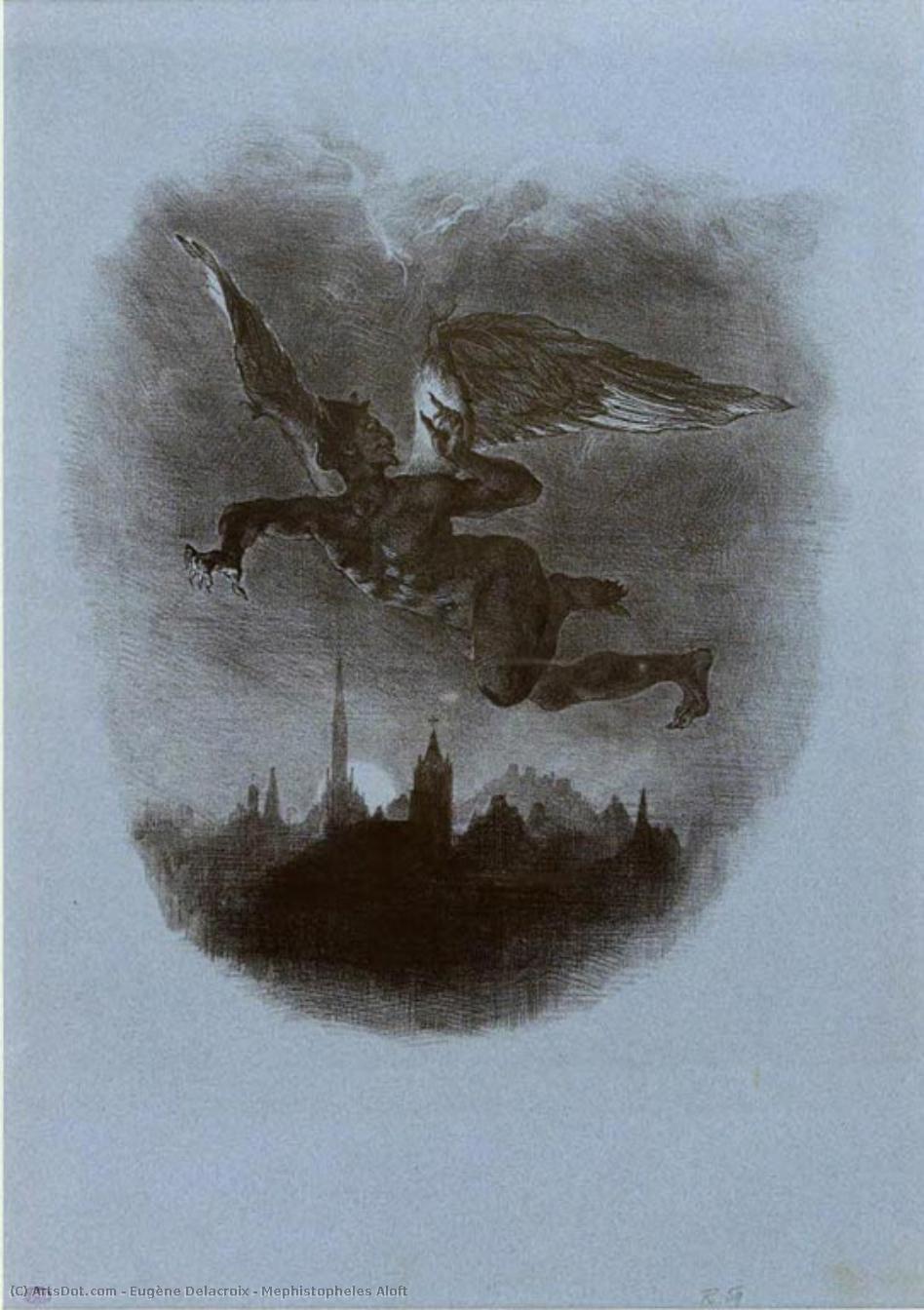
Eugène Delacroix’s “Mephistopheles Aloft,” completed in 1826, stands as a cornerstone of Romantic art—a dramatic distillation of Goethe's Faustian myth into a breathtaking visual experience. More than just a depiction of demonic ascension, it embodies the movement’s core tenets: fervent emotion, imaginative storytelling, and an unapologetic embrace of darkness alongside bursts of incandescent color. This lithograph reproduction captures not merely an image but the very spirit of Delacroix's artistic vision.
Composition and Technique – Mastering Movement Through Line
Delacroix’s masterful technique—primarily honed through oil painting on canvas—is brilliantly translated into the medium of lithography. The artist eschewed meticulous detail, favoring instead loose brushwork that conveys palpable dynamism. This approach is expertly mirrored in the lithograph's extensive use of hatching and cross-hatching, creating tonal variations that sculpt form and imbue the scene with a sense of turbulent movement. Fine lines delineate intricate textures—the feathered wings of Mephistopheles and the crumbling stonework of the cityscape—while broader strokes define expansive areas of color and atmosphere. The circular vignette framing the central figure serves to heighten visual impact, drawing the viewer’s gaze directly to this imposing presence.
A Mythological Landscape – Goethe's Faust Revisited
The artwork draws heavily from Goethe’s seminal literary work, “Faust,” exploring themes of temptation, ambition, and the perilous allure of forbidden knowledge. Mephistopheles, representing evil incarnate, is portrayed soaring above a brooding urban panorama—a deliberate contrast between celestial power and earthly decay. This juxtaposition underscores the narrative's central conflict: the struggle between good and evil, reason and passion. The cityscape itself symbolizes the world viewed from a position of moral superiority, hinting at Mephistopheles’s detachment from human concerns.
Romantic Emotion – Dramatic Lighting and Textured Surfaces
Delacroix’s Romantic sensibility is powerfully conveyed through his use of dramatic lighting—a radiant glow emanating from above—which casts long shadows across Mephistopheles's body and wings, amplifying the scene’s theatrical quality. The lithograph faithfully reproduces the textural richness of Delacroix’s original painting, achieved through variations in line density. Dense hatching creates areas of deep darkness and roughness, while sparse lines produce lighter tones and smoother surfaces—a technique that convincingly simulates the palpable physicality of the canvas.
Symbolism and Legacy – An Icon of Romantic Imagination
“Mephistopheles Aloft” transcends its mythological subject matter to become an emblem of Romantic artistic ideals. The winged figure embodies both freedom and peril, reflecting the movement’s fascination with confronting darkness while simultaneously celebrating beauty and passion. Delacroix's legacy extends far beyond this single masterpiece; he established a new aesthetic standard—one characterized by expressive brushwork, vibrant color palettes, and emotionally charged narratives—influencing generations of artists to come. This lithograph reproduction offers an unparalleled opportunity to experience the enduring power of Romantic art firsthand.