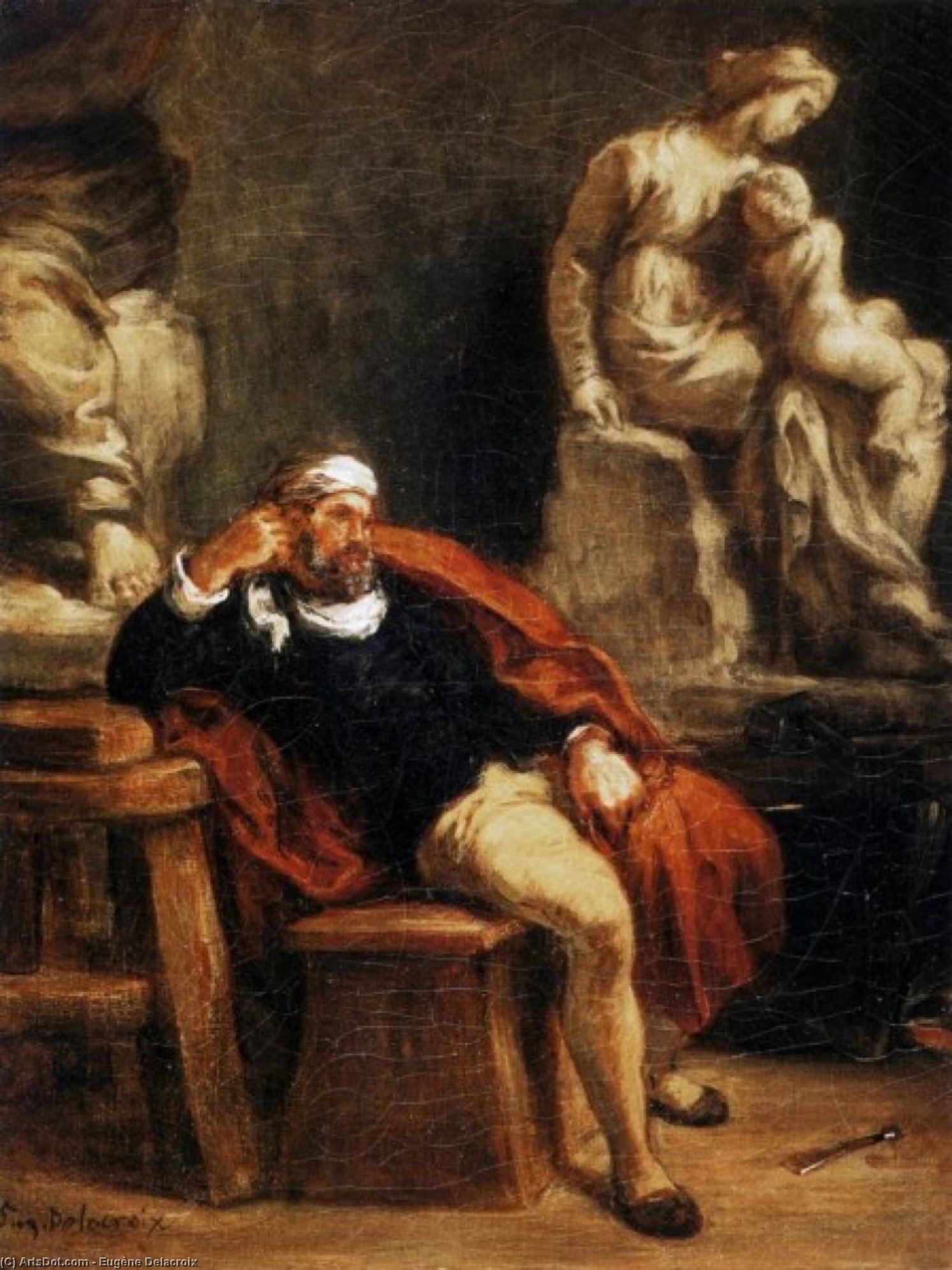
Witness Eugène Delacroix's masterful portrayal of Michelangelo at his studio! This 1850 painting captures the artist’s genius and reflects Romantic ideals, housed at Musée Fabre.
Explore the vibrant world of Eugène Delacroix, a leading French Romantic artist! Discover his dramatic scenes, exotic themes & masterful use of color. See iconic works like 'Liberty Leading the People'. #Delacroix #Romanticism #FrenchArt
Discover the Musée Fabre in Montpellier through its magnificent collection of French and Italian masterpieces including works by Rubens and Courbet, offering an unmissable journey through art history that invites you to explore.
A Glimpse into Genius: Delacroix’s ‘Michelangelo in His Studio’
Eugène Delacroix's “Michelangelo in His Studio,” painted in 1850, is more than just a portrait; it’s a carefully constructed tableau vivant—a window into the creative process of one of history’s most revered artists. This oil on canvas, currently residing at the Musée Fabre in Montpellier, France, offers a remarkably intimate and layered depiction of Michelangelo at work, capturing not only his physical presence but also the very essence of artistic dedication and contemplation. Delacroix, a key figure in the Romantic movement, deliberately chose this subject to elevate Michelangelo’s legacy while simultaneously revealing his own deep admiration for the Renaissance master's unparalleled skill and profound humanity. The painting isn’t merely a likeness; it’s an exploration of genius itself—a meditation on inspiration, labor, and the enduring power of artistic vision.
The Composition: A Study in Light and Shadow
Delacroix skillfully employs a pyramidal composition to draw the viewer's eye towards Michelangelo, seated with a quiet intensity that speaks volumes. The artist is positioned within a warmly lit interior space, his hands clasped thoughtfully behind his head, suggesting deep thought or perhaps a moment of creative breakthrough. The background is dominated by two imposing marble statues—likely studies for future works—that anchor the scene and subtly reinforce Michelangelo’s sculptural prowess. A strategically placed vase adds an element of elegance and sophistication, hinting at the artist's appreciation for beauty and refinement. However, it’s not just the individual elements that contribute to the painting’s power; Delacroix masterfully uses light and shadow to create a sense of depth and drama, highlighting Michelangelo’s form and imbuing the scene with an atmosphere of quiet contemplation. Notably, three other figures are present—a standing man on the left, and two individuals towards the right—adding a layer of dynamism and suggesting the bustling environment of a working studio, far from the solitary image often associated with artistic creation.
Romanticism’s Echoes: Delacroix's Influences
Delacroix’s choice to depict Michelangelo is deeply rooted in the tenets of Romanticism—a movement that prioritized emotion, imagination, and individualism over the rationalism of the Neoclassical era. He was profoundly influenced by Théodore Géricault, whose monumental “The Raft of the Medusa” demonstrated the power of art to capture dramatic historical events and evoke intense emotional responses. Delacroix’s own work, particularly his depictions of exotic locales like Morocco (seen in "Moroccan Military Exercises"), reveals a fascination with the unfamiliar and the sublime—qualities he sought to emulate in his portrayal of Michelangelo. The influence of earlier masters, such as Peter Paul Rubens and the Venetian Renaissance painters, is also evident in Delacroix’s use of vibrant color and dynamic brushwork, creating a sense of movement and vitality within the scene. The painting can be seen as a deliberate attempt to fuse the grandeur of the Renaissance with the passionate intensity of Romanticism.
Symbolism and Artistic Legacy
Beyond its aesthetic qualities, “Michelangelo in His Studio” is rich in symbolic meaning. The seated figure represents not just an individual artist but embodies the very spirit of creative endeavor—the struggle to translate inner visions into tangible form. The unfinished sculptures in the background symbolize the ongoing process of artistic creation, highlighting the dedication and perseverance required to realize a masterpiece. Michelangelo’s gaze upwards suggests a connection with something larger than himself—perhaps divine inspiration or simply the boundless possibilities of his art. Delacroix's tribute is not merely an homage to Michelangelo’s technical skill but also a celebration of his enduring legacy as a visionary artist who profoundly shaped Western art history.
Discovering ‘Michelangelo in His Studio’
For those seeking a deeper understanding of this captivating artwork, reproductions are available through ArtsDot.com and the Musée Fabre's website. Furthermore, exploring other works by Eugène Delacroix, such as “Moroccan Military Exercises” and “Portrait of Alfred Bruyas,” offers valuable insight into his artistic development and thematic concerns. The painting stands as a testament to Delacroix’s skill and a poignant reminder of the enduring power of art to capture both the physical and spiritual dimensions of human creativity.