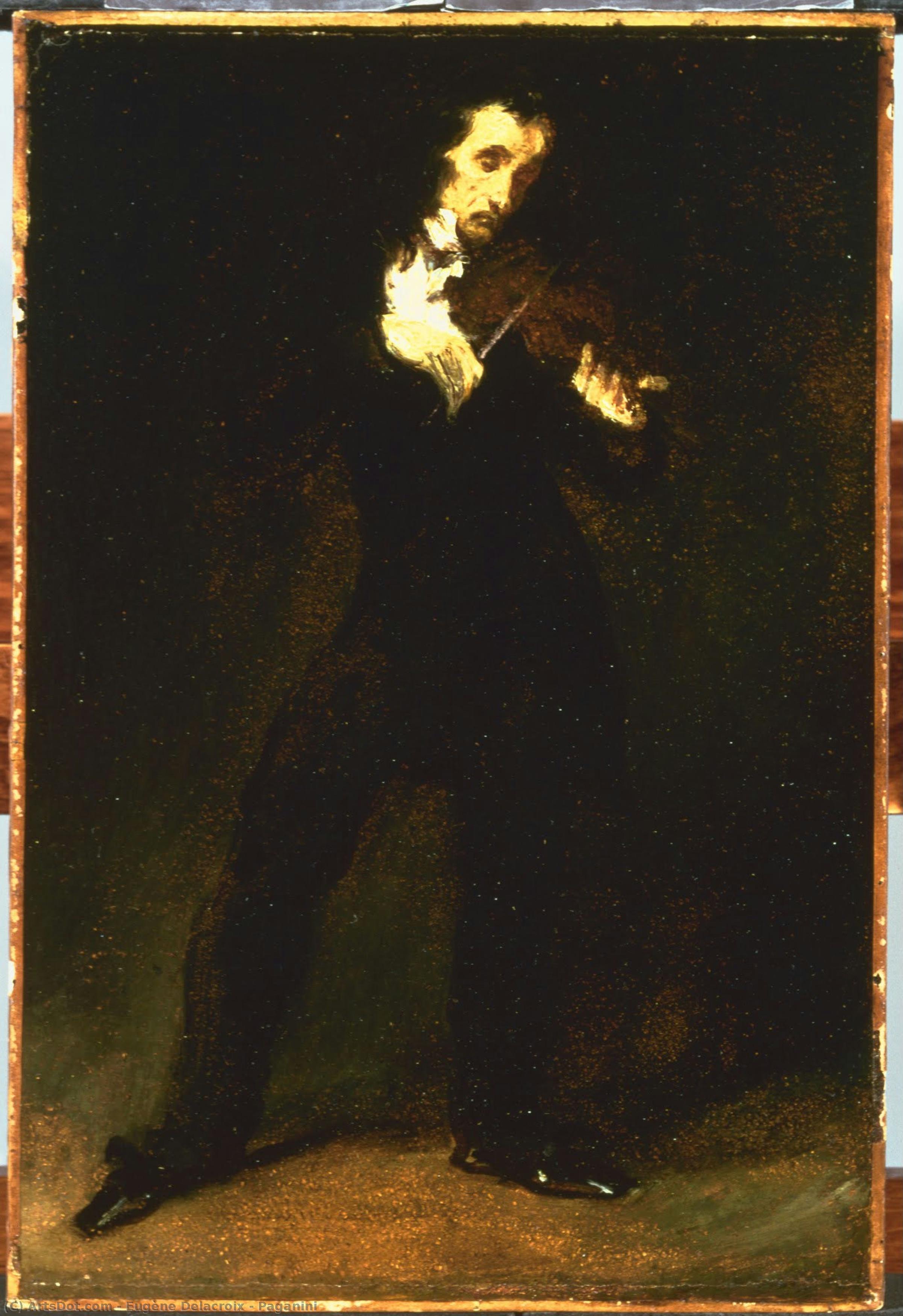
Delacroix’s haunting portrait captures Paganini's electrifying performance style—a masterful blend of Romantic drama and expressive brushstrokes—reflecting the artist’s passion for music and offering a glimpse into 1831 Paris.
Explore the vibrant world of Eugène Delacroix, a leading French Romantic artist! Discover his dramatic scenes, exotic themes & masterful use of color. See iconic works like 'Liberty Leading the People'. #Delacroix #Romanticism #FrenchArt
A Portrait Steeped in Romantic Drama: Delacroix’s Paganini
Delacroix's depiction of Nicolo Paganini—a violinist celebrated for his unparalleled virtuosity and rumored to possess supernatural abilities—isn’t merely a likeness; it’s an embodiment of the Romantic spirit itself. Painted in 1831 shortly after Paganini captivated audiences at the Paris Opera, the portrait transcends simple representation, striving instead to convey the musician's aura of mystique and transformative performance. It stands as Duncan Phillips’ prized possession within The Phillips Collection, a testament to Delacroix’s enduring influence on artistic sensibilities.
Subject Matter and Context
The painting captures Paganini in mid-performance, frozen in a moment of intense concentration. He is positioned centrally against a dark background—a deliberate choice that emphasizes his isolation and draws attention to the luminous areas illuminating his face, hands, and shirt front. This stark contrast underscores Delacroix’s fascination with capturing fleeting expressions of emotion and conveying the sublime – core tenets of Romantic art. The opera house setting speaks to the burgeoning interest in theatrical spectacle and the desire to evoke visceral responses from viewers. Paganini himself was a figure shrouded in legend; accounts described him as unnervingly pale, gaunt, and possessing unsettling charisma—characteristics Delacroix skillfully translated onto canvas.
Style and Technique: Gesture and Luminosity
Delacroix’s technique is characterized by loose, gestural brushstrokes that prioritize feeling over meticulous detail. This approach aligns perfectly with Paganini's performance style – a dynamic interplay between precision and improvisation. The artist eschewed the polished surfaces of Neoclassicism, favoring instead an expressive palette and textural richness. Thick impasto creates palpable physicality, mirroring the energy of Paganini’s movements and conveying the musician’s commanding presence. Light is strategically employed to sculpt Paganini's form and highlight key elements—the violin bow gleaming against the darkness—creating a dramatic visual effect that captures the essence of Romantic idealism.
Symbolism: Genius and Transcendence
Beyond its depiction of a musical performer, “Paganini” operates on multiple symbolic levels. The dark background represents obscurity and challenges perception, symbolizing Paganini’s enigmatic nature and hinting at his perceived mastery over forces beyond human comprehension. Delacroix's focus on Paganini’s face—closed eyes conveying profound contemplation—suggests an exploration of inner consciousness and the pursuit of artistic transcendence. Furthermore, the violin itself embodies musical excellence and represents a conduit for channeling emotion into art – mirroring Delacroix’s own belief in the transformative power of creative expression.
Emotional Impact: Capturing the Sublime
Ultimately, Delacroix's “Paganini” succeeds in conveying the Romantic preoccupation with capturing the sublime—that feeling of awe and terror inspired by confronting something vast and incomprehensible. The painting compels viewers to contemplate the artist’s profound understanding of human psychology and his ability to translate musical performance into visual art. It remains a powerful reminder that true artistry lies not merely in accurate representation but in evoking emotion and transporting the audience beyond the confines of everyday experience—a legacy firmly cemented by Delacroix's masterful execution and Duncan Phillips’ discerning eye.