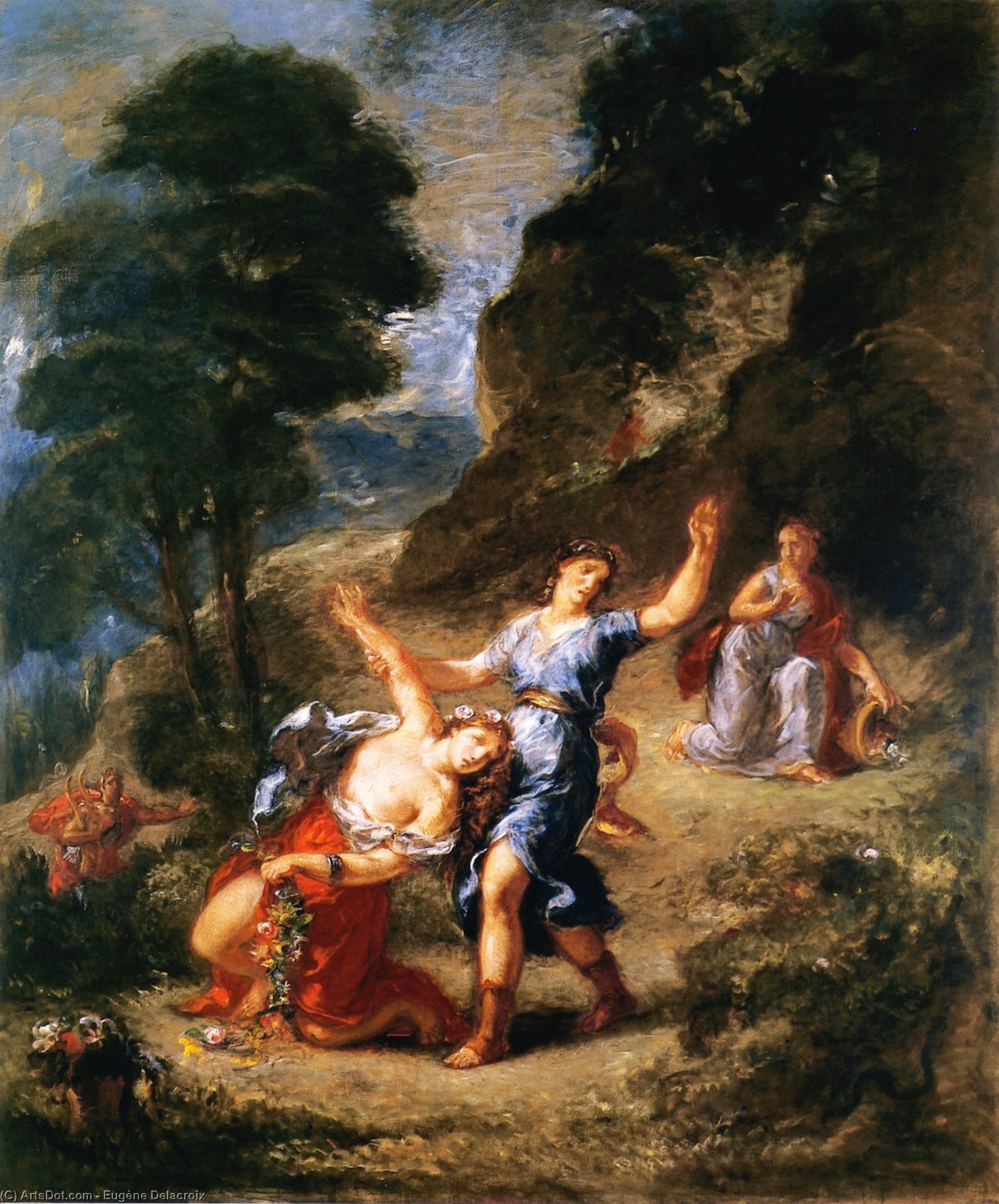
Delacroix’s haunting Spring - Orpheus and Eurydice captures the sorrowful beauty of mythic loss with vibrant Romantic brushstrokes—a timeless masterpiece inspired by Greek legend and housed in São Paulo's Museo de Arte.
Explore the vibrant world of Eugène Delacroix, a leading French Romantic artist! Discover his dramatic scenes, exotic themes & masterful use of color. See iconic works like 'Liberty Leading the People'. #Delacroix #Romanticism #FrenchArt
A Symphony of Sorrow: Delacroix’s ‘Spring – Orpheus and Eurydice’
The painting “Spring – Orpheus and Eurydice” by Eugène Delacroix, completed in 1856, stands as a cornerstone of Romantic art—a testament to its preoccupation with emotion, imagination, and the sublime beauty intertwined with profound melancholy. Currently residing at the Museo de Arte de São Paulo (MASP), Brazil, this monumental canvas transcends mere depiction; it embodies the very spirit of its era and continues to captivate viewers with its haunting portrayal of mythic grief.
Mythological Roots and Narrative Depth
Delacroix’s inspiration stemmed directly from Homer's epic poem “The Odyssey,” specifically recounting the tale of Orpheus, a legendary musician who descended into Hades to retrieve his beloved Eurydice after her untimely death by serpent venom. The painting meticulously captures this dramatic narrative—Orpheus kneeling beside Eurydice’s lifeless body, clutching her hand in despair as he wrestles with unbearable sorrow. Surrounding him are figures representing the underworld’s inhabitants, their expressions mirroring the pervasive sadness of the scene. This isn't simply a retelling of a story; it’s an exploration of grief itself—a visceral reaction to loss that Delacroix renders with breathtaking sensitivity.
The Romantic Style: Color and Movement Unleashed
Delacroix’s artistic style is unmistakably Romantic, rejecting the cool rationality of Neoclassicism in favor of vibrant color palettes and dynamic brushstrokes. Heavily influenced by Rubens and the Venetian Renaissance masters, he employed a technique characterized by loose, expressive application of paint—a deliberate departure from academic precision. Notice how Delacroix utilizes shades of ochre, crimson, and emerald green to illuminate the landscape, creating an atmosphere that feels both ethereal and grounded. The swirling brushstrokes convey movement and emotion, mirroring Orpheus’ tormented state of mind and amplifying the painting's dramatic impact.
Symbolism Within Sorrow: Landscape as Reflection
Beyond its narrative core, “Spring – Orpheus and Eurydice” is laden with symbolic significance. The outdoor setting—a grove of trees bathed in dappled sunlight—represents not merely a backdrop but also a poignant contrast to the darkness of Hades. Light symbolizes hope and remembrance, attempting to pierce through the gloom of despair. The rocks scattered across the canvas serve as anchors, grounding the scene while simultaneously emphasizing the immensity of Orpheus’ grief. Delacroix subtly communicates that even amidst profound sorrow, beauty persists—a reminder of what has been lost but also a testament to the enduring power of love and memory.
Emotional Resonance: A Timeless Masterpiece
Ultimately, “Spring – Orpheus and Eurydice” succeeds in conveying an unparalleled emotional depth. Delacroix’s masterful handling of color and brushstroke achieves a remarkable feat—transforming grief into something profoundly beautiful. The painting compels viewers to confront the universality of sorrow, prompting contemplation on themes of loss, longing, and the human condition. It remains a powerful emblem of Romantic idealism, demonstrating that art can transcend time and continue to inspire awe and empathy generations later. Its enduring appeal lies in its ability to capture not just a story but also the very essence of human emotion—a legacy cemented by Delacroix’s unwavering commitment to artistic expression.