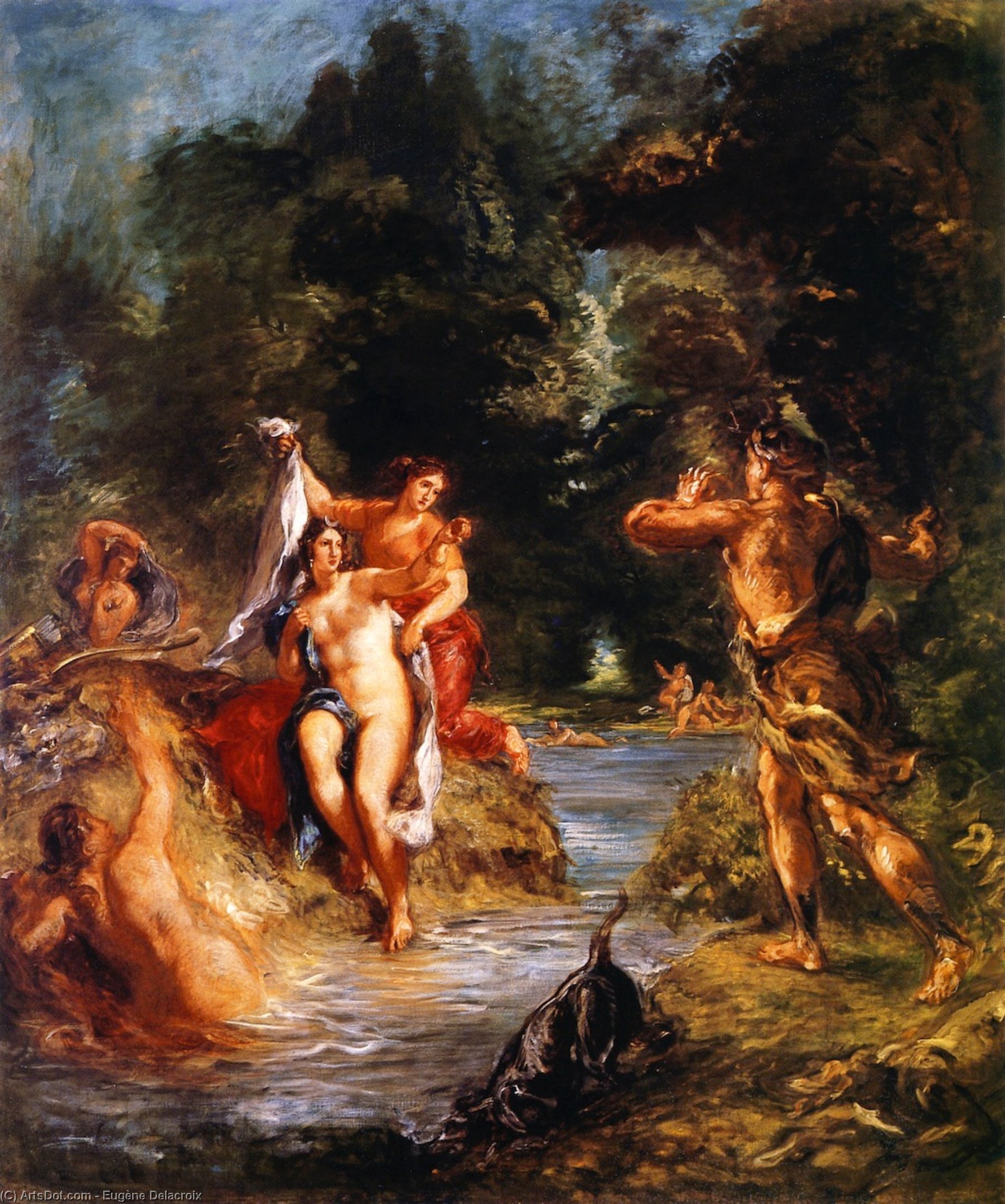
The Echoes of Myth and Passion: Delacroix’s ‘Summer – Diana and Actaeon’
Eugène Delacroix's “Summer – Diana and Actaeon,” housed within the Museo de Arte de Sao Paulo, isn’t merely a painting; it’s a visceral plunge into the heart of Greek mythology, rendered with an intensity that still resonates today. Completed between 1856 and 1863, this monumental work captures a pivotal moment from Ovid's *Metamorphoses* – the horrifying transformation of the hunter Actaeon after he unwittingly stumbles upon Diana bathing in a secluded forest pool. More than just a retelling of a myth, Delacroix’s masterpiece is a profound exploration of shame, vulnerability, and the devastating consequences of transgression, all conveyed through his signature Romantic style. The painting immediately commands attention with its dramatic lighting, rich color palette, and dynamic composition, drawing the viewer into a scene brimming with both beauty and terror.
A Mythical Genesis: Context and Narrative
The story at the heart of “Diana and Actaeon” is a classic tale of divine retribution. Actaeon, a skilled hunter in pursuit of a deer, violates Diana’s privacy by spying on her bathing. Enraged by this intrusion, she transforms him into a stag, condemning him to be hunted and ultimately torn apart by his own hounds – a brutal punishment for his hubris. Delacroix masterfully captures the immediate aftermath of this transformation: Actaeon, now in stag form, stares with horrified recognition at his reflection in the pool’s surface, realizing the horror of his situation. The presence of two dogs, one poised to attack and another already engaged in the gruesome pursuit, amplifies the scene's tension and underscores the inevitability of his fate. This isn’t a detached recounting of events; it’s an intensely emotional portrayal of a man confronting his own monstrous transformation.
Delacroix’s Romantic Vision: Technique and Style
Delacroix was a leading figure in the Romantic movement, rejecting the rigid formality of Neoclassicism in favor of expressive brushwork, vibrant color, and an emphasis on emotion and drama. In “Diana and Actaeon,” this is evident in every aspect of the painting’s execution. The loose, visible brushstrokes create a sense of movement and immediacy, conveying the chaos and panic of the scene. Delacroix employs a rich, saturated palette – deep greens, blues, and browns dominate the forest backdrop, contrasted by the warm tones of Actaeon's skin and the shimmering light reflecting off the water. The use of chiaroscuro (the dramatic contrast between light and dark) further intensifies the emotional impact, highlighting Actaeon’s horrified expression and casting long, ominous shadows across the landscape. Notice how Delacroix doesn’t meticulously render every detail; instead, he prioritizes capturing the *feeling* of the scene – the sense of dread, vulnerability, and impending doom. The composition itself is deliberately unbalanced, drawing the eye to Actaeon's central position and amplifying his isolation.
Symbolism and Emotional Resonance
Beyond its narrative power, “Diana and Actaeon” is rich in symbolism. Diana herself represents both divine beauty and ruthless retribution, while Actaeon embodies human fallibility and the consequences of unchecked desire. The pool acts as a mirror, not just reflecting Actaeon’s physical form but also his shattered sense of self. The dogs symbolize the inescapable nature of fate and the loss of innocence. The painting speaks to universal themes of shame, transgression, and the dark side of human nature – emotions that continue to resonate with viewers today. It's a potent reminder of the dangers of violating boundaries, both physical and moral, and the devastating price one can pay for such actions. The overall effect is profoundly unsettling yet undeniably captivating, leaving a lasting impression long after viewing.
For those seeking a high-quality reproduction of this iconic masterpiece, visit Eugène Delacroix: Summer - Diana and Actaeon on ArtsDot. Furthermore, the Museo de Arte de Sao Paulo offers a wealth of information about this painting and its place within Delacroix’s broader oeuvre.