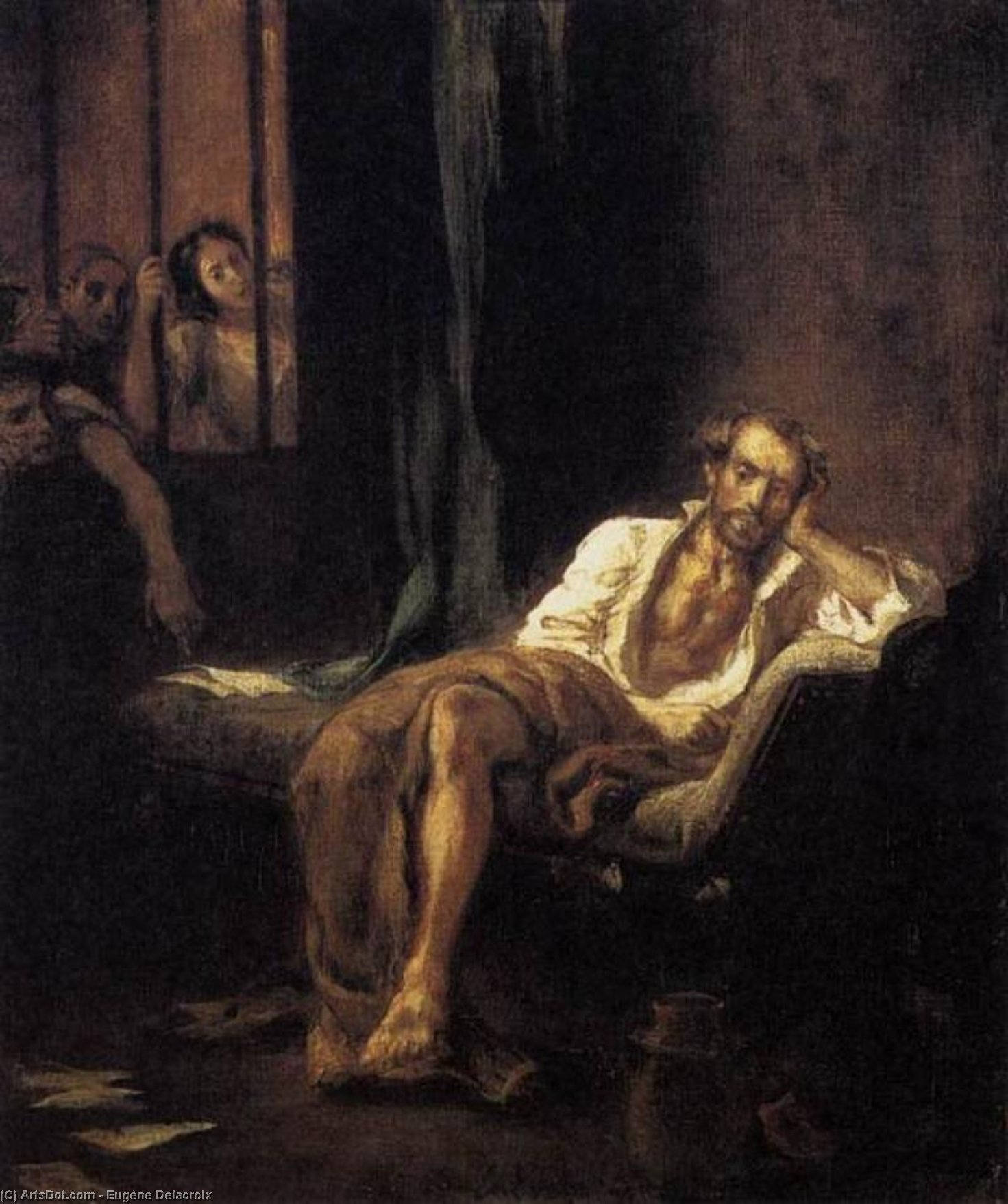
Tasso in the Madhouse: A Descent into Romantic Torment
Eugène Delacroix’s “Tasso in the Madhouse,” painted in 1839, is not merely a depiction of a troubled poet; it's a visceral plunge into the heart of Romantic emotion. This arresting oil on canvas, measuring 60 x 50 cm, immediately confronts the viewer with an unflinching portrayal of suffering – a subject Delacroix masterfully wielded to explore themes of genius, isolation, and the precariousness of the human mind. The painting’s power resides not just in its subject matter but in Delacroix's masterful manipulation of light, color, and composition, elements deeply rooted in his engagement with the artistic traditions of Rubens and Venetian Renaissance painters.
- Subject Matter: Inspired by Torquato Tasso’s personal struggles with mental illness, as documented in his epic poem *Gerusalemme Liberata*, the work transcends a simple biographical portrait. Delacroix uses Tasso's plight to reflect upon his own artistic frustrations and the challenges faced by creative individuals often misunderstood or dismissed by society.
- Composition: The scene unfolds with a deliberate, almost claustrophobic intensity. Tasso, starkly revealed in his underwear, sits on a bed – a symbol of vulnerability and confinement – surrounded by observers who seem both fascinated and repulsed. This arrangement immediately draws the viewer into the narrative, forcing an uncomfortable engagement with the subject’s distress.
- Technique: Delacroix's brushwork is loose and expressive, characteristic of Romanticism’s rejection of Neoclassical precision. Thick impasto creates a palpable sense of texture and movement, further amplifying the emotional impact of the scene. The use of chiaroscuro – dramatic contrasts between light and dark – intensifies the psychological drama, highlighting Tasso's isolation within the dimly lit room.
A Window into Delacroix’s Soul
Beyond its immediate narrative, “Tasso in the Madhouse” offers a profound insight into Delacroix himself. The painting is widely interpreted as an autobiographical statement, reflecting his own feelings of alienation and frustration as a brilliant artist struggling for recognition during a period of immense social and political change in France. The dingy setting, with its worn furniture and unsettling atmosphere, mirrors the internal turmoil experienced by both Tasso and, arguably, Delacroix himself. The inclusion of the figure standing in the background adds to this sense of unease, suggesting an audience judging or scrutinizing the artist’s vulnerability.
Delacroix's decision to depict Tasso unclothed is particularly significant. It strips away any veneer of respectability, presenting a raw and unvarnished image of human suffering. This bold choice aligns with the Romantic emphasis on emotion and authenticity, rejecting the idealized representations favored by earlier artistic movements.
Historical Context & Lasting Influence
Painted in 1839, “Tasso in the Madhouse” exists within a pivotal moment in art history – the transition from Neoclassicism to Romanticism. Delacroix’s work represents a decisive break with the formal constraints of the past, embracing instead a more subjective and emotionally charged approach to painting. The painting's influence can be seen in the works of later artists such as Edgar Degas and Charles Baudelaire, who were similarly drawn to themes of psychological distress and social alienation.
The fact that an earlier version of this scene from 1824 exists further illuminates Delacroix’s artistic development. The evolution between the two paintings demonstrates a deepening engagement with Romantic principles and a heightened awareness of his own creative process. “Tasso in the Madhouse” stands as a testament to Delacroix's enduring legacy, solidifying his position as one of the most important figures in the history of French art.
Collecting a Masterpiece
A hand-painted reproduction of “Tasso in the Madhouse” offers an unparalleled opportunity to bring this iconic work into your home or office. Each reproduction meticulously recreates Delacroix’s original technique, capturing the drama and emotional intensity of the scene with remarkable fidelity. Whether you are a seasoned art collector or simply seeking a stunning piece of decorative art, this reproduction is sure to be a conversation starter and a source of inspiration for years to come.