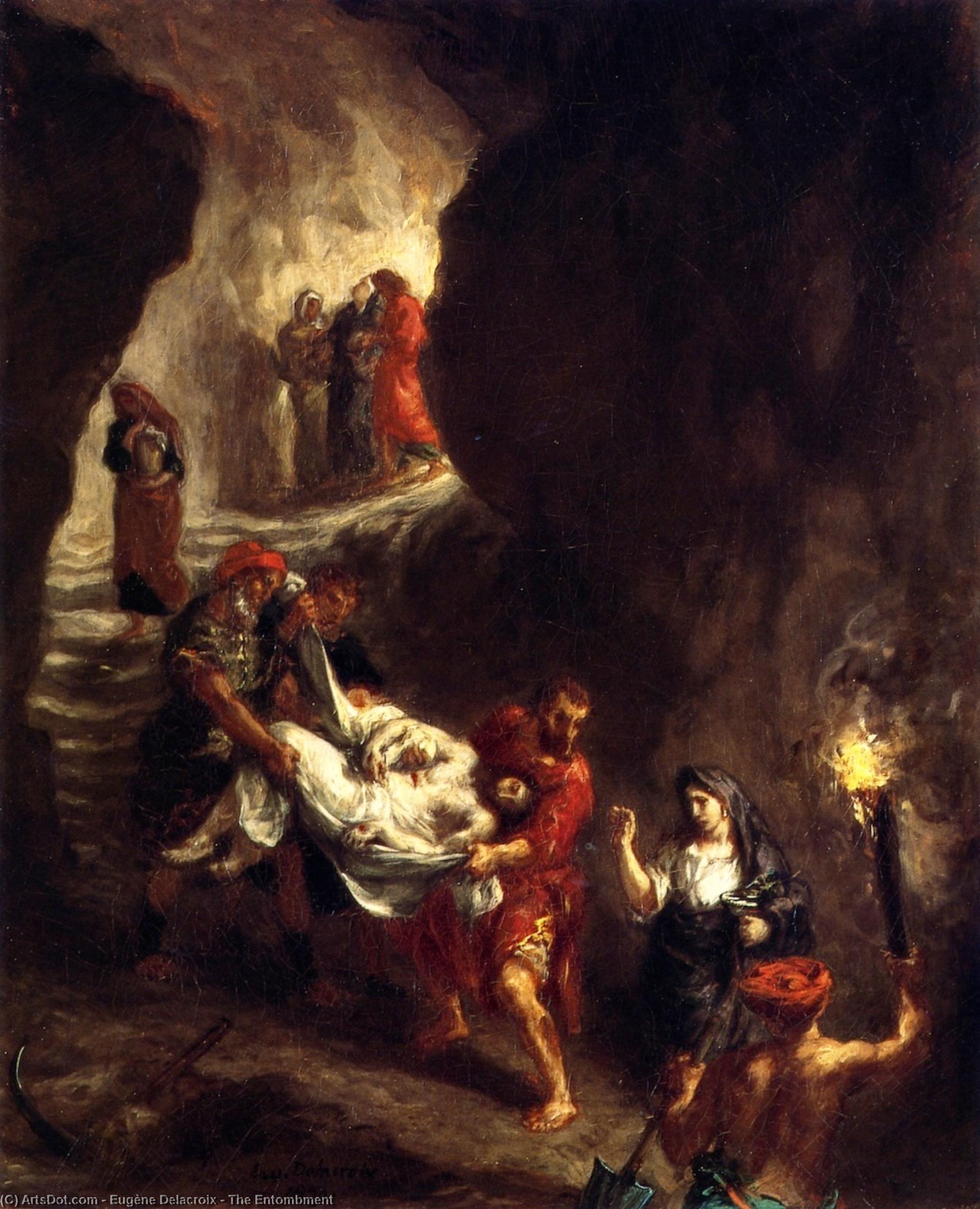
The Entombment by Ferdinand Victor Eugène Delacroix: A monumental Romantic painting depicting Jesus Christ's burial procession, characterized by dramatic brushstrokes and emotive figures conveying grief and faith amidst the turbulent backdrop of Victorian France.
Explore the vibrant world of Eugène Delacroix, a leading French Romantic artist! Discover his dramatic scenes, exotic themes & masterful use of color. See iconic works like 'Liberty Leading the People'. #Delacroix #Romanticism #FrenchArt
Explore Western art masterpieces at the National Museum of Western Art in Tokyo! Discover Renaissance to modern works by Monet & Van Gogh within a stunning Le Corbusier building.
A Moment Frozen in Time: Delacroix’s “The Entombment”
Delacroix's "The Entombment," completed in 1858, stands as a cornerstone of French Romanticism—a movement that prioritized emotion and imagination over rational observation. More than just a depiction of biblical narrative, it’s an immersive experience for the viewer, transporting them back to the turbulent atmosphere of Victorian France and resonating with profound spiritual contemplation.
Subject Matter and Narrative
The painting portrays the funeral procession of Jesus Christ after his crucifixion, focusing on the moment of interment—the lowering of the body into its tomb. Delacroix eschewed meticulous anatomical detail, opting instead for a dramatic portrayal emphasizing gesture and emotion. The figures are not idealized saints but ordinary men grappling with grief and sorrow, conveying the palpable weight of loss and faith. Their expressions – anguish, compassion, solemnity – speak volumes about the human condition confronting mortality.
Style and Technique: Romantic Drama Embodied
Delacroix’s stylistic approach is unmistakably Romantic. He employs bold brushstrokes—loose, expressive marks that capture movement and dynamism—creating a palpable sense of immediacy. The palette leans heavily on dark hues – browns, blacks, reds – reflecting the somber mood of the scene but punctuated by flashes of warm light emanating from the torches illuminating the cave. This chiaroscuro technique dramatically highlights key figures and contributes to the overall theatrical effect. Unlike academic painting’s pursuit of polished surfaces, Delacroix prioritized capturing feeling above all else.
Historical Context: Echoes of Resurrection
Painted during a period marked by significant social and political upheaval—the Franco-Prussian War loomed large on the horizon—"The Entombment" served as a powerful symbol of hope amidst despair. The painting’s commission coincided with the Vatican Jubilee, commemorating the centenary of Pope Pius IX's ascension to the papacy, and Delacroix intended it to evoke the spiritual fervor of the era. It reflects the Romantic preoccupation with themes of suffering, sacrifice, and redemption—ideas deeply rooted in Christian theology but expressed through a distinctly humanist lens.
Symbolism: Light Versus Darkness
The torches positioned strategically within the cave represent divine illumination battling against encroaching darkness – symbolizing faith confronting doubt and mortality overcoming despair. The positioning of the figures emphasizes the importance of compassion and solidarity as they bear witness to Christ’s final act. Furthermore, the tomb itself serves as a potent reminder of death but simultaneously anticipates resurrection—a central tenet of Christian belief that Delacroix powerfully conveys through his masterful composition.
Emotional Impact: A Profound Reflection on Humanity
“The Entombment” transcends mere visual representation; it compels viewers to confront fundamental questions about life, death, and faith. The painting’s emotional resonance stems from its ability to capture the raw vulnerability of human experience—the grief of bereaved loved ones, the solemn reverence for sacred ritual, and the enduring yearning for spiritual solace. It remains a testament to Delacroix's artistic genius and his profound understanding of the human spirit.