A Symphony of Line and Existential Inquiry
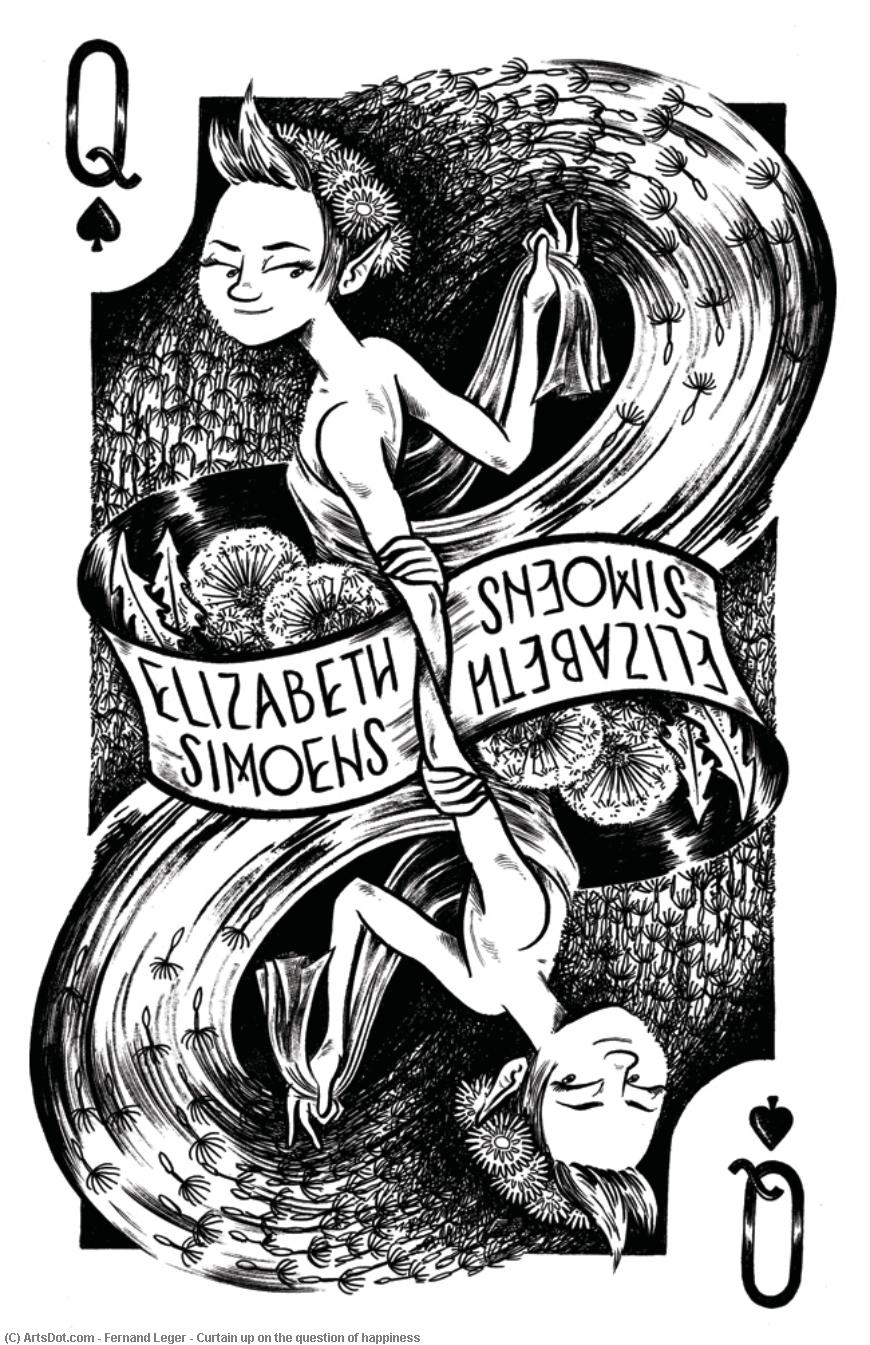
In the twilight of his prolific career, Fernand Léger produced a work that transcends the boundaries of mere graphic design to become a profound meditation on the human condition. “Curtain up on the question of happiness,” painted in 1955, is an enigmatic masterpiece that invites viewers into a world where Cubist geometry meets deep, existential longing. Presented within the evocative format of a playing card—specifically the Queen of Spades—the artwork immediately commands attention through its stark, monochromatic intensity. This choice of medium and frame suggests a certain theatricality, as if the viewer is being invited to witness a pivotal moment in a cosmic drama where the stakes are nothing less than the pursuit of joy itself.
The composition is a masterful display of Léger’s ability to manipulate space and movement. Utilizing the principles of Cubism, he dismantles traditional representation in favor of fractured planes and rhythmic, swirling lines that dominate the background like turbulent waves or heavy drapery. This sense of instability and kinetic energy creates a striking tension against the more serene, contemplative faces nestled within the design. The interplay between these two distinct facial expressions—one alert and engaged, the other resting in quiet repose—serves as a visual metaphor for the duality of existence: the struggle of the intellect versus the peace of the soul.
The Precision of the Machine Age and the Soul
Technically, the piece is a triumph of pen and ink on paper, showcasing Léger’s legendary command over line work. There is an almost architectural precision to the contours that define each shape, creating a dense, textural pattern that vibrates with life. By eschewing traditional shading, Léger achieves a stark clarity that amplifies the emotional impact of the black and white palette. This lack of tonal gradation forces the eye to follow the rhythmic pulse of the ink, mirroring the artist's lifelong fascination with the machine age. Even in this more personal, symbolic work, one can sense the influence of his "tubism" and his obsession with the strength, geometry, and unapologetic energy of a modernizing world.
Beyond its formal brilliance, the artwork is rich with layers of symbolism that resonate deeply with collectors and enthusiasts of fine art. The stylized depiction of a dog within the composition introduces themes of loyalty and companionship, grounding the abstract chaos in the warmth of human connection. Furthermore, the presence of the name "Elizabeth Simoens" on a vertical banner adds a layer of personal dedication, suggesting that even within the vast, swirling complexities of life, there are individual markers of identity and devotion. For an interior designer or a discerning collector, this piece offers more than just aesthetic beauty; it provides a focal point for conversation, blending the avant-garde spirit of mid-century modernism with a timeless, universal question about what it truly means to be happy.