A Celebration of Modernity: Fernand Léger’s *Still Life with a Beer Mug*
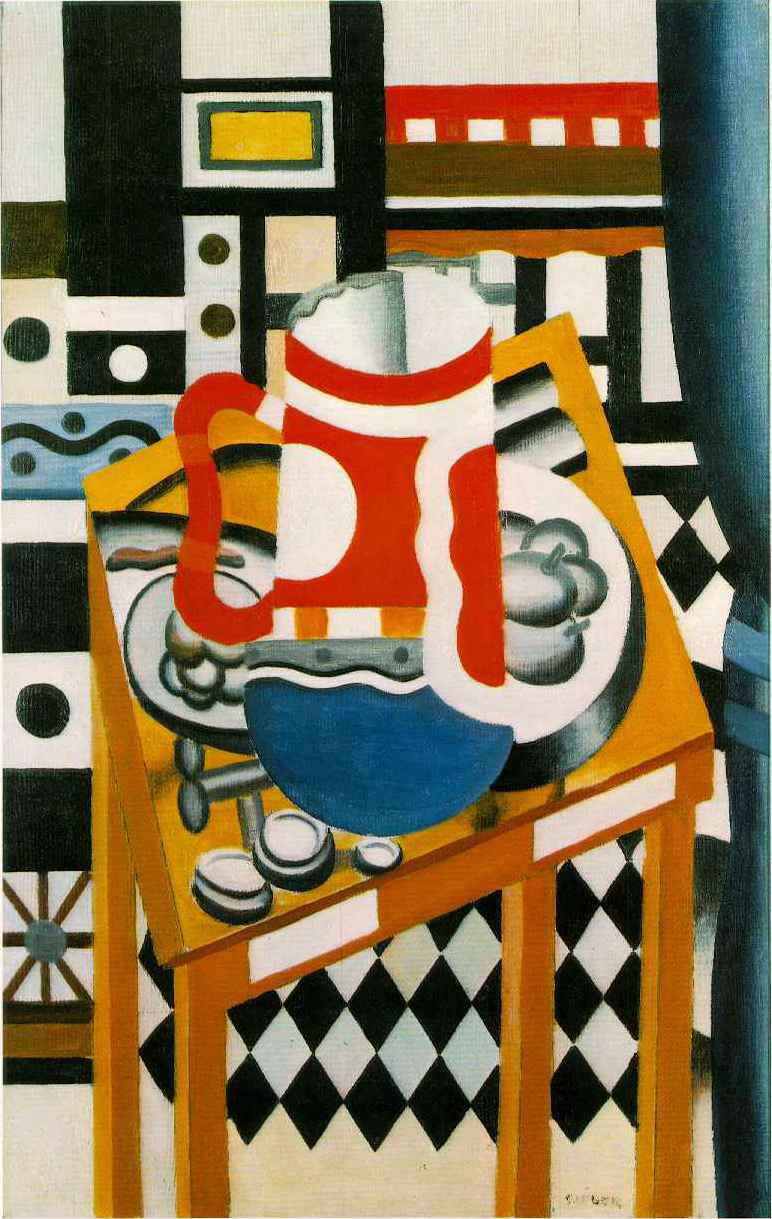
Fernand Léger's *Still Life with a Beer Mug*, a captivating example of his distinctive artistic vision, invites us to contemplate the burgeoning relationship between humanity and machine in the early 20th century. Painted around the same period as his monumental murals adorning the Métro stations of Paris, this intimate still life reveals Léger’s fascination with geometric forms, industrial materials, and the increasingly dominant presence of technology in everyday life. The painting isn't merely a depiction of objects; it’s an assertion – a bold declaration that modern existence could be both beautiful and powerfully structured.
Cubist Echoes and Materiality
Created between 1881 and 1955, *Still Life with a Beer Mug* firmly establishes Léger within the Cubist movement, though he developed a highly personal interpretation. Unlike Picasso or Braque’s often fragmented explorations of form, Léger embraces a more optimistic vision. The objects – a beer mug, bowl, cup, and spoon – are rendered with a deliberate simplification of their shapes, broken down into fundamental geometric components. This technique isn't about deconstruction; it’s about rebuilding the world according to new principles, reflecting the perceived order of industrial design. The checkered table surface further emphasizes this structured approach, adding another layer of visual precision.
Symbolism and the Machine Age
The choice of subject matter itself is laden with symbolic weight. A beer mug, a commonplace object, becomes elevated to a central position, suggesting a celebration of leisure and perhaps even a critique of the relentless demands of industrial labor. The bowl, cup, and spoon represent the basic necessities of life – sustenance and comfort – presented in a deliberately stylized manner. Léger’s use of materials—likely oil paint on canvas—reflects his interest in the properties of modern materials like steel and concrete, hinting at their growing influence on artistic expression. The vase, positioned near the top left corner, adds an element of classical reference, subtly juxtaposing traditional forms with the emerging aesthetic of modernity.
Technique and Emotional Impact
Léger’s technique is characterized by a bold application of paint, often employing thick impasto to create a tactile surface that emphasizes the materiality of his subjects. The colors are deliberately muted – primarily ochres, browns, and grays – reflecting the industrial palette of the era. Despite this restrained color scheme, the painting possesses an undeniable energy, driven by Léger’s confident brushstrokes and his unwavering commitment to capturing the dynamism of the machine age. *Still Life with a Beer Mug* isn't simply a still life; it’s a powerful statement about the transformative impact of modernity on art and society, inviting viewers to consider their own relationship with technology and form.