Fernand Léger’s dynamic Purist painting captures the joyous energy of circus performers in 1950 Normandy. Explore this captivating artwork and bring a touch of modernist abstraction into your home.
Discover Fernand Léger (1881-1955): Pioneer of Cubism & 'Tubism'! Explore bold paintings celebrating modern life, machinery, and the human form – a key forerunner to Pop Art.
A Dance Amidst Geometric Forms: Exploring Fernand Léger’s ‘The Album Circus’
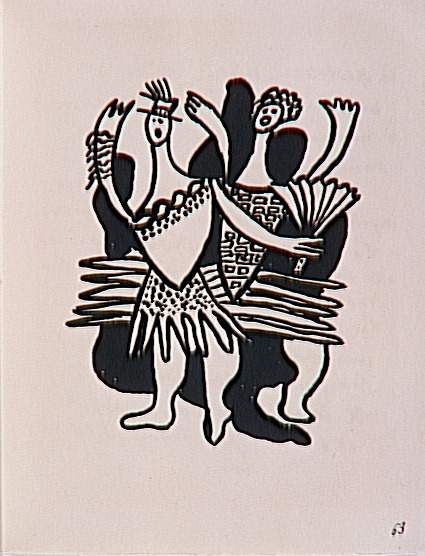
Fernand Léger's “The Album Circus,” painted in 1950, stands as a striking embodiment of Purism – a movement that sought to liberate painting from the constraints of Impressionism and Expressionism by prioritizing geometric abstraction alongside recognizable imagery. This artwork isn’t merely a depiction of a circus performance; it’s an assertion of form itself, reflecting Léger's fascination with industrial machinery and his belief in its ability to convey emotion and dynamism. The canvas captures three figures engaged in dance, rendered in bold, simplified shapes—circles, squares, and rectangles—that dominate the composition. These forms aren’t haphazard; they are meticulously arranged to create a sense of rhythm and movement, mirroring the energy of the circus spectacle.
Style and Technique: Purism's Radical Vision
Purism emerged from the disillusionment following World War I, rejecting sentimentalism and embracing a rigorously rational aesthetic. Léger championed this approach, deliberately eschewing tonal gradations and blending colors to achieve maximum impact with minimal pigment. The painting’s surface is treated with a matte finish, emphasizing the flatness of the canvas and highlighting the sculptural quality of the geometric forms. Léger utilized thick impasto—applying paint in textured layers—to sculpt the shapes, creating palpable physicality despite their abstract nature. This technique underscores his desire to communicate not just what he sees but how it *feels*, channeling the raw energy of industrial production into a visual idiom that defies traditional conventions.
Historical Context: The Machine Age and Artistic Rebellion
The 1950s witnessed a burgeoning interest in technology and urban life, shaping artistic sensibilities across Europe. Léger’s “The Album Circus” directly responds to this cultural shift, reflecting the optimism of the postwar era while simultaneously questioning established artistic hierarchies. He deliberately distanced himself from Surrealism, rejecting its dreamlike imagery for a more concrete engagement with reality—albeit reimagined through geometric abstraction. The painting's formal simplicity served as a deliberate rebuke to the expressive tendencies prevalent in preceding decades, asserting instead the power of pure form to convey emotion and communicate ideas.
Symbolism Beyond Representation: Rhythm and Dynamism
Despite its lack of figurative detail, “The Album Circus” is laden with symbolic significance. The geometric shapes represent not just physical objects but also underlying principles—stability, movement, and repetition—that govern the universe. Léger believed that these forms could express emotions as powerfully as any human figure, capturing the exhilaration and excitement of the circus experience. The circular movements of the dancers’ limbs contribute to the overall rhythm of the composition, reinforcing the idea that art should transcend mere imitation and strive for a deeper understanding of human consciousness.
Emotional Impact: A Celebration of Form and Movement
Ultimately, Léger's “The Album Circus” succeeds in conveying a profound sense of joy and vitality. The bold colors—primarily reds and yellows—further amplify this emotional resonance, mirroring the vibrancy of the circus atmosphere. More than just depicting a scene, Léger invites viewers to contemplate the fundamental relationship between form and emotion – demonstrating that abstraction can achieve an expressive depth previously unattainable through representational art. It remains a testament to Léger’s unwavering conviction in the transformative potential of geometric abstraction as a vehicle for conveying human experience.