A Vision of Mechanized Dreams: Exploring Fernand Léger’s ‘The Album “Circus”’
Fernand Léger's "The Album “Circus,” completed in 1950, stands as a striking testament to the artist’s singular approach to abstraction – one that deliberately sought to reconcile the dynamism of industrial progress with the enduring power of human emotion. Unlike many artists of his era who distanced themselves from representational art altogether, Léger remained firmly grounded in observation, meticulously translating the rhythms and textures of the machine age onto canvas with a distinctive visual vocabulary. His formative years spent amidst the agricultural landscapes of Normandy instilled within him a profound appreciation for physicality and craftsmanship, qualities that would inform his artistic practice throughout his prolific career.
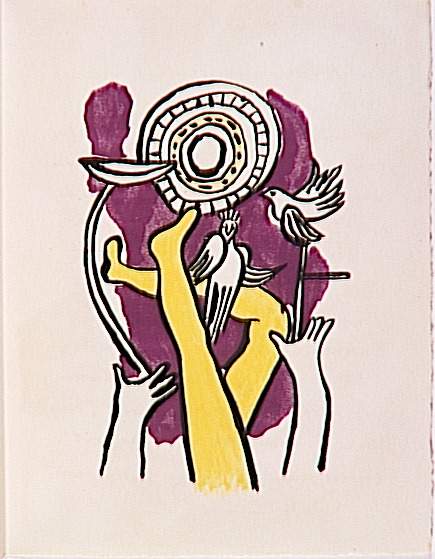
- Subject Matter & Composition: Léger’s artwork depicts an unsettling yet captivating tableau featuring stylized figures—primarily limbs—engaged in a circular dance around a luminous orb. This central element evokes imagery of both the sun and an eye, symbolizing enlightenment and awareness amidst the pervasive influence of machinery. The flattened perspective contributes to a dreamlike atmosphere, prioritizing expressive gesture over realistic depiction.
- Style & Technique: Léger’s style is undeniably expressionistic abstraction, characterized by bold lines and simplified forms that eschew traditional shading techniques. He employs a technique rooted in graphic illustration, applying flat color fields with minimal blending to achieve a striking visual impact. The texture of the surface—a subtle graininess indicative of ink or paint on board—adds another layer of sensory richness.
Historical Context: Embracing Modernity’s Paradoxes
Created during the mid-century period, “The Album “Circus” reflects Léger's unwavering belief that art could simultaneously capture the anxieties and aspirations inherent in a rapidly industrializing world. Léger was deeply influenced by movements like Constructivism and Bauhaus, which championed geometric abstraction as a tool for conveying social ideals—specifically, efficiency and functionality. However, Léger refused to succumb to purely utilitarian aesthetics; instead, he sought to infuse his work with emotional resonance, demonstrating that abstraction could serve as a conduit for profound psychological exploration.
- Symbolism & Interpretation: The circular form—representing both the sun and an eye—suggests themes of cyclical renewal and heightened perception. The reaching limbs embody yearning and struggle, mirroring humanity’s attempts to adapt to the transformative forces reshaping society. Léger's deliberate use of contrasting colors – predominantly dark hues punctuated by bursts of yellow – amplifies these symbolic tensions.
- Emotional Impact: “The Album “Circus” evokes a palpable sense of unease mingled with wonder. Its flattened perspective and simplified forms compel viewers to confront the complexities of modern existence without resorting to comforting illusions. Léger’s masterful manipulation of line and color creates an immersive experience that lingers in the imagination long after encountering the artwork.
Decorative Potential & Artistic Legacy
“The Album “Circus”'s bold aesthetic qualities lend themselves beautifully to interior design projects, particularly those aiming for a contemporary or avant-garde sensibility. Its striking color palette and dynamic composition can serve as inspiration for creating spaces that are both stimulating and emotionally evocative. Léger’s enduring influence extends beyond the realm of painting; his pioneering approach to abstraction paved the way for subsequent generations of artists who sought to redefine visual language.